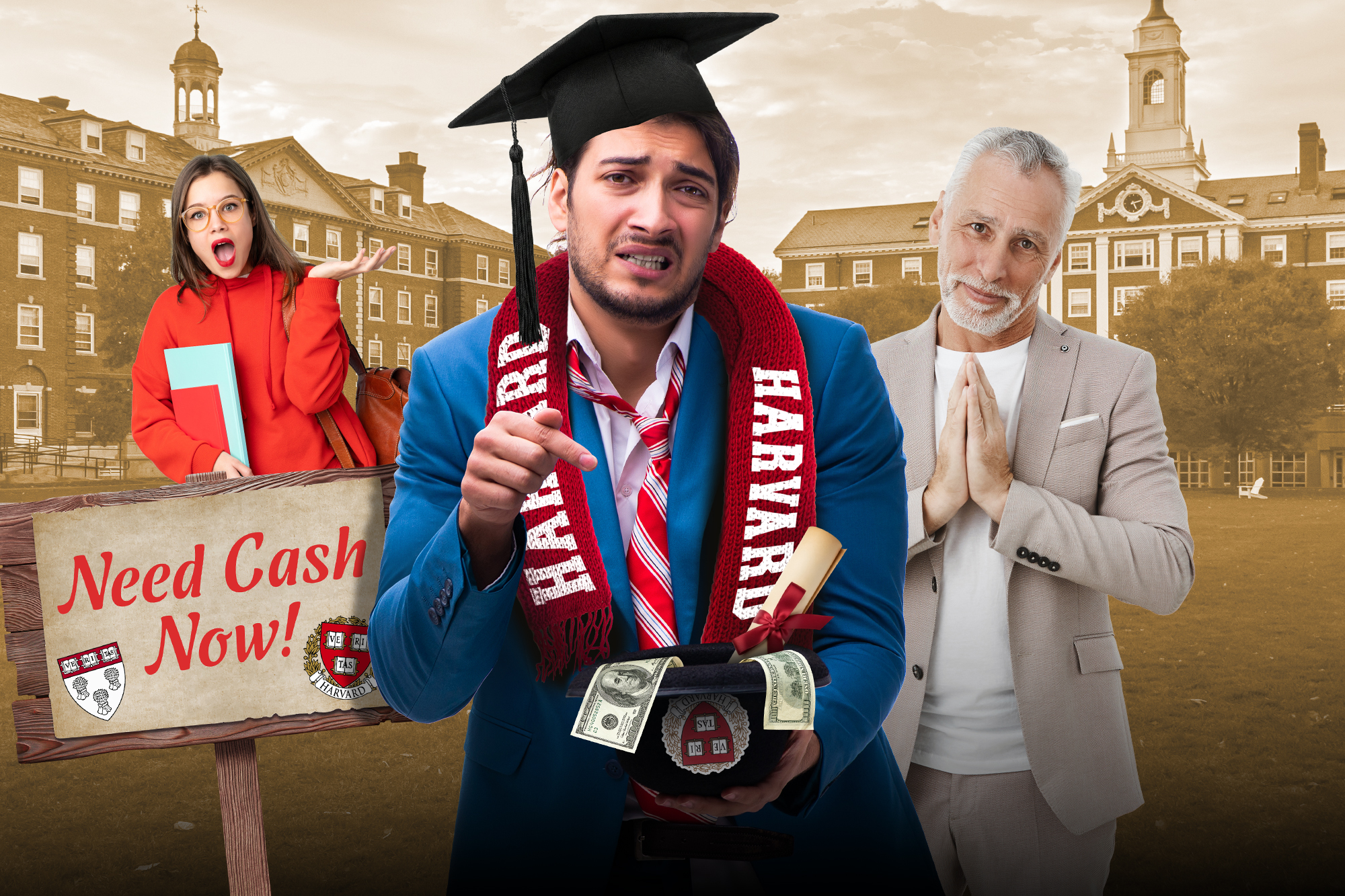
Harvard University, among the most prestigious of America’s Ivy League universities, has revealed a few chinks in its finances as it continues its battle with the Trump administration, On The Money has learned.
That’s our reading of an interesting document that the school recently distributed on Wall Street, a “preliminary offering statement” that makes disclosures to investors who are weighing whether to snap up the university’s debt.
Harvard is planning to borrow $675 million through a Massachusetts agency that sells low-cost, tax-advantaged municipal bonds on behalf of certain private entities that qualify for the privilege, universities being among them.
Most such issues would be pretty prosaic; indeed there’s nothing unusual about this borrowing per se since it’s being used mostly to refinance older, higher-cost bonds, and to fund a few capital projects.
What’s interesting are the disclosures in the document, which some say represent a sobering new reality for the most elite of our colleges after it has come under scrutiny by the Trump administration and the public for how it handled hot-button political issues on campus.
For those on the right who think Harvard is on the verge of bankruptcy because of its ongoing contretemps with the White House – including government probes and throttling of federal research funds over campus antisemitism – you’re going to be a bit disappointed. The school maintains the highest bond ratings – triple-A from Moody’s and Standard & Poor’s, the biggest outfits that assess an issuer’s ability to repay its bonds.
Meanwhile, Harvard’s massive $56.9 billion endowment – an investment pool that helps the university fund projects and dole out financial aid for students – returned 11.9% for the fiscal year ended June 30, 2025.
People at the school tell me that the endowment’s returns surpassed the school’s long-term “benchmark” or goal of cranking out an 8% return. OK, not bad. But the 11.9% endowment gains didn’t beat the S&P, which was up around 13% during that time.
Harvard, of course, is notoriously selective; just around 4% of undergrads who apply get in, the prospectus noted. And it’s expensive. The all-in cost for one year of undergraduate study (tuition plus average room and board) stands at $86,926, a 16.6% increase over the past five years, according to the document.
But fewer are applying, the document also shows. A nifty chart can be found showing that the school received roughly 47,800 “first year” applications for the 2025-2026 academic year, down 17% since the 2021-2022 academic year. Enrollment of first year students fell more than 6% since the 2021-2022 academic year.
Harvard counters that those numbers are skewed because the school last year reversed a Covid-era “test optional” standard for college applicants, reinstalling standardized tests for the 2025-2026 academic year, thus its process is more selective. Another set of numbers show the current year’s crop of incoming students roughly matches the numbers before the test optional mandate went into effect.
Now let’s turn to the school’s balance sheet, also nestled inside the offering statement. It’s no secret that private equity has its problems: Lackluster returns, and significant illiquidity and in a sector known as “private credit,” or direct loans to business including software companies investors believe could be upended by artificial intelligence.
The prospectus didn’t state if Harvard has investments in private credit, but it did note that “endowment results in fiscal year 2025 were dampened by having less public than private equity.”
Charlie Gasparino has his finger on the pulse of where business, politics and finance meet Sign up to receive On The Money by Charlie Gasparino in your inbox every Thursday.
That’s one way of looking at it. The people at Harvard point out that their money managers aren’t paid to knock it out of the park on every investment; they’re playing the long game looking for decent returns within strict risk parameters.
In the face of all of this, there’s the White House’s attempts to slash federal funding; the documents included a statement from Harvard’s president, Alan Garber, which noted a continued university-wide hiring freeze as well as keeping salaries flat, “painful layoffs,” and “scaled back projects and expenditures.”
In other words, it’s not so easy being elite.