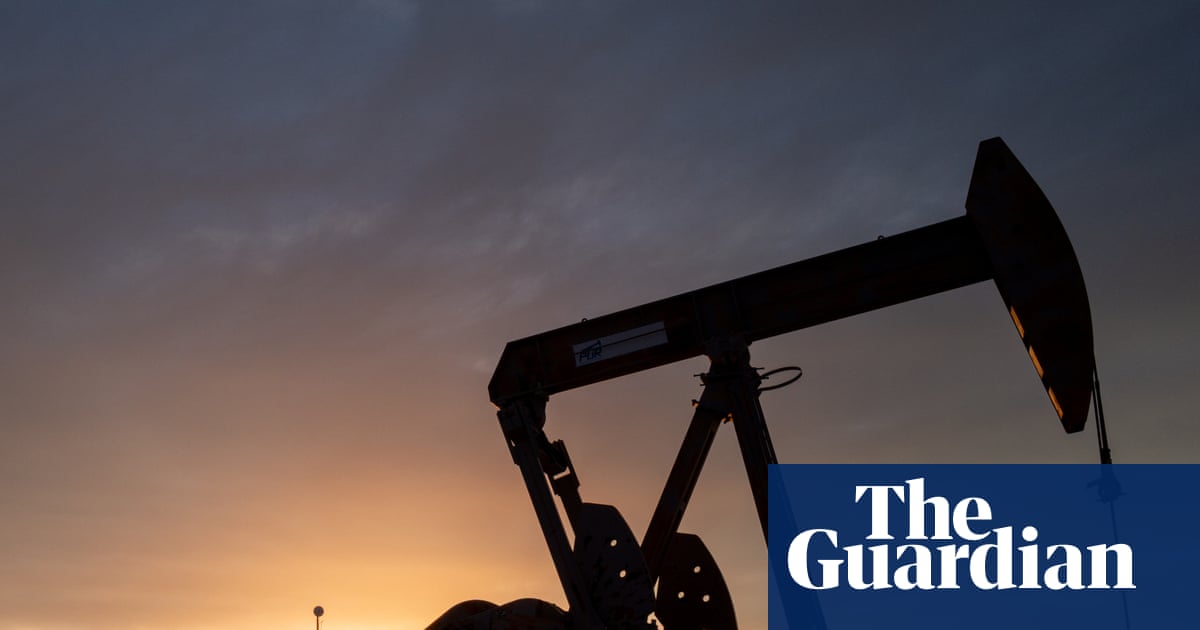
A pump jack at sunset in Midland, Texas. Photograph: Brandon Bell/Getty ImagesView image in fullscreenA pump jack at sunset in Midland, Texas. Photograph: Brandon Bell/Getty ImagesAnalysisHow sheltered really is the US from the Gulf oil supply crisis?Callum Jones in New YorkAs Trump suggests Middle East oil disruption is not his problem, experts say talk of US ‘energy independence’ is a smokescreen – with consumers paying the price
A month has passed since the US and Israel’s war on Iran all but closed the strait of Hormuz, through which about a fifth of the world’s oil supplies typically flow. Prices have surged, amid fears of sustained disruption to global supplies.
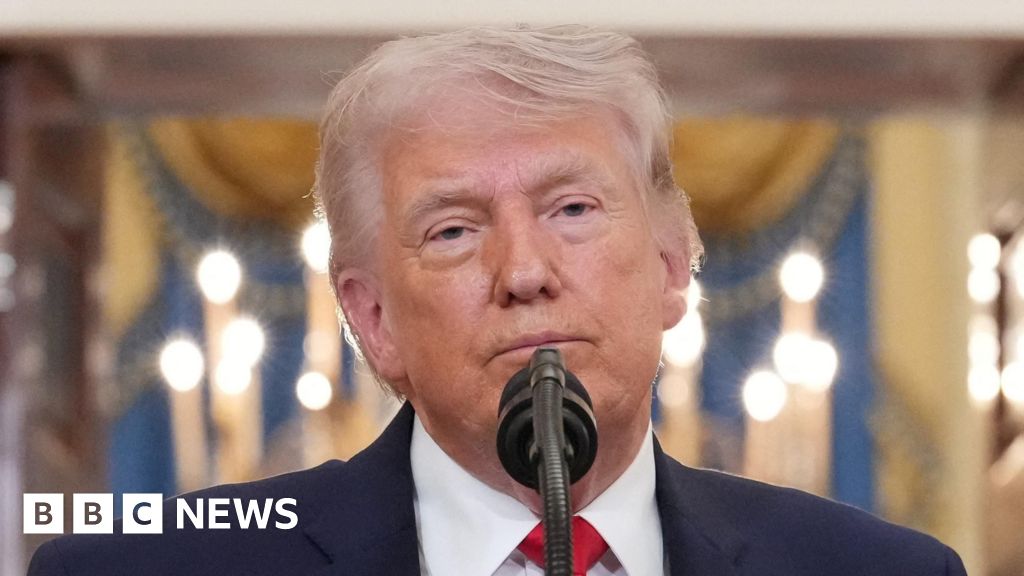
Donald Trump argues this is not his country’s problem. “Go get your own oil!” the president urged countries, including the UK, earlier this week. The US has “plenty”, he added. The US is “totally independent” of the Middle East, the president claimed in a prime-time address on Wednesday. “We don’t need their oil.”
Read more“Under my leadership, we are [the] No 1 producer of oil and gas on the planet, without even discussing the millions of barrels that we’re getting from Venezuela,” he said.
Trump and his allies hail the US as an energy “superpower” after a historic surge in domestic oil production sparked by the fracking boom. For years now, it has produced more oil than the entire country consumes.
But the oil market is fundamentally international.
Unlike natural gas – another crucial energy source – for which prices can vary drastically in different parts of the world, the oil market is far more interconnected.
The US benchmark price for gas, known as the Henry hub, is currently less than $3 per million British thermal units (MMBtu) while the European Dutch title transfer facility (TTF) price trades above $16. A price surge in Europe doesn’t necessarily cross the Atlantic.
“Gas, unlike oil, is hard to move around,” Clark Williams-Derry, an analyst at the Institute for Energy Economics and Financial Analysis. “You can’t just pour gas into a drum, and then move that drum somewhere else.”
Significant oil price movements are rarely confined to a specific region. Brent crude, the international benchmark, has by risen by nearly half since the start of the war, to north of $100 per barrel – and climbed sharply after Trump’s latest address.
“Think of it like a giant swimming pool,” said Williams-Derry. “There are waves or ripples, but the whole swimming pool rises or falls. The fundamental level is set by the global market.”
“Under current policy, being a net exporter doesn’t do anything to cushion the US from global price trends,” he added.
The US does export more oil than it imports. But it still imports millions of barrels per day, and relied on Gulf nations for almost a tenth of those imports last year. Many US refineries are geared up to process heavier crude than the lighter, sweeter stuff primarily produced domestically in the US.
The energy supply disruption sparked by the war on Iran goes far beyond oil. Global fertilizer costs have risen sharply, prompting US farmers to reconsider their planned crops, as the strait of Hormuz remains paralyzed. A small but significant share of US fertilizer imports come from the Middle East.
Qatar typically supplies about a third of the world’s helium, which plays a key role in the manufacturing of semiconductors. But the country halted output last month – a potentially worrying move for chipmakers and the many industries that rely on them.
But for now, oil remains the most visible indicator of the turmoil. Simply being a net exporter “doesn’t differentially protect American households” from higher prices, said Neale Mahoney, Trione director of the Stanford Institute for Economic Policy Research.
“Because of the oil [price] increasing, it is going to be beneficial to certain sectors of the US economy – the energy production sectors – and certain states within the US: Texas, New Mexico, North Dakota, big energy-producing states,” he added. “While it doesn’t protect the US consumer, and US consumers will be feeling the squeeze, there are winners as well as losers in the US.”
But the rally of big oil stocks this year will do little to cheer most drivers filling up at gas stations across the US. Average nationwide fuel prices breached $4 per gallon for the first time since 2022 earlier this week, amid widespread frustration over the increase in costs.
Read more“In the US, because we produce oil and gas, when there’s a price spike, consumers are paying more, and producers are making more,” said Williams-Derry. “The talk of ‘energy independence’ has to be seen as a smokescreen,” he added. “For a low-income person, with a livelihood balanced on a knife-edge, they literally cannot afford higher prices at the pump.”
High fuel prices, many incumbent presidents and congressional candidates have learned, can scupper political campaigns. With seven months until November’s midterm elections, and Republican control of Congress in the balance, voters nationwide are paying more and more to fill up their cars.
Trump’s professed confidence that they won’t feel pain for long is perhaps best distilled into an old adage: what goes up must come down. “When this conflict is over, the strait will open up naturally,” he claimed on Wednesday, predicting that fuel prices “will rapidly come back down”.
Mahoney, a member of the White House national economic council during Joe Biden’s administration, isn’t so certain of a swift reversal. “There is the famous rockets-and-feathers phenomenon with retail gas and petrol prices, where they shoot up fast and float down like a feather,” he said. “Even if crude prices were to drop pretty quickly, we are likely to see elevated pump prices over the spring, and through the middle of the summer.”