Ships attempting to pass through the Strait of Hormuz will need secret codes and to pay up to $2 million in Chinese yuan or cryptocurrencies to avoid being attacked by Iran, according to a new report.
After Iran’s lawmakers approved a bill to impose fees on the safe passage through the Strait of Hormuz this week, new guidelines have been set for tankers and cargo ships to buy their way through with a company linked to the Islamic Revolutionary Guard Corps, sources familiar with the deal told Bloomberg.
Once the IRGC has the ship’s files on hand, the vessel would need to fly the flag of a non-enemy nation and transmit a secret, high frequency code to alert the Iranian navy so that it may guide the ship through the strait.
The rules effectively gives Tehran full control over the Strait of Hormuz, a key trade route that oversees the transport of 20% of the world’s oil supply.
Before ships can make the journey through the critical trade route, they must provide full information of their vessel’s ownership, flag, cargo, destination, crew and data from its Automated Identification System — which records a ship’s transit history.
The information is passed on to the IRGC’s navy for background checks to ensure the ships have no links to the US or Israel, according to Bloomberg.
If the background check is passed, the parties then negotiate the price of passage, with oil tankers seeing the starting price at around $1 per barrel of crude, which must be paid in yuan or stable cryptocurrencies.
For a very large crude carrier (VLCC), which carries up to 2 million barrels, that price could equate to $2 million for passage.
Tehran has defended the creation of “the Iranian tollbooth” to the International Maritime Organization, which serves as the world’s shipping watchdog.
“As the coastal state bordering the Strait, the Islamic Republic of Iran, in full conformity with established principles and rules of international law, has restricted the passage of vessels belonging to or associated with the aggressors,” Tehran said in a letter to the IMO.
Iran closed the strait in March to anyone it deemed an enemy after the US and Israel waged war on the Islamic Republic.
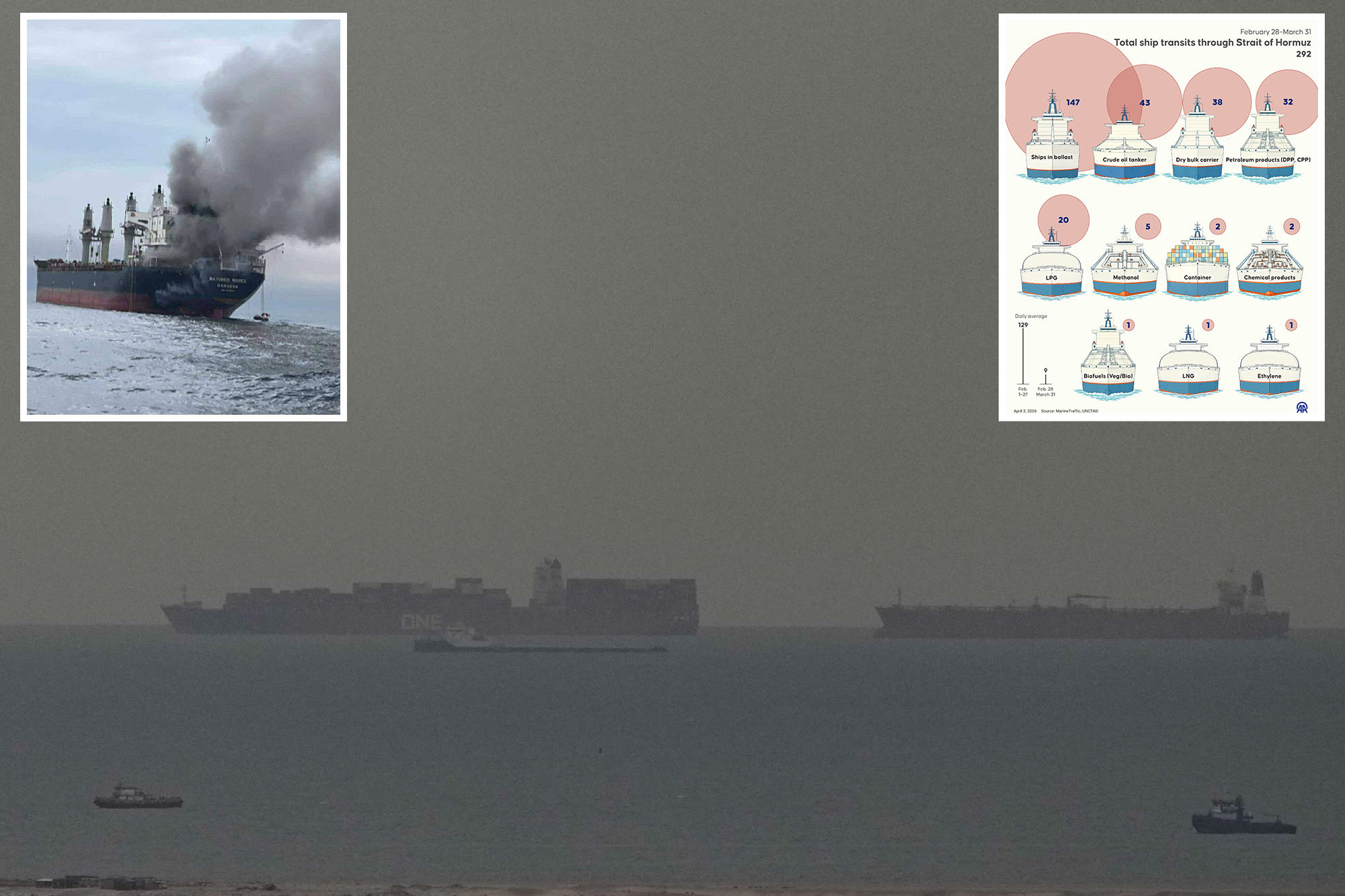
Around 300 ships have been able to get through the Strait of Hormuz since the war began after negotiating with Iran, including ships linked to India, China, and Pakistan.
Prior to the war, some 130 ships traveled through the Strait of Hormuz everyday, according to maritime trackers.
Some 2,000 ships remain trapped in the area, with the IMO calling on nations to urgently find ways to evacuate the trapped ships, which are carrying about 20,000 seafarers on board.