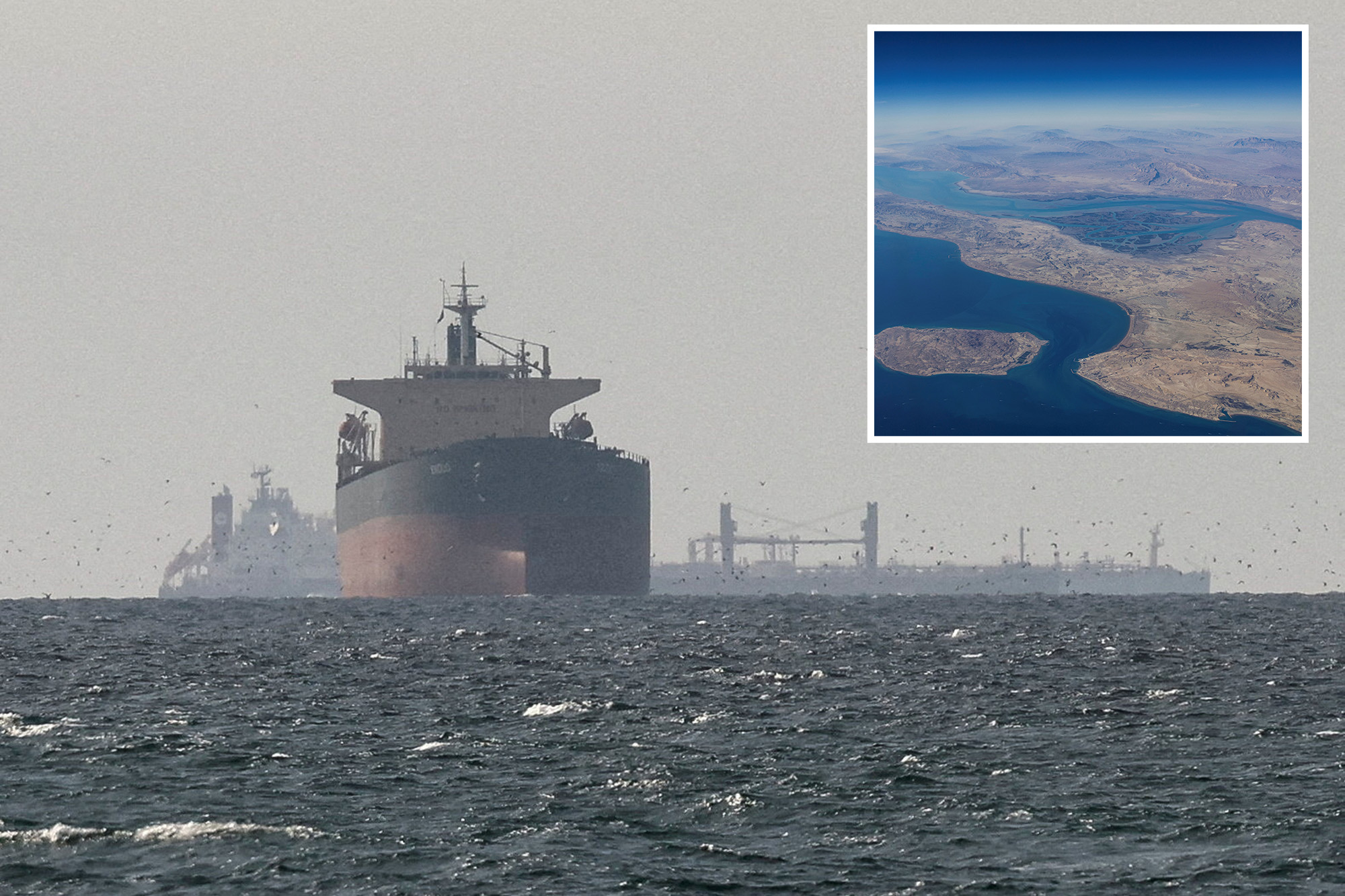
Passage through the Strait of Hormuz has plummeted to an average of seven ships a day — just 5% of its regular traffic prior to the Iran war — as Tehran exerts full control over the critical waterway.
Following US-Israeli joint strikes in Iran on Feb. 28, the Islamic Republic shut down the Strait of Hormuz, leaving more than 2,000 ships stranded in the waters that once saw some 130 vessels a day.
Since then, only a handful of ships have been given permission to cross the strait every day, with traffic peaking to between five to seven ships a day last week, Bloomberg reported.
The traffic appeared to be on par this week, with at least six ships crossing on Monday and Tuesday, according to maritime trackers. Most of the vessels that have passed are fuel tankers and bulk carriers linked to Iran and China.
Only 292 ships have crossed the Strait of Hormuz between Feb. 28 and March 31 — 71% of which ships are owned by Iran or a member of its shadow fleet, according to the Lloyd’s List Intelligence maritime tracker.
The shadow fleet vessels have notably accounted for 88% of all transits over the last week, an uptick from the previous week, Lloyd’s data shows.
Chinese ships have accounted for about 10% of the traffic, underscoring the financial ties between Tehran and Beijing.
Iran has gone as far as demanding that payments for passage through the Strait of Hormuz be paid in China’s yuan currency, or through stable cryptocurrencies.
Iran has also allowed dozens of ships linked to India and Pakistan to pass through following negotiations with the countries, with New Delhi heavily relying on gas exports that go through the Strait of Hormuz.
For its part, Pakistan said it had reached a deal for two of its ships to pass through the strait every day for 10 days.
Lloyd’s analysts have warned that Iran has effectively created a “toll booth” system where Tehran collects fees from other ships trying to get through despite repeated threats from President Trump.
After Iran’s lawmakers approved a bill to impose fees on the safe passage through the strait this week, new guidelines have been set for ships to buy their way through, sources familiar with the deal told Bloomberg.
The new rules would force ships to go through a detailed background check to ensure they have no links to the US or Israel, according to the outlet.
If the background check is passed, the parties then negotiate the price of passage, with oil tankers seeing the starting price at around $1 per barrel of crude, which must be paid in yuan or stable cryptocurrencies.
For a very large crude carrier (VLCC), which carries up to 2 million barrels, that price could equate to $2 million for passage.