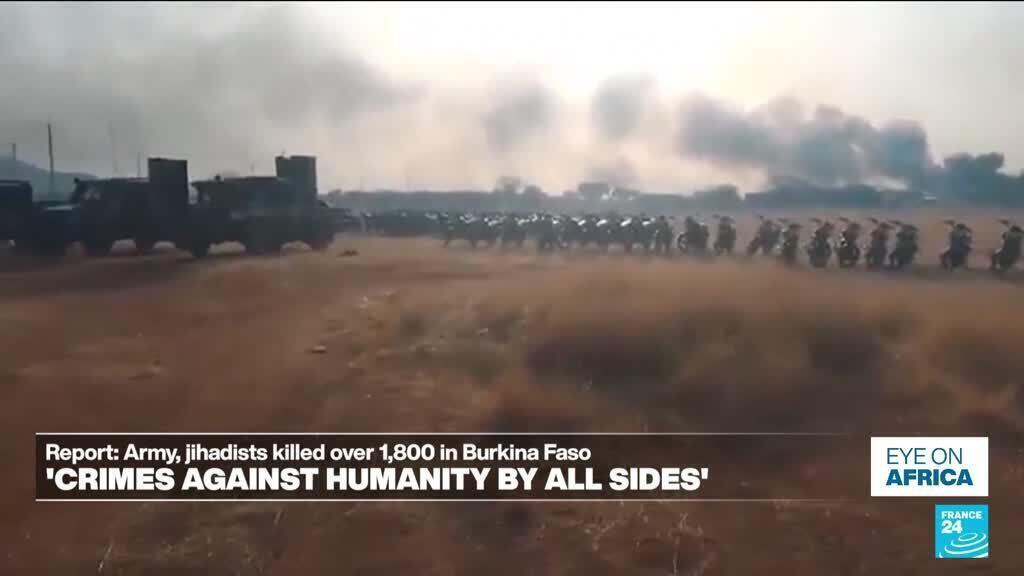
Human Rights Watch says Burkina Faso's security forces and allied militias "appear to be more brutal and violent" than militant groups. The Fulani ethnic group has reportedly been one of the targets.
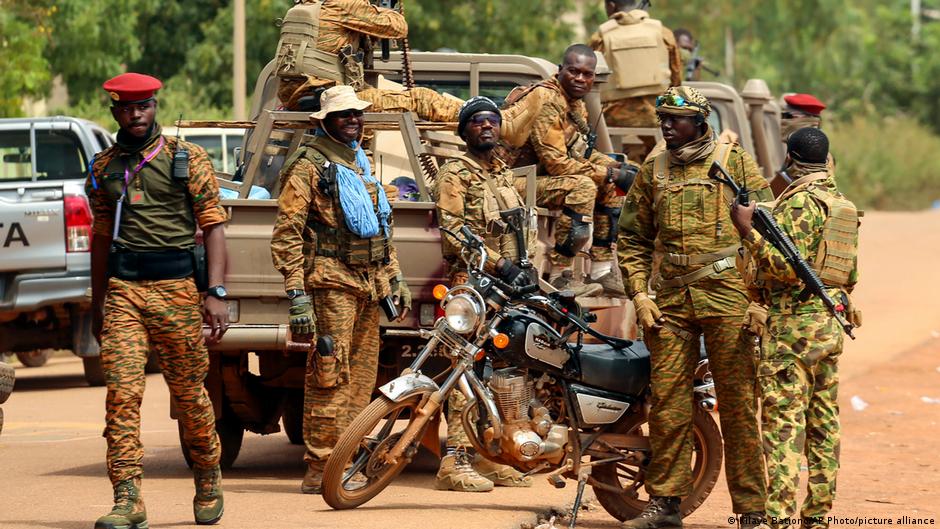
https://p.dw.com/p/5Bbj9A military junta took power in Burkina Faso in 2022, but it has since failed to stabilize the country.Image: Kilaye Bationo/AP Photo/picture allianceAdvertisementA study by NGO Human Rights Watch (HRW) has found that government forces in Burkina Faso are responsible for over twice as many civilian deaths as that of militant jihadist groups over a two-year period.
"These atrocities, including the government's ethnic cleansing of Fulani civilians, amount to war crimes and crimes against humanity for which senior leaders on all sides may be liable," the HRW's 316-page report said.
Jihadist violence has gripped the Sahel region since 2021, turning Burkina Faso, Mali and Niger into insurgency hotspots. HRW reported that in Mali the same pattern had been observed, with government forces also killing more civilians there.
A military junta took power in 2022, but it has since failed to stabilize the country, with more than 60% of the country currently outside of government control.
Over 2.1 million people have lost their homes and almost 6.5 million need humanitarian aid to survive.
Ilaria Allegrozzi, senior Sahel researcher at Human Rights Watch said Burkina Faso's security forces and allied militias "appear to be-more brutal and violent" than militant groups like the local al-Qaeda affiliate, Jama'at Nusrat al-Islam wal-Muslimin (JNIM).
The government of Burkina Faso has previously denied allegations of extrajudicial killings, saying instead that their forces had only killed "terrorists."
HRW warns that violence at the hands of the government could bolster militant groups and complicate relations between western governments with Burkina Faso, which had already expelled French troops from its territory and welcomed closer ties with Russia after the coup.
The HRW report details widespread abuses by all parties to the conflict. HRW said it based its report on 450 interviews and verified social media and satellite imagery.
But it also found that between January 2023 and August 2025 at least 1,837 civilians were killed in some 57 incidents of violence and that of those, 33 were committed by government forces and their allies.
In sum, around 1,255 civilian deaths were attributed to official forces.
Allegrozzi said since JNIM controls large swathes of territory, security forces are sometimes called on to escort humanitarian or supply convoys in rural areas and in many cases, these forces kill civilians they encounter along the way.
In particular, the Fulani community — a traditionally semi-nomadic pastoralist ethnic group that lives scattered throughout multiple Sahel states — has reportedly been targeted. Conflicts between farmers and herders have periodically erupted across the region for years.
Fulani people in Burkina Faso number some 1.8 million, amounting to around 8.5% of the total population.
HRW says that it appears to be the de facto policy of the Burkina Faso government to target the group, with a common practice of reprisal attacks against villages accused of collaborating with JNIM militants.
"The highest levels of government appear supportive of military action against Fulani people based on these attitudes," the report read.
HRW added that officials have installed a system of censorship, making it difficult to get an accurate picture of the situation in the country.
Speaking out against government forces could lead to being abducted, imprisoned or drafted into the army.