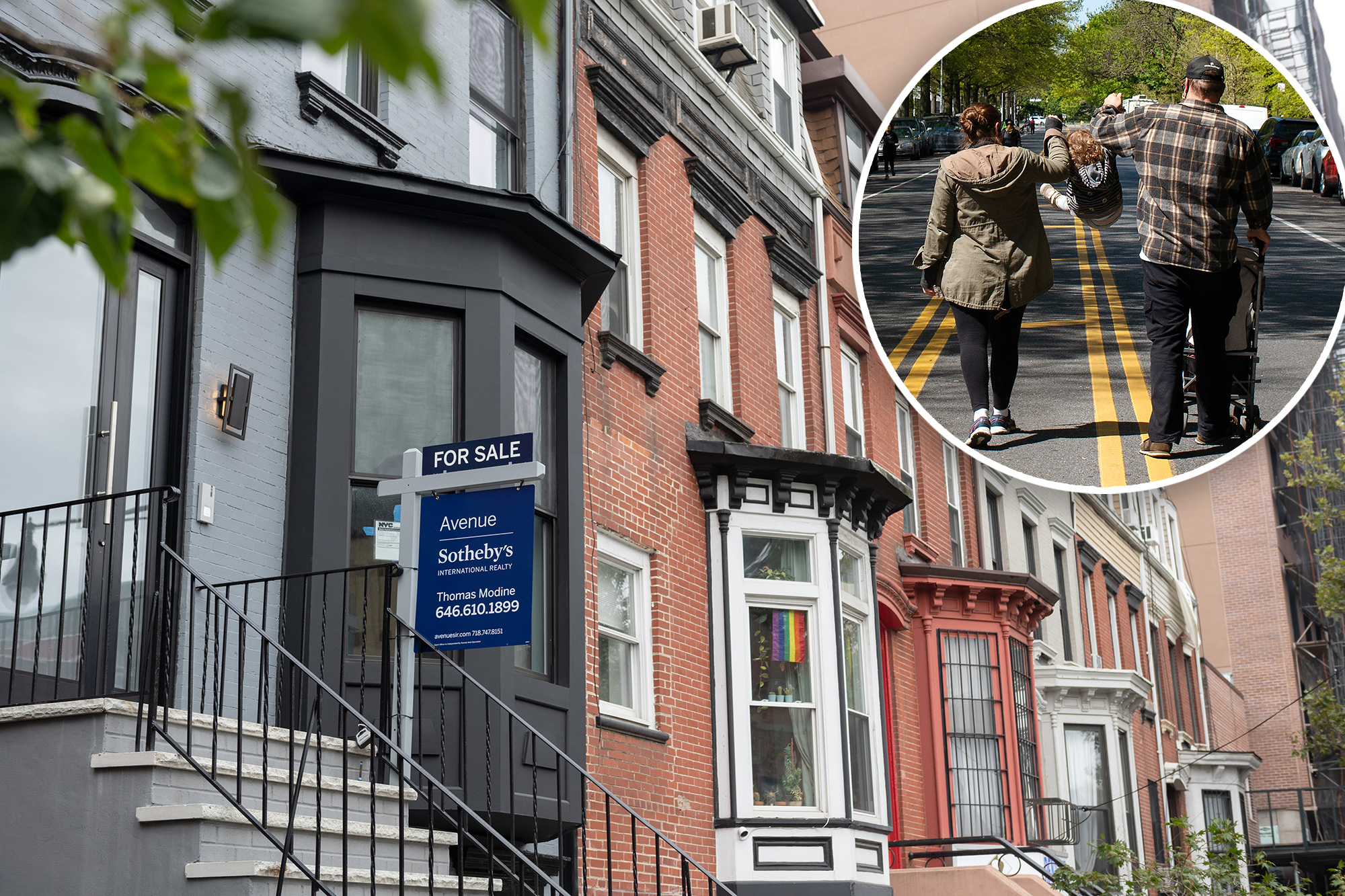
Homeowners living in some of America’s oldest homes are facing a double burden as the housing stock continues to age.
From 2000 to 2024, the median age of U.S. homes has risen steadily, climbing from 30 years at the start of the century to 43 years.
Buffalo, NY, Pittsburgh, and New York City are the U.S. cities that have the oldest homes, with median home ages of 66, 64, and 63 years, respectively, according to Construction Coverage’s American Cities With the Oldest Homes study.
“Older townhomes and co-ops often come with charm, character, and prestige, but they also come with very specific, and sometimes major, issues buyers need to understand upfront,” Michael Reisor, founder of Reisor.Team at Compass in New York City, tells Realtor.com.
Reiser says many buyers go in thinking their budget will be spent on improvements with an immediate and visible payoff, like refinished floors, new fixtures and finishes, or updated windows.
“But in many cases, the biggest expenses are tied to the unseen and sometimes unforeseen: electrical, plumbing, structural work, and other core systems,” he says. “Spending $200,000 or more on those items while having the home look largely the same afterward is not exactly an exciting experience.”
Construction Coverage senior researcher Jonathan Jones tells Realtor.com that “while older homes often offer unique character and a more accessible purchase price, buyers need to go in with their eyes open regarding long-term costs.
Our research shows a stark contrast: Homes built before 1940 cost nearly 10 times more in routine annual maintenance compared to new builds, and they are nearly 30 times more likely to be in inadequate condition.”
Jones says the upfront savings can quickly be offset by ongoing upkeep and the need for major upgrades.
He also notes that older properties typically face higher energy bills due to lower efficiency.
“There’s a common belief that construction standards were higher in the past, and it’s really a mixed bag,” says Jones. “While it’s true that ‘they don’t build them like they used to’ when it comes to certain materials and historic character, modern homes are built to much stricter engineering, safety, and efficiency codes.”
One reason the national housing stock is aging is because the United States has been slow to expand its housing supply.
In 2025, new-home construction fell short of household formations, widening the U.S. housing supply gap to an estimated 4.03 million homes, according to Realtor.com economists.
“In today’s challenging housing market, many buyers are turning to older homes due to the ongoing shortage of new construction,” Jones says.
According to Jones’ research, a major factor behind this gap is the impact of the Great Recession, when many construction companies downsized or shut down entirely, resulting in years of insufficient building.
This sustained lack of investment has left much of the nation’s housing stock older and more worn.
As a result, homebuyers are often faced with properties that require significant repairs, expensive upgrades, and higher energy costs.