Pakistan's decision to suspend Khyber Pakhtunkhwa's provincial government could further strain already tense relations between Islamabad and Kabul.
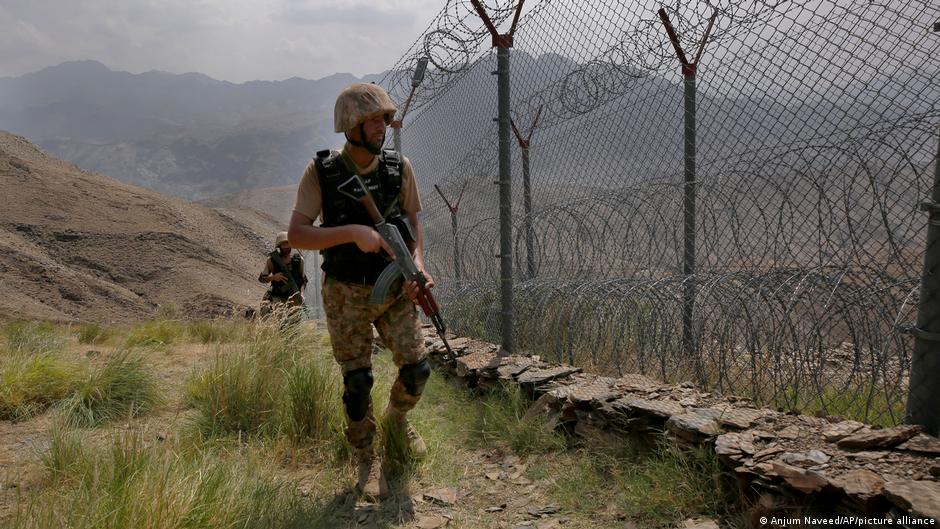
https://p.dw.com/p/5ODiAIslamabad blames Afghan-based elements for launching militant attacks on PakistanImage: Anjum Naveed/AP/picture allianceAdvertisementPakistan on Sunday announced that the northwestern province of Khyber Pakhtunkhwa had been put under emergency rule.
Prime Minister Shehbaz Sharif's federal government defended the move, saying the provincial administration — led by imprisoned former Prime Minister Imran Khan's Tehreek-e-Insaf (PTI) party — was working "hand in glove" with the Pakistani Taliban, known as Tehrik-e-Taliban Pakistan (TTP).
"The PTI government in the province has not equipped the police and security forces to counter militancy. Instead, they have links with TTP and did not cooperate with the federal government to fight terrorism," Talal Chaudhry, minister of state for interior affairs, told DW.
Information Minister Attaullah Tarar said the government had "solid evidence" to support its allegations, the Associated Press news agency reported.
He said the suspension and imposition of a state of emergency in Khyber Pakhtunkhwa would allow security forces and the new administration to better coordinate efforts to combat terrorism.
The move comes as thousands of Khan supporters continue to stage anti-government protests and demand the former leader be released from jail.
But the federal government has denied that its action was driven by domestic politics.
Are Pakistan and Afghanistan heading for war?To view this video please enable JavaScript, and consider upgrading to a web browser that supports HTML5 video
Khyber Pakhtunkhwa, which has suffered an increasing number of militant attacks in recent months, is a political stronghold of former PM Khan.
The cricketer-turned-politician has been in jail since 2023 on corruption and other charges that he and his supporters say are politically motivated.
His PTI party had long governed the volatile province, but Islamabad's decision to impose emergency rule has now effectively removed it from power.
Pakistan's constitution allows the federal government to take over from provincial authorities during an emergency.
Islamabad said Khyber Pakhtunkhwa would now be administered directly by a new governor, assisted by an advisory council. This arrangement will initially be in place for six months, but could be extended for as long as necessary, authorities said.
Khan's party has lambasted the suspension of the provincial government.
"This is more a coup disguised as emergency and governor rule," said PTI spokesperson Sayed Zulfikar Bukhari.
It has also sparked questions about provincial autonomy and the future of civilian rule, with critics warning that the abrupt removal of an elected administration risks weakening accountability and deepening political divisions.
"Governor's rule should only be imposed in extreme constitutional crises, not political disputes, and its legality should be reviewed by the Constitutional Court," Osama Malik, a senior constitutional expert, told DW.
"While it may temporarily reduce militant attacks, lasting security requires political engagement and stronger civilian law enforcement."
Why Pakistan is fighting the Taliban it once backedTo view this video please enable JavaScript, and consider upgrading to a web browser that supports HTML5 video
Raja Qaiser Ahmed, assistant professor of regional security and foreign affairs at Quaid-i-Azam University in Islamabad, echoed this view.
"Federal rule can never be a substitute for an elected political authority. The argument of provincial autonomy would also definitely surface amidst this uncharacteristic measure taken," he told DW.
"It may, though, streamline coordination between the federal government and the province, which was a missing link for quite some time."
Pakistan has seen a surge in militant violence in recent years.
Authorities have recorded more than 2,800 militant attacks since January, which have killed or wounded about 3,000 people, according to the AP news agency.
Islamabad blames Afghan-based elements for the attacks and has accused the ruling Taliban of allowing Afghan territory to be used to harbor militants.
Pakistan wants Kabul to clamp down on the TTP, which is a separate group but closely linked to the Afghan Taliban. The TTP seeks to impose a hard-line interpretation of Islam, particularly in Khyber Pakhtunkhwa.
"We have been asking Kabul to recognize terrorists as terrorists and take action against them. They must do so because their own peace, security, and future are linked to Pakistan," asserted Chaudhry, the deputy interior minister.
The Afghan Taliban deny the allegations and say they cannot be held accountable for security incidents inside Pakistan.
How 5 years of Taliban rule have changed AfghanistanTo view this video please enable JavaScript, and consider upgrading to a web browser that supports HTML5 video
The dispute has fueled growing tensions between the neighbors, which have escalated into armed clashes in recent months, heightening fears of a wider confrontation.
Ahmed believes the suspension of Khyber Pakhtunkhwa's provincial government is likely to aggravate tensions between Pakistan and Afghanistan.
"Security measures taken in Khyber Pakhtunkhwa would further impinge on the Pakistan-Afghan relationship, which is seemingly locked in a protracted cycle of offense and escalation," said Ahmed.
After announcing emergency rule, Islamabad also authorized the deployment of additional army troops and military equipment to the region to support authorities.
Ayesha Siddiqa, an independent military and security analyst, warned that the suspension of the elected provincial government could complicate counterterrorism efforts by deepening resentment among local communities.
"After ending the political government, I don't think the security situation will improve. In fact, there will be less willingness among local communities to support counterterrorism operations," she told DW.