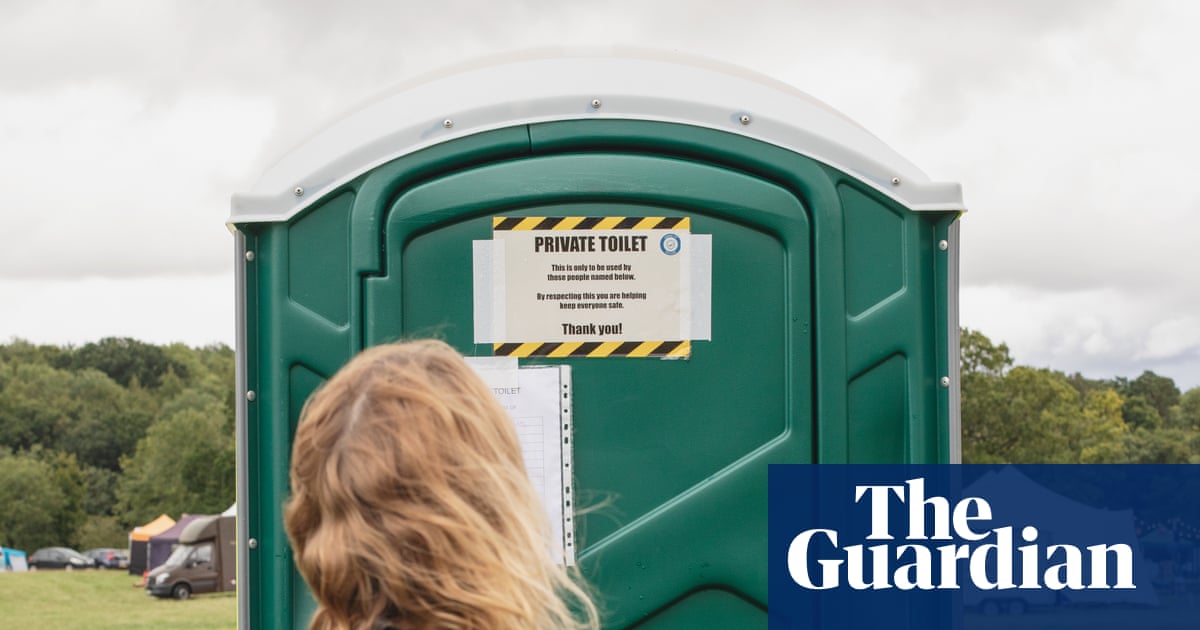
Urine from other sources will also be used during the three-year project, which has been backed by a grant from the Forestry Commission. Photograph: Christopher Bethell/The GuardianView image in fullscreenUrine from other sources will also be used during the three-year project, which has been backed by a grant from the Forestry Commission. Photograph: Christopher Bethell/The GuardianFestivalgoers’ urine to fertilise trees in Brecon Beacons restoration schemeFertiliser created from waste produced in block of toilets used by 700 revellers at Boomtown festival last year
Scientists are aiming to grow 4,500 trees at a national park with the help of fertiliser made from festivalgoers’ urine.
The fertiliser was created by Bristol-based startup NPK Recovery, which connected their unit to a block of toilets used by 700 revellers at Boomtown festival in Hampshire in July last year.
The urine was turned into 540 litres of fertiliser product during the 2025 event, and will now be used to grow native trees such as beech on the edge of Bannau Brycheiniog, also known as the Brecon Beacons, in Wales.
Urine from other sources will also be used during the three-year project, which has been backed by a grant from the Forestry Commission.
On Thursday morning, a Scots pine seed was planted at the site to mark the launch of the initiative.
Lucy Bell-Reeves, co-founder of NPK Recovery, said trials had shown their fertiliser was as effective as commonly used alternatives.
This project will be the first time it has been trialled on trees.
“Using a waste product to grow trees is a circular solution that can revitalise our struggling native species,” she said.
“We need to stop flushing crop and tree-growing nutrients down the loo and start using them to increase our fertiliser security. After all, we’re not about to run out of urine any time soon,” Bell-Reeves added.
“I love the idea that by the end of this three-year project, revellers will have created a fledgling Welsh forest, which could flourish for hundreds of years.”
In April last year, the company collected 1,000 litres of urine from women’s urinals at the London Marathon which was processed into fertiliser.
The firm uses bacteria to recover nitrogen and other naturally occurring nutrients from the urine, creating a liquid odour-free fertiliser.
NPK Recovery has a mobile laboratory that it brings to events, enabling the urine to be processed into fertiliser at source.
As part of the Welsh project, the company has partnered with charity Stump up for Trees, which was co-founded by author and cyclist Rob Penn.
Over the past five years, the charity has planted more than 500,000 trees in the area – halfway towards their target of 1m – to deliver landscape restoration.
Penn said: “We are very excited to be involved in this ground breaking project, which has implications for the future of sustainable forestry. As a small charity, collaboration is essential and we are chuffed to be working with NPK Recovery, who are bringing innovation to an area of industry that needs it.”