To play this video you need to enable JavaScript in your browser.This video can not be played
'Disabled or not, everyone deserves an opportunity,' RJ Mitte says in 2015 BBC interview
"I have cerebral palsy but I've never let it hold me back."
Those are the words of a 22-year-old Breaking Bad star RJ Mitte in an essay for Huffpost, external back in 2014.
Explaining his experiences of learning to stand up to bullies while growing up, he added: "It shouldn't define you. I just happen to have CP."
That was also true of Mitte's character Walter 'Flynn' White Jr, the son of Bryan Cranston's character in the drama, which was recently named the best TV show of the 21st Century by the New York Times.
"What I really like is that he was on TV playing a character that had cerebral palsy, but it wasn't about the fact that he had cerebral palsy," says Emma Livingstone, founder and CEO of Up - the Adult Cerebral Palsy Movement.
"When we see RJ Mitte on TV just playing a role, but who also happens to have CP, I think that's really powerful."
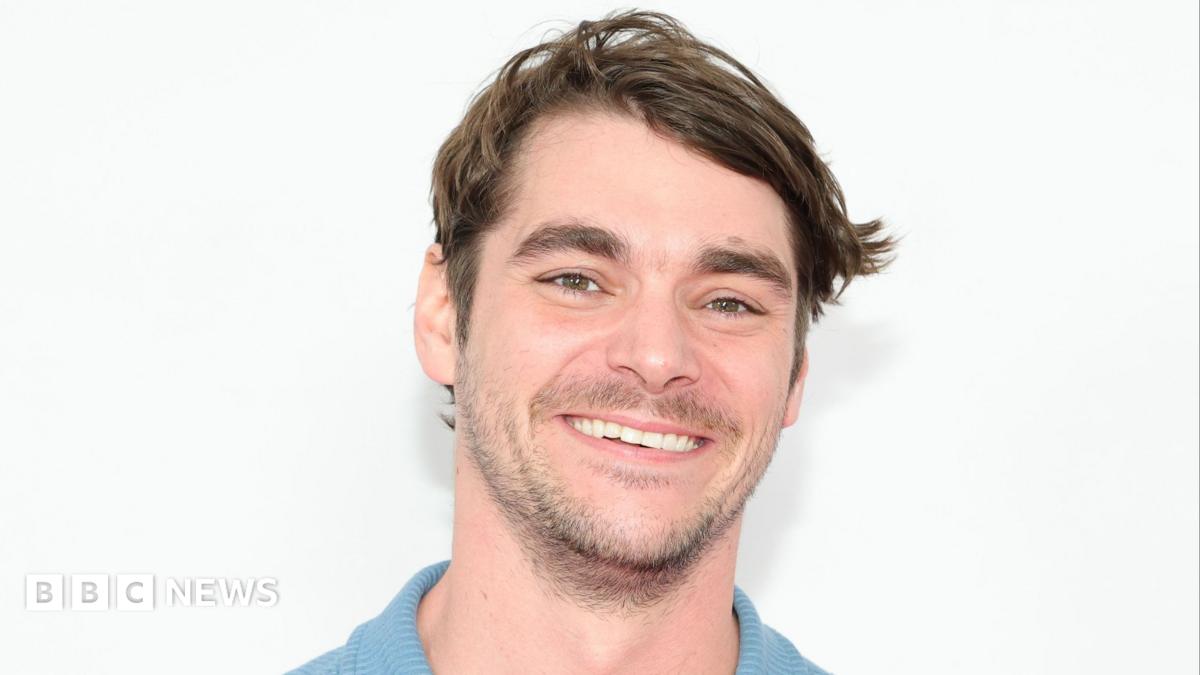
Mitte, who died by suicide on Monday at the age of 34, wasn't just an actor - he was also an advocate and supporter, working as an ambassador for charities including United Cerebral Palsy and Can Do Canines, as well as creating The Mitte Foundation, which offered community grants in his home town in Texas.
Image source, Getty ImagesSusan Sellers, president and CEO of United Cerebral Palsy, says: "His advocacy was rooted in a commitment to ensuring that people with cerebral palsy and other disabilities are seen, heard, and afforded the opportunity to reach their full potential."
Mitte's legacy, particularly for performers with disabilities, is significant.
Ruth Madeley, who stars as disability rights advocate Judy Heumann in new film Being Heumann, tells the BBC: "If you don't see it, you don't think it's possible. When I was younger, acting wasn't even on my radar. I didn't even think it was an option."
The actress, who has spina bifida, adds: "To have people like him [Mitte] on screen for so many young people looking at the arts as an industry that they want to get into... He was just a beautiful example of that.
"But he wasn't just a disabled person breaking down barriers in the industry. He was a phenomenal talent, and I think that's what's going to be missed so much."
Another actor, Keron Day, who appeared in Netflix hit Sex Education, tells the BBC: "My biggest tribute I can pay to RJ and his work is that I am emailing you today from a set of a TV show.
"That is his legacy: disabled people having careers within the creative industries. If I could have half the impact that RJ has had, I would be enormously proud. It's a sad day for both our industry and our community."
Comedian and screenwriter Laurence Clarke concurs. "The more portrayals that we see on TV, that's going to inspire more disabled people to think it's a career for them," he says.
"Things have moved on a long way since Breaking Bad came out in 2008. But there's always further to go."
Speaking of Mitte's role in Breaking Bad, Clarke tells the BBC: "What's beautiful about it is that the disability is visibly there, always."
He also notes the impact on people watching inclusive dramas and shows.
"The more you're exposed to those portrayals, as members of the public, it becomes just part of life, and how you see the world."
Mitte was aged three when he was diagnosed with cerebral palsy, which the NHS describes as the name for a group of lifelong conditions that affect movement and co-ordination caused by a problem with the brain that develops around birth.
He was cast in Breaking Bad at 14, and told Channel 4 News in 2016 that the show "pioneered a lot of TV and writers to be more brave".
But he added a note of caution, saying: "We still have a long way to go... it's still a business and we have to do that slowly."
Earlier this month, he hinted that he may be interested in continuing the Breaking Bad story, external, but said any revival would have a lot to live up to.
"I just want to top Breaking Bad, that's the hardest," he said. "I set a bar for myself as a young man that is kinda unattainable. I tell people, 'Look, it's a long way down from the top of the mountain'."
After Breaking Bad, Mitte's other on-screen credits include Hannah Montana, Switched at Birth, Westhampton and his latest project, Talking to Strangers, which came out earlier this year.
But his biggest achievement - and his greatest pride - was his philanthropic work.
"Where I felt most top of the world was being able to help others through Breaking Bad, with the work I've done with people with disabilities... trying to remind people they have a voice and [to] lend my voice.
"The greatest thing that Breaking Bad has given me is to be able to lend my voice to causes that make a meaningful impact, that change people's lives."
3 Oscar nominees challenging perceptions of disability
How Traitors winner became 'proud of disability'