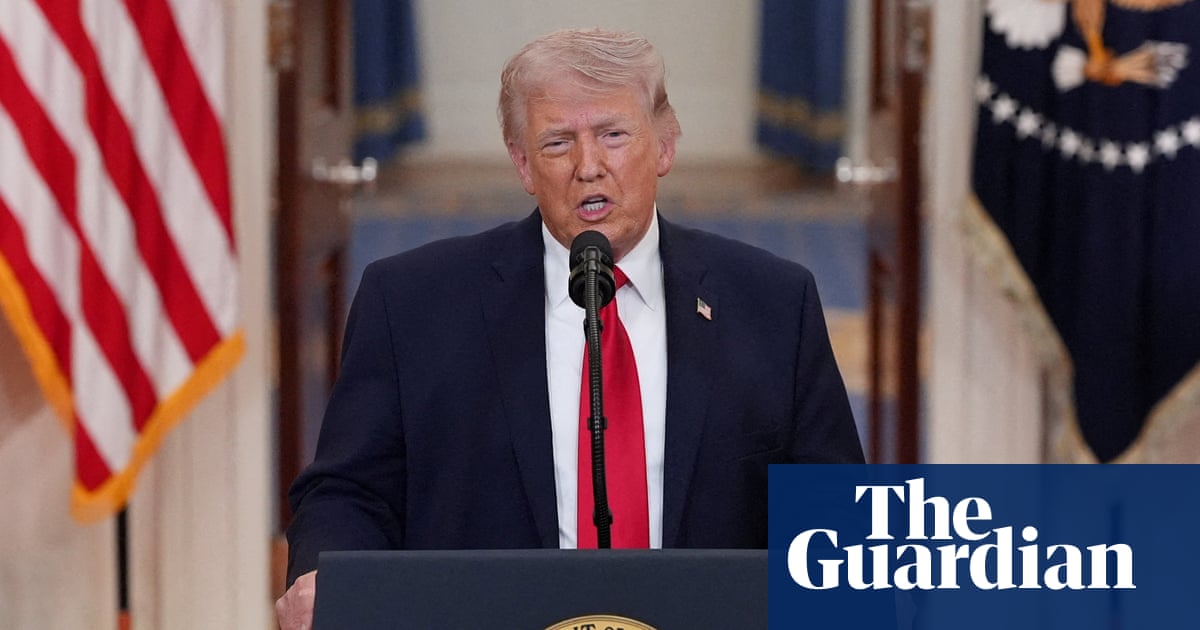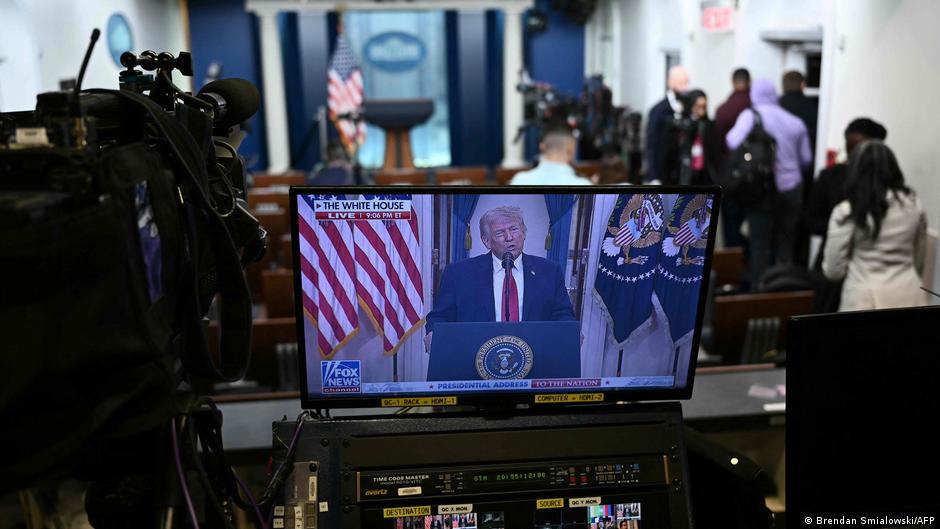
In a national address, US President Donald Trump spoke about the war in Iran and claimed that "all of their original leaders" are dead and that the US is "totally independent" of Middle Eastern oil. Is this true?
https://p.dw.com/p/5BYd3A month after the start of the war in Iran, President Donald Trump told Americans the US was ready to 'finish the job'Image: Brendan Smialowski/AFPAdvertisementA month after the start of the war in Iran, President Donald Trump addressed the nation on April 1. Speaking from the White House, he said the US would hit Iran "extremely hard over the next two to three weeks" and "bring them back to the Stone Ages, where they belong." He also said the American "core strategic objectives are nearing completion."
Trump also spoke about the impact of the war on the economy. Surprisingly, he did not mention NATO, which had been expected ahead of the address.
During the 20-minute prepared speech, Trump made some misleading or false statements on Iran's previous leadership and the US economy. DW Fact checkexamined a few claims from his speech.
Claim: "Regime change was not our goal. We never said regime change, but regime change has occurred because of all of their original leaders' death. They're all dead," Trump said during his remarks, according to a transcript.
While it is true that Trump did not state regime change as a goal at the start of the war, he did claim at later stages that it had occurred (like here, here and here). He also called on the "people of Iran" to take action. "When we are finished, take over your government. It will be yours to take. This will be probably your only chance for generations," Trump said on February 28.
During Trump's first administration, the US killed top Iranian military leader Qassem Soleimani. Since the start of the current US-Israel war with Iran, several key leaders in Iran have been killed, most notably its Supreme Leader Ayatollah Ali Khamenei.
The latter has, however, been replaced by his son, Mojtaba Khamenei, arguably signalling more of a continuation of the previous regime than a change. Important leaders in Iran's governmental structure are still in place since before the war: President Masoud Pezeshkian, Foreign Minister Abbas Araghchi and Chief Justice Gholamhossein Mohseni Ejei.
It is debatable whether the removal of some top Iranian leaders constitutes "regime change." It is clear, however, that while many of its important leaders have been killed, parts of Iran's leadership structure remain intact.
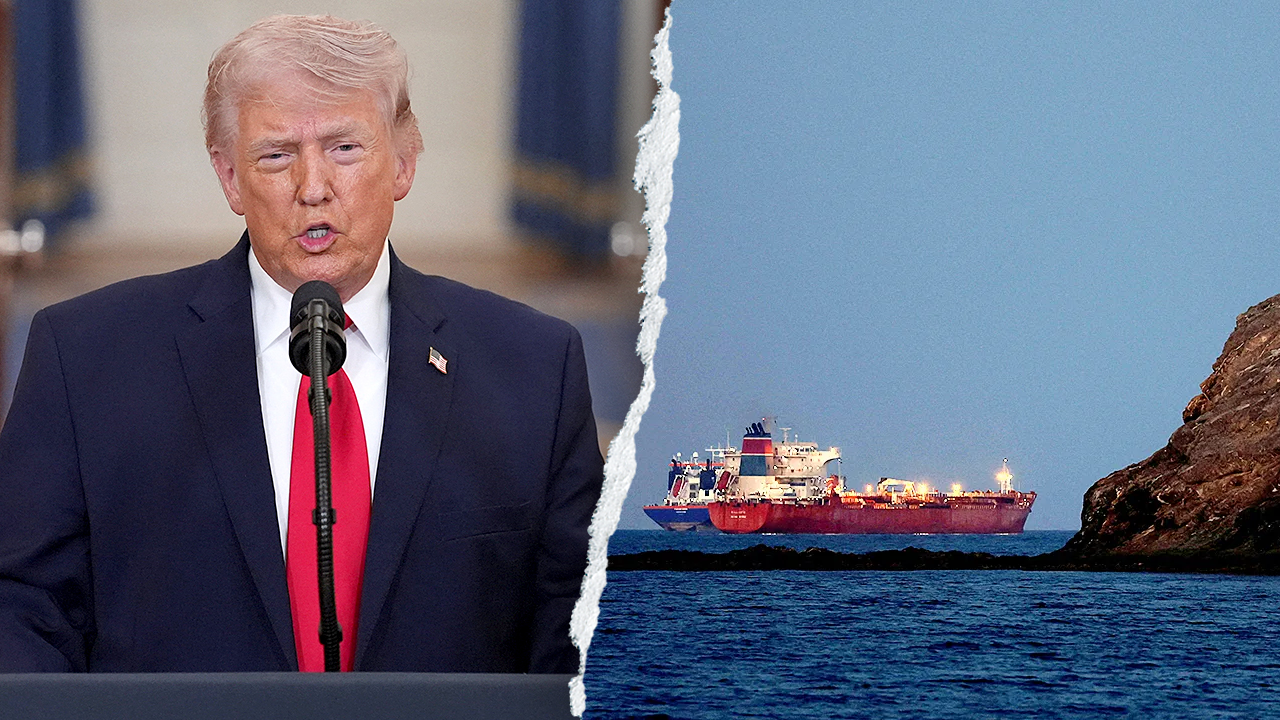
Claim: "We're now totally independent of the Middle East, and yet we are there to help. We don't have to be there. We don't need their oil," Trump claimed.
In this statement, Trump focused on crude oil. The United States is the world leader in crude oil production and, according to the US Energy Information Administration (EIA) and also the Energy Institute's Statistical Review of World Energy, clearly ahead of countries such as Russia or Saudi Arabia.
However, the US also imports oil — 40% in total, according to the American Fuel & Petrochemical Manufacturers (AFPM). In 2022, 12% of imported crude oil came from the Persian Gulf region, the EIA writes. The most recent figures come from 2025: 8.5% of crude oil imported into the US originated from the Persian Gulf, amounting to a total of just under 250 million barrels.
Trump's claim that the United States is completely independent of the Middle East is therefore false when it comes to crude oil. The US is the largest producer but still imports a significant — though recently shrinking — share of its crude oil from the region. Overall — referring to all goods — imports from the Middle East to the United States amounted to $56.9 billion in 2025, according to the Office of the United States Trade Representative.
"American consumers are, in effect, already competing with buyers elsewhere in the world for barrels of crude oil embedded in the refined petroleum products they directly consume, the embedded transport costs of all the goods they buy," Shahryar Pasandideh, a Ph.D. candidate political science at The George Washington University, told DW. "Greater — but not total — American self-sufficiency in oil and gas does not automatically mean that the United States is insulated from problems elsewhere in the world, not least the problems that it has itself brought about as a result of a war of choice against Iran."
Claim: Trump said the US has received more than $18 trillion in investments since he took office last year. "I hate to say that, but we were a dead and crippled country after the last administration [...] record setting investments coming into the United States, over $18 trillion and the highest stock market ever with 53 all-time record highs in just one year," he said.
A White House website dedicated to tracking total US and foreign investment lists a total of $10.5 trillion — far less than what Trump claimed in his address to the nation.
According to the list, the two largest contributors are the United Arab Emirates and Qatar, each pledging over a trillion dollars in investments. However, it is not clear how these countries would make such investments, because the figures far exceed the size of their economies. In 2024, the UAE's GDP was just over $550 billion, while Qatar's stood at around $220 billion, according to the World Bank.
The war on Iran has been questioned in various political and analytical contexts, including in relation to domestic politics in the United States, which is set to face midterm elections in November.
This is not the first time Trump has made false claims about investment figures. He has presented several different numbers over the past year. In May 2025, he claimed $10 trillion, significantly less than what the White House reported at that time. In December 2025, Trump said that "we've got $18 trillion coming into our country” in an interview with Politico. The figure was significantly higher than documented at that time.
Marcel Tenud contributed to this fact check