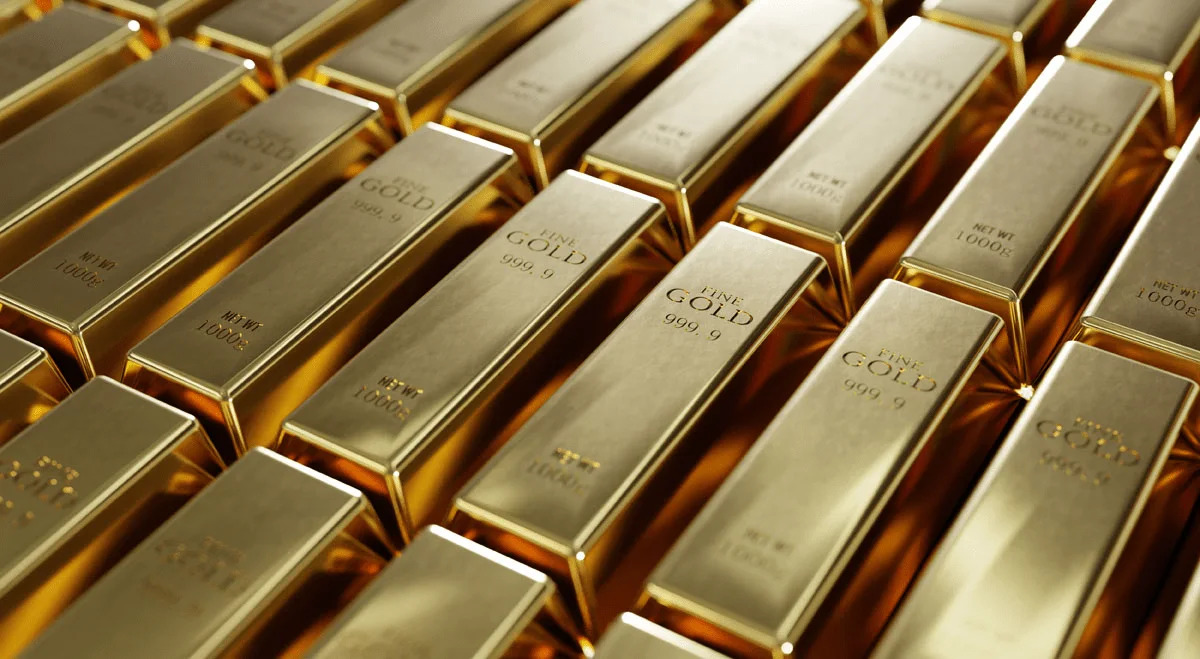
Gold Prices Rise as Oil Retreats Ahead of US Inflation Data and Federal Reserve Decision Fiona Craig Tue, October 13, 2026 at 5:36 AM EDT 5 min read GC=F +0.38% CL=F -2.03% Gold bars ©Adobe Stock Images Gold prices moved higher on Tuesday as a decline in crude oil prices provided some support for the precious metal, while investors assessed inflation risks linked to the Middle East conflict and awaited US consumer price data.
At 04:47 ET (08:47 GMT), spot gold (XAU/USD) advanced 0.4% to $4,189.12 an ounce, while gold futures gained 0.5% to $4,213.25 an ounce.
The recovery came as oil prices retreated following indications that Russia could increase diesel exports beyond previously announced volumes under a supply agreement with the United States.
However, crude prices remained elevated amid concerns about disruptions to energy shipments from the Gulf, particularly following attacks attributed to Iran-backed Houthi forces on Saudi Arabia's international airport in Riyadh.
The developments have complicated the outlook for gold, which has traditionally attracted demand during periods of geopolitical uncertainty but can also come under pressure when rising energy costs increase inflation expectations and encourage tighter monetary policy.
The continuing conflict in the Middle East has created competing influences on precious metal prices.
Geopolitical instability can support demand for gold as investors seek assets perceived as relatively defensive during periods of uncertainty.
However, higher oil prices can also contribute to persistent inflation, potentially prompting central banks to maintain elevated interest rates or introduce further increases.
Gold has declined by approximately 20% since the United States and Israel launched a joint military assault on Iran in late February, according to the reported market figures.
The decline has reflected concerns that rising energy prices could prolong inflationary pressures and lead to additional monetary tightening.
Higher interest rates generally increase the opportunity cost of holding gold because the metal does not generate interest income.
As a result, interest-bearing assets such as government bonds can become relatively more attractive when borrowing costs and yields rise.
Tuesday's decline in oil prices offered some relief from these concerns, although uncertainty surrounding Middle Eastern energy supplies continued to influence market sentiment.
The possibility of increased Russian diesel exports could help ease pressure on global fuel markets, but risks to Gulf shipping routes remain an important consideration for traders.
Despite recent price weakness, continued purchases by central banks remain an important source of underlying demand for gold.
Analysts at The Gold Bullion Company highlighted the role of official-sector buying in supporting the precious metal's longer-term outlook.
Central banks have continued adding gold to their reserves as part of efforts to diversify their holdings and reduce exposure to individual reserve assets.
According to the analysts, these purchases allow countries to "diversify their reserves and reduce dependence on any single reserve asset", including the US dollar.
Gold's role as a reserve asset remains relevant for monetary authorities seeking to manage currency exposure and maintain a diversified portfolio of international assets.
Such demand can provide longer-term support for bullion, although short-term price movements remain sensitive to interest rates, currency fluctuations and geopolitical developments.
Investors were preparing for the release of US consumer price inflation data on Wednesday, with the figures expected to provide further insight into the Federal Reserve's monetary policy outlook.
The central bank raised interest rates in September for the first time since 2023, citing the need to contain inflation.
However, expectations have shifted towards the possibility that policymakers will leave borrowing costs unchanged at their October meeting.
Interest-rate swaps indicated an approximately 20% probability of another increase in October, although financial markets continued to anticipate one additional rate rise before the end of 2026.
The forthcoming inflation report could influence those expectations, particularly if consumer prices show evidence of continued pressure from higher energy costs.
A stronger-than-expected inflation reading could reinforce expectations for restrictive monetary policy, potentially weighing on gold.
Conversely, signs of easing price pressures could reduce expectations for further tightening and improve the outlook for non-yielding assets.
Federal Reserve Bank of Cleveland President Beth Hammack said on Monday that smaller, more frequent monetary policy adjustments could help maintain stable inflation expectations.
However, she did not explicitly support an interest-rate increase at the Fed's October meeting.
Her comments highlighted the importance of incoming economic data as policymakers assess the appropriate pace of any additional adjustments.
Other precious metals also advanced during Tuesday's session.
Spot silver rose 0.3% to $60.4830 an ounce, while spot platinum increased 0.7% to $1,704.03 an ounce.
The broader gains coincided with weakness in the US dollar.
The US Dollar Index, which measures the currency against a basket of major international counterparts, declined 0.3% to 102.33.
A weaker dollar can make gold and other dollar-denominated commodities less expensive for buyers using foreign currencies, potentially supporting international demand.
Currency movements therefore provided an additional favourable influence on precious metal prices during the session.
Gold's modest recovery reflected a combination of lower oil prices, dollar weakness and continued uncertainty surrounding the global economic outlook.
However, the metal remains exposed to competing influences from geopolitical risk and expectations for US monetary policy.
Persistent energy supply disruptions could increase demand for defensive assets, but they could also sustain inflation and raise the likelihood of additional interest-rate increases.
The upcoming US consumer price report will therefore be an important indicator for investors assessing the Federal Reserve's next steps.
Beyond the immediate inflation figures, central bank purchases and reserve diversification are expected to remain important considerations for the longer-term gold market.