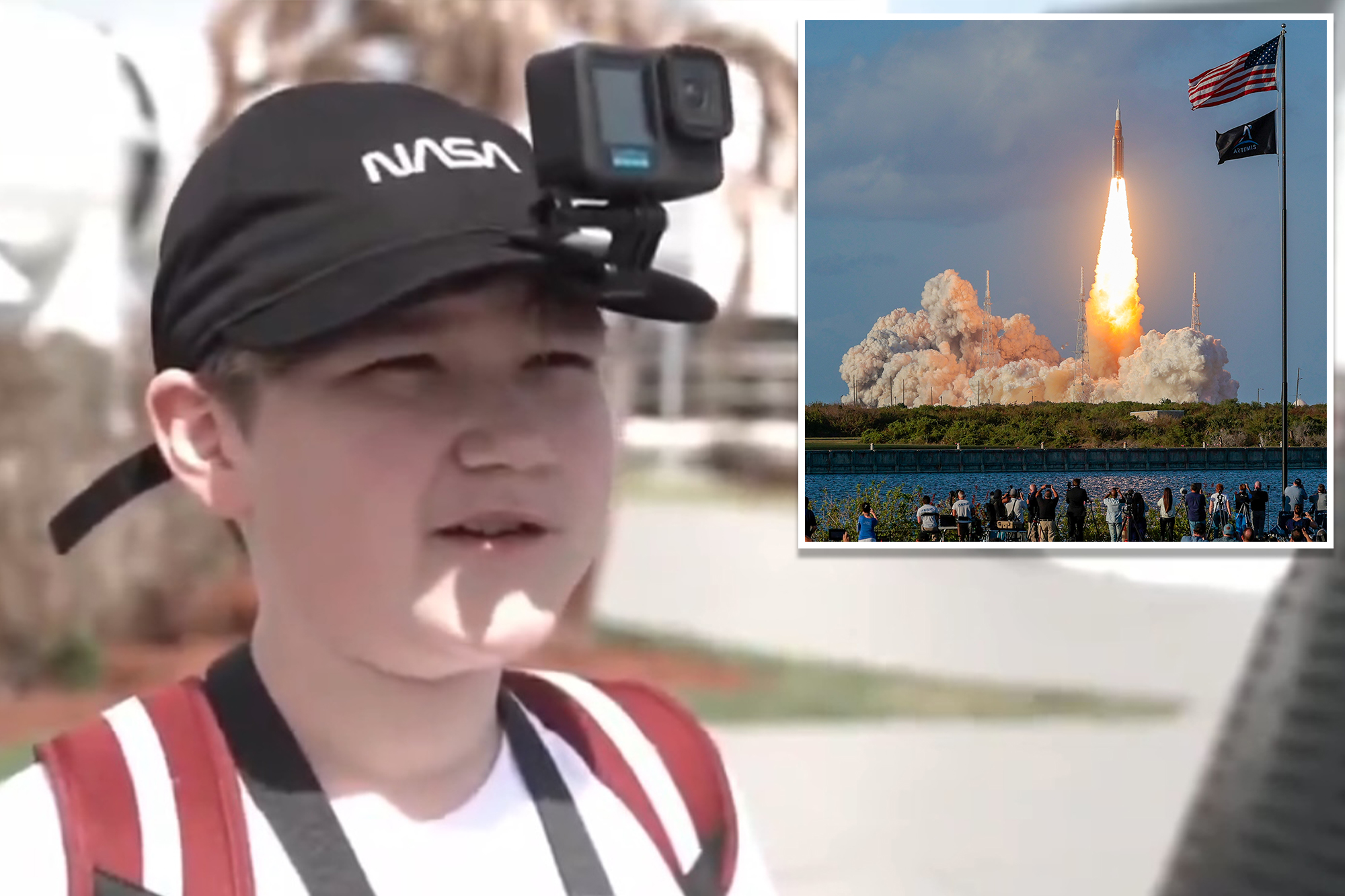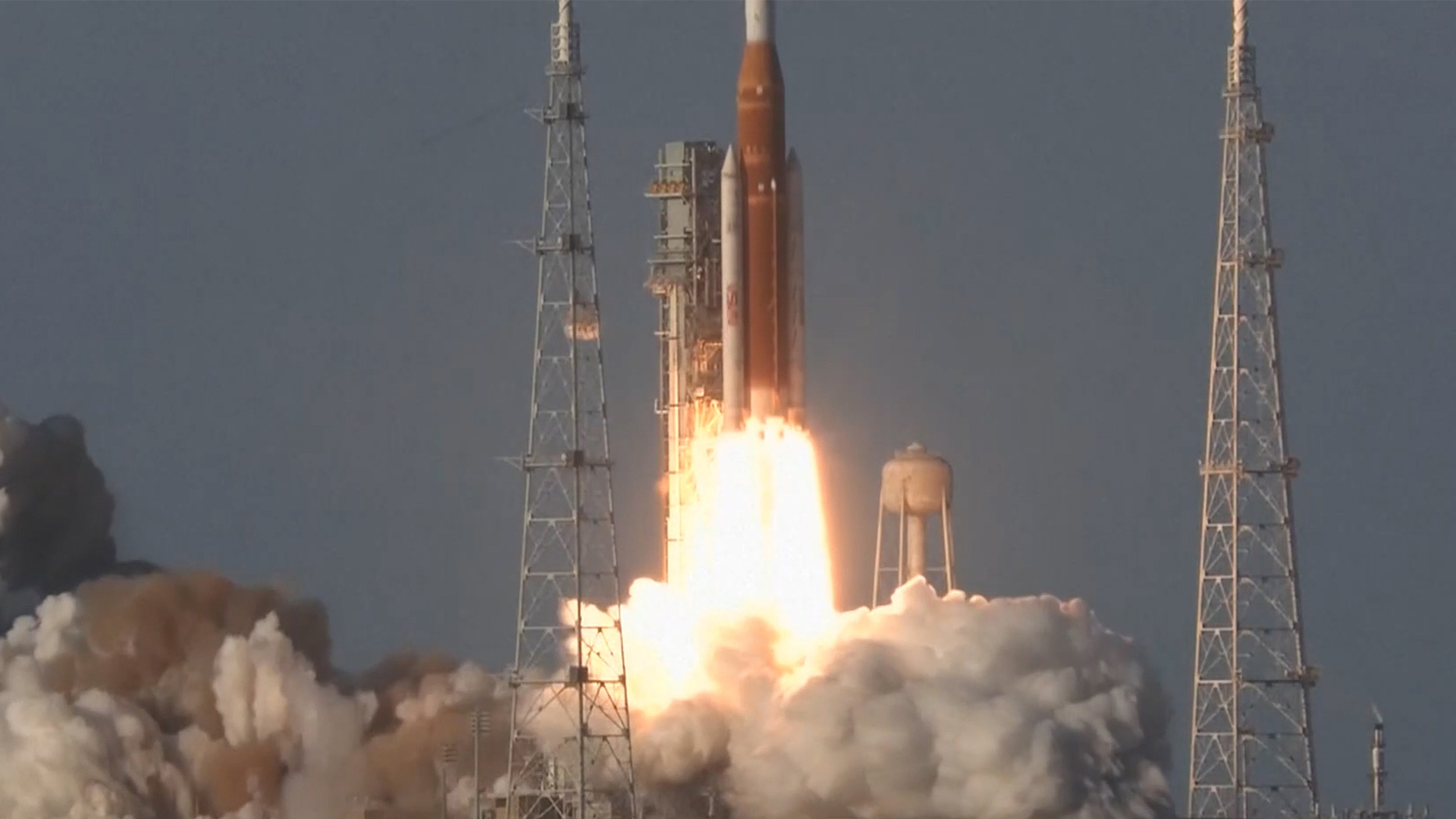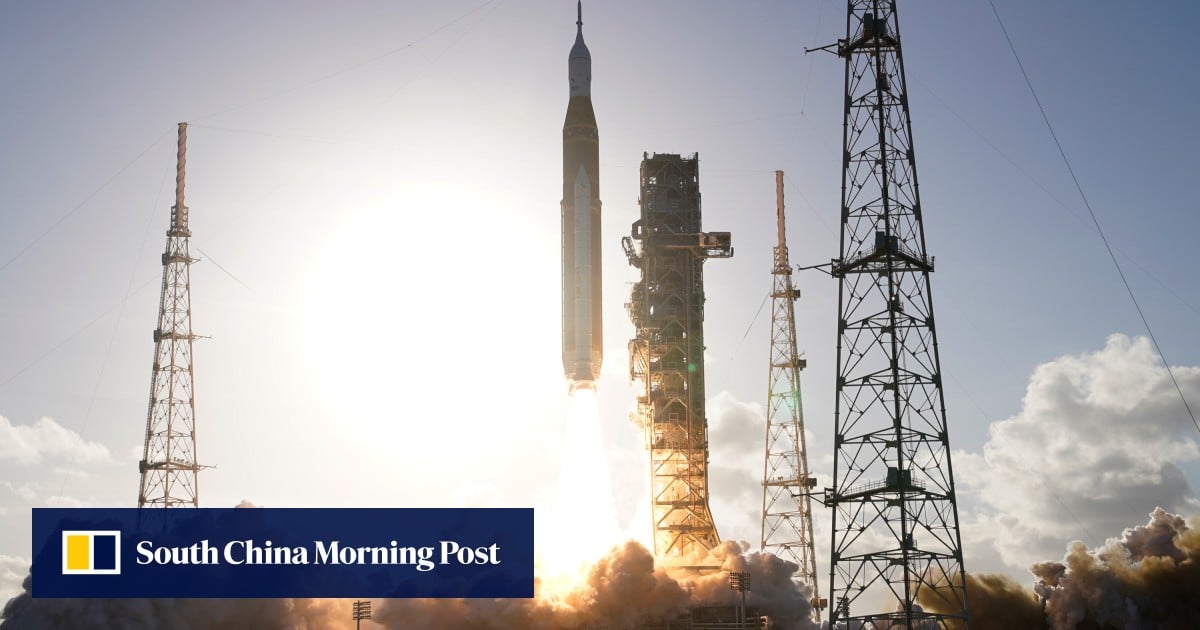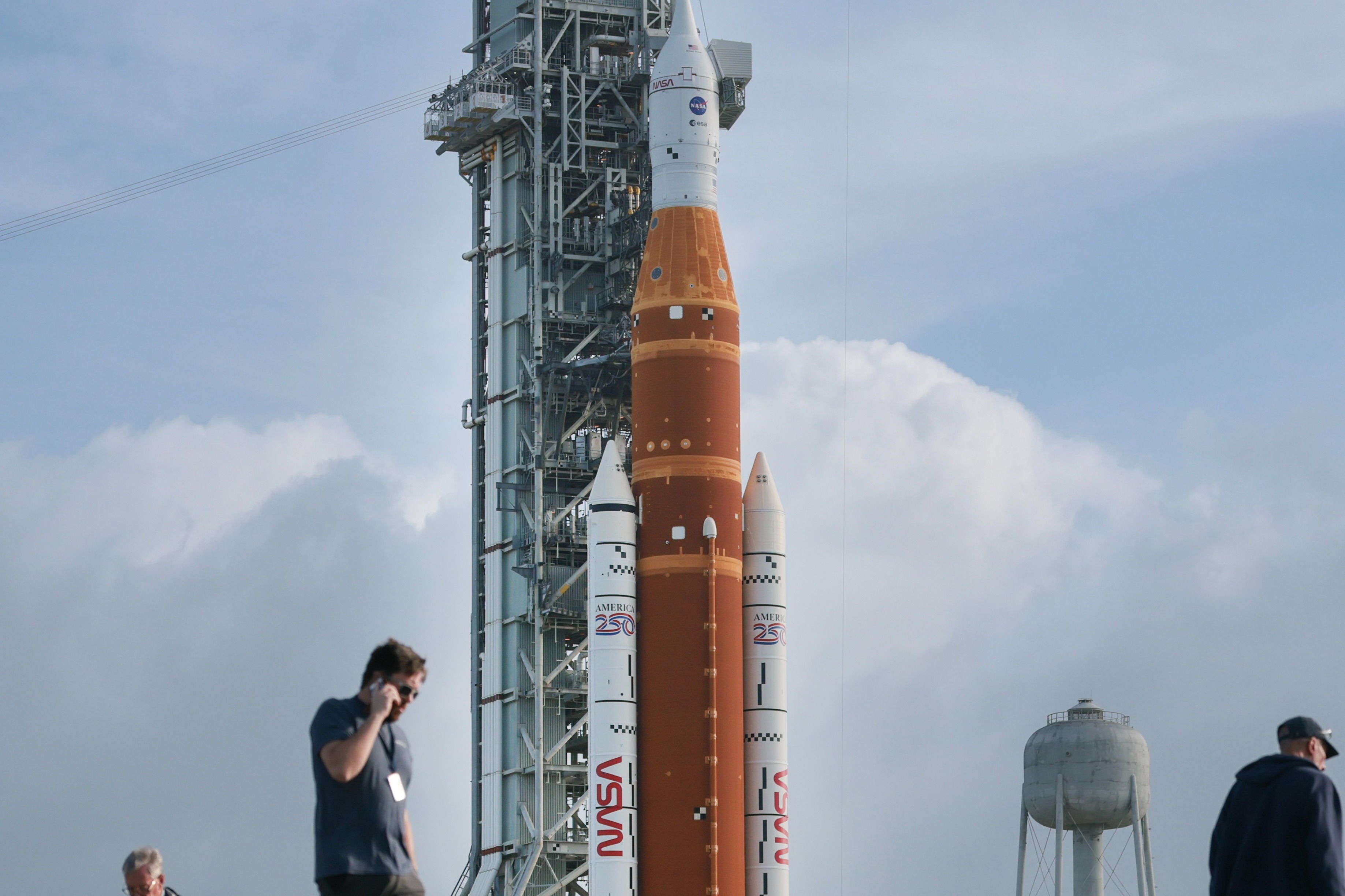
Getty Images Artemis II lifted off from Florida’s Cape Canaveral on Wednesday, marking the crucial first step in mankind’s historic return to deep space and the moon.
A crew of four astronauts are onboard the towering 322-foot rocket — and if all goes according to plan they will travel 250,000 miles away from home, further from Earth than any human has ever gone.
They will also view sights never-before-seen by the human eye during the 10-day mission as they round the far side of the moon with the sun’s daylight shining up it.
That striking view was shadowed in darkness when Apollo astronauts last flew to the moon over 50 years ago.
After 10 days in the close confines of their Orion capsule, the Artemis II crew will splash down in the Pacific Ocean. It would be a major step in mankind’s journey to walk on not just the moon, but also on the planet Mars in the coming years.
The journey’s successful completion would leave just two more launches before we again walk on the moon.
Artemis III is scheduled to further test out rendezvous systems with new lunar landers in 2027, while a moon-landing is scheduled for 2028. A manned Mars mission could follow within years from there.
The astronauts — commander Reid Wiseman, specialists Christina Koch and Jeremy Hansen, and pilot Victor Glover — settled into orbit within 10 minutes of blast off, and will spend the next 24 hours circling the Earth while testing out the rocket systems in preparation for its final launch to the moon.
That launch — known as the translunar injection burn — will take place Thursday, just over 25 hours into the flight and will launch the Orion capsule into the vastness separating Earth and the moon.
The crew will be travelling through that space — known as the cislunar space — at over 22,000 mph as they begin the roughly four-day journey to the moon.
During that time they will put the Orion capsule through its paces with numerous systems test to make sure it will be able to perform when its carrying humans to the moon and later on the months-long journey to Mars.
Artemis II’s crew will also fire their engine for several minor trajectory corrections during the trip to make sure they don’t crash into the moon or fly past it into the depths of space.
Earth will be shrinking in spacecraft windows all the while, and by day five the capsule will have been snagged by the Moon’s gravitational field of influence and begin falling towards it.
Day six is when the main event begins — the astronauts will fly by the moon and get the closest look anyone has had since Apollo 17 departed in 1972.
The ship will come between 4,000 and 6,000 miles the lunar surface, and the moon will look like a basketball held at arm’s length to the crew looking out from the capsule windows.
Communications will be cut off with Earth for upwards of 50 minutes, and the Artemis crew will spend the flyby making detailed observations of the moon’s far side for later study.
It’s during that time that Artemis II is expected to make history by sending humans further from Earth than any have travelled before — breaking a record set in 1970 when Apollo 13 flew 248,655 from home.
Artemis II will then use the moon’s gravity to slingshot the Orion back to Earth using nothing but Isaac Newton’s fundamental laws of physics — the only time the capsule’s engine will be fired over the return trip is for further trajectory-correction burns.
The ship will have travelled about 685,000 miles in a huge figure-eight by the time it has been recaptured by Earth’s gravity and begins its descent through the atmosphere about nine hours into the mission’s 10th day.
Speeds will reach about 25,000-mph as the Orion hurtles through the atmosphere, and the capsule’s outer shell will heat to nearly 5,000-degrees Fahrenheit as its protective outer shell sloughs off behind it.
Artemis II will then deploy parachutes to slow it down to about 20 mph, and the crew will touch safely down off the coast of San Diego.
The mission will mark several firsts beyond its distance record.
Koch will be the first woman to fly to the moon, while Glover will be the first person of color and Hansen — a Canadian — will be the first non-American to make the trip.
Artemis II — to answer mankind’s perennial question — will also be the first deep space voyage to include not just a toilet, but a door to give the astronauts a bit of privacy while going about their business.