Chinese Tech Firms Bought 1 Million Nvidia Gaming Chips This Year. Here’s Where It Shows Up Gian Estrada Tue, October 13, 2026 at 1:57 AM EDT 4 min read NVDA -1.29% Trade NVIDIA on Coinbase Trading disclosure Trading disclosure The above button links to Coinbase. Yahoo Finance is not a broker-dealer or investment adviser and does not offer securities or cryptocurrencies for sale or facilitate trading. Coinbase pays us for certain activity generated through this link. Prices displayed are informational.
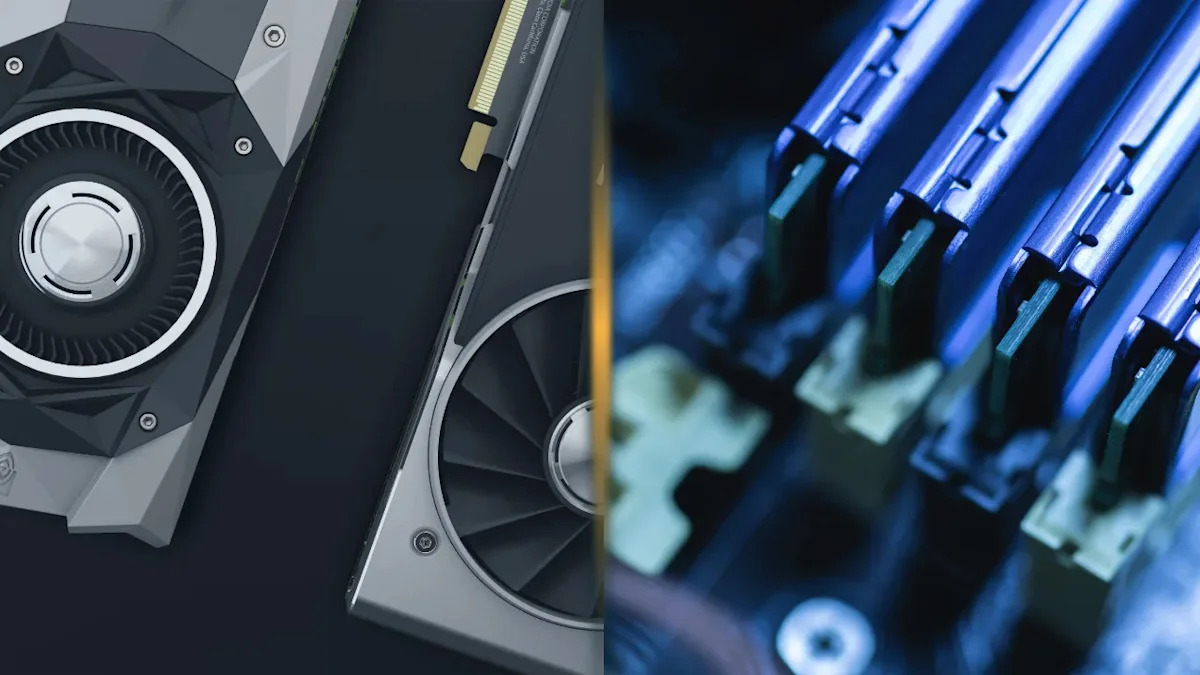
Nvidia (NVDA:NASDAQ) has said its share of China's AI accelerator market is effectively zero, but Chinese tech companies are still buying its hardware by the million. According to a Financial Times report published on October 13, Chinese groups have bought more than 1 million Nvidia gaming and workstation chips this year to cover a shortfall in AI computing power.
These are products US export rules don't block, including the RTX Pro 6000D and RTX Pro 5000. They're slower than Huawei's Ascend 910C at most tasks, but they can handle simpler AI work such as the prefill stage of inference. For companies that can't get enough compute at home, that's good enough.
The FT's numbers explain why. Industry insiders estimate China's domestic AI chip supply could reach about 3.5 million units this year (including roughly 1 million made overseas), while demand is expected to far exceed 5 million.
Add Nvidia's million and the total still falls short. That gap is why Nvidia keeps showing up in China's AI buildout despite four years of US restrictions and Beijing's push for self-sufficiency.
Spending is rising faster than supply. Combined capex at Alibaba, ByteDance, and Tencent could more than double to about Rmb700 billion ($104 billion) this year, and Morgan Stanley puts China's total 2026 spending on computing power at $193 billion, about 21% of the US figure.
In fiscal 2026 (ended January 2026), Gaming revenue rose 41% to $16.04 billion, well above the $12.46 billion crypto-era peak of fiscal 2022. Professional Visualization, where the RTX Pro workstation cards book, jumped 70% to $3.19 billion, about 51% above its previous high. That year largely predates the purchases the FT describes, though, so those figures don't show how much of the growth came from Chinese AI buyers.
Revenue from customers in China, including Hong Kong, came to $19.68 billion in fiscal 2026. Nvidia reported $4.6 billion of first-quarter H20 sales before April's licensing requirement disrupted shipments, followed by approximately $60 million under licenses granted in August. Its disclosures don't break out the product mix of the remaining China revenue.
Revenue from customers headquartered in China, including Hong Kong, reached $7.88 billion in the July quarter, roughly double a year earlier.
The obvious objection is scale, and it's a fair one. Data Center revenue hit $89 billion in the July quarter, about 92% of Nvidia's $96.2 billion total, while China was only around 8%. A million gaming and workstation cards matter to China's AI labs far more than they matter to Nvidia's income statement.
The fiscal 2026 data can't settle the question, since it mostly predates this year's buying and overlaps with a global gaming upgrade cycle. The July quarter is the better test, and China's doubling there points the same way as the FT.
The more useful insight sits elsewhere. Nvidia's guidance still assumes no China data center compute revenue, and Chinese demand is reaching its top-end chips anyway, just not through China.
That side door runs through Oracle (ORCL:NYSE). Last month, it has also been reported that Tencent signed an agreement to lease access to approximately 100,000 advanced AI chips through Oracle's Southeast Asian data centers. Such contracts can generate Oracle cloud revenue and support demand for Nvidia hardware outside China.
Tencent (TCEHY) and Alibaba (BABA:NYSE) are the spenders behind this demand. Both are pushing new models and agent tools this year, and alongside ByteDance they're chasing offshore leases for the training work that workaround cards can't do.
China's own chipmakers, led by Huawei and Cambricon (688256.SS:SHANGHAI), more than doubled domestic AI chip output this year and still left a gap of over a million chips. Until that closes, Nvidia stays in China's AI buildout through the back door, and Oracle is the clearest US beneficiary named in the FT's report.
TIKR lets you forecast the future price of any stock in less than a minute. Just enter a few assumptions into TIKR's valuation model and see what NVDA stock could be worth. Start from Wall Street consensus estimates, or adjust the inputs to reflect your own view of the business. It's free to use.
Value Nvidia Corporation for free→