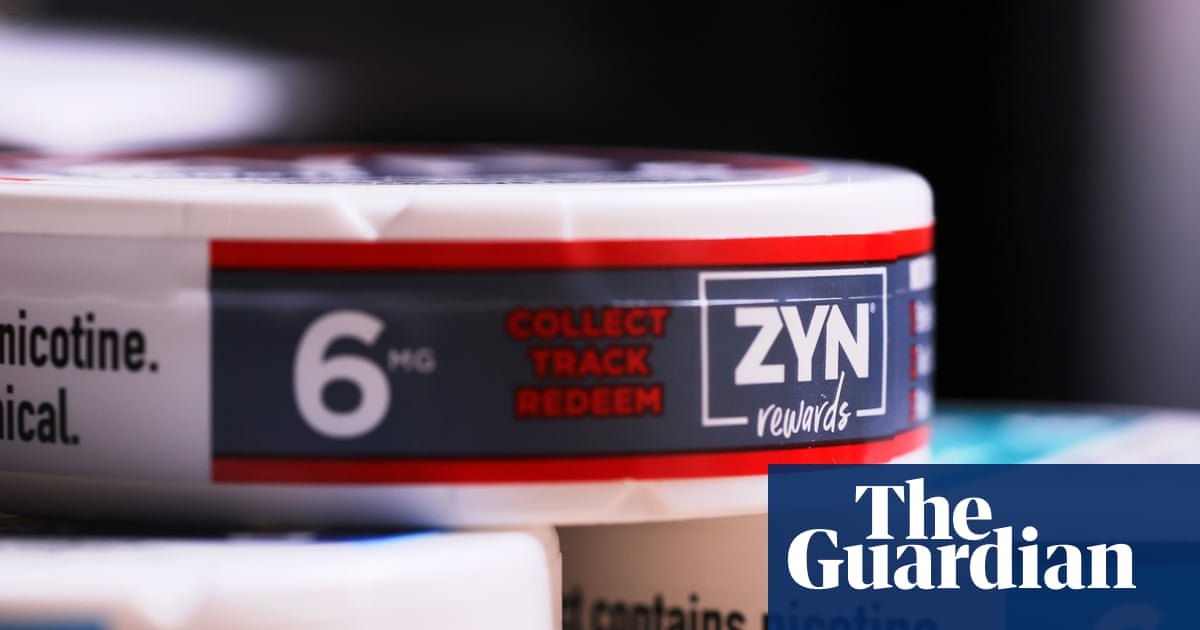
Zyn nicotine cases. Photograph: Michael M Santiago/Getty ImagesView image in fullscreenZyn nicotine cases. Photograph: Michael M Santiago/Getty ImagesNicotine pouches not yet cleared for sale in US due to concerns over young usersFDA planned to fast-track applications for authorization, but agency reviewers raise alarm over addiction risk
Popular nicotine pouch products have yet to be cleared for sale in the United States despite a fast-track Food and Drug Administration scheme, as agency scientists hesitate to authorize them due to potential risks to new users, including children, three sources told Reuters.
New tobacco products like pouches, which users insert under their lip to get a nicotine buzz, must be authorised by the FDA in order to be legally sold in the US, the world’s largest market for smoking alternatives worth some $22bn.
When granting licenses, the agency weighs whether a product can help smokers switch to a less harmful form of nicotine use while not driving risks too high for non-tobacco users and children.
The concerns behind the hold-ups, previously unreported, are a blow to tobacco firms like Philip Morris International, which has pending applications for newer versions of its top-selling label Zyn, as well as British American Tobacco with rival label Velo.
PMI’s shares fell more than 7% on Wednesday before recovering some ground to stand 4.8% lower at 1503 GMT. BAT’s stock was 1.5% lower, while Turning Point Brands, which also has applications related to two pouch brands under the pilot, plunged over 17%.
BAT said in a statement that its applications warrant the FDA’s authorisation given robust scientific support, and that it continues to engage constructively with the agency. PMI did not address Reuters questions around the delay to its applications.
These days, BAT and PMI shares trade on pouches, which have become a significant part of the valuation case and had been considered less complicated by regulatory risks, Jefferies analyst Andrei Andon-Ionita said, adding that Reuters’ reporting was driving the share price moves.
Pouches are the fastest-growing nicotine product in the US, with millions of users. PMI alone sold 794m cans of its current version of Zyn in the country in 2025, more than double its 2023 sales.
The FDA planned to fast-track the outstanding applications in a pilot programme first reported by Reuters last year, with decisions expected by the end of 2025. Six pouches under one label, Altria’s on! PLUS, were granted licenses in December.
But applications related to the four other pouch brands are still pending due to a cautious approach by agency reviewers, three sources familiar with the FDA’s process said, adding that the scientific evidence for speeding them through was not as clearcut as expected.
Two of those sources said specific concerns related to risks to youth or other non-users, such as driving addiction in adults who do not already smoke.
The FDA said in a response to questions from Reuters that the applications in the pilot are on track for faster decisions than most others. It declined to comment on whether its reviewers had concerns related to risks to youth or new users.
The FDA says nicotine products are highly addictive and are not risk-free even for adults, while nicotine can harm developing brains.
Pouches, however, are generally less harmful than cigarettes, and when smokers switch completely scientific data indicates they can lower health risks, the FDA said in a statement to Reuters.
The agency is weighing evidence on how effective each pouch product is at getting smokers to switch against information on risks, including its own survey data on how popular pouches are among middle- and high-schoolers and which brands they use.
This annual FDA survey shows that nicotine pouch use remains low among these groups but it has risen in recent years. The FDA’s pilot programme was developed as tobacco lobbyists and the White House pushed the agency to authorise more brands for sale.
Some manufacturers have had license applications languishing for years, leaving them unable to sell any products legally or only outdated versions. Meanwhile, sales of unregulated nicotine products have boomed.
Asked whether it was under pressure to grant more licenses under the pilot, the FDA said it made its decisions based on science and law.
PMI and BAT said in statements to Reuters that the FDA’s pilot programme could help support public health and also restore fair competition in the US nicotine market.
Jefferies’ Andon-Ionita said the delay is worse news for PMI because Zyn has been registering significant market share losses while newer, more competitive versions await licenses.