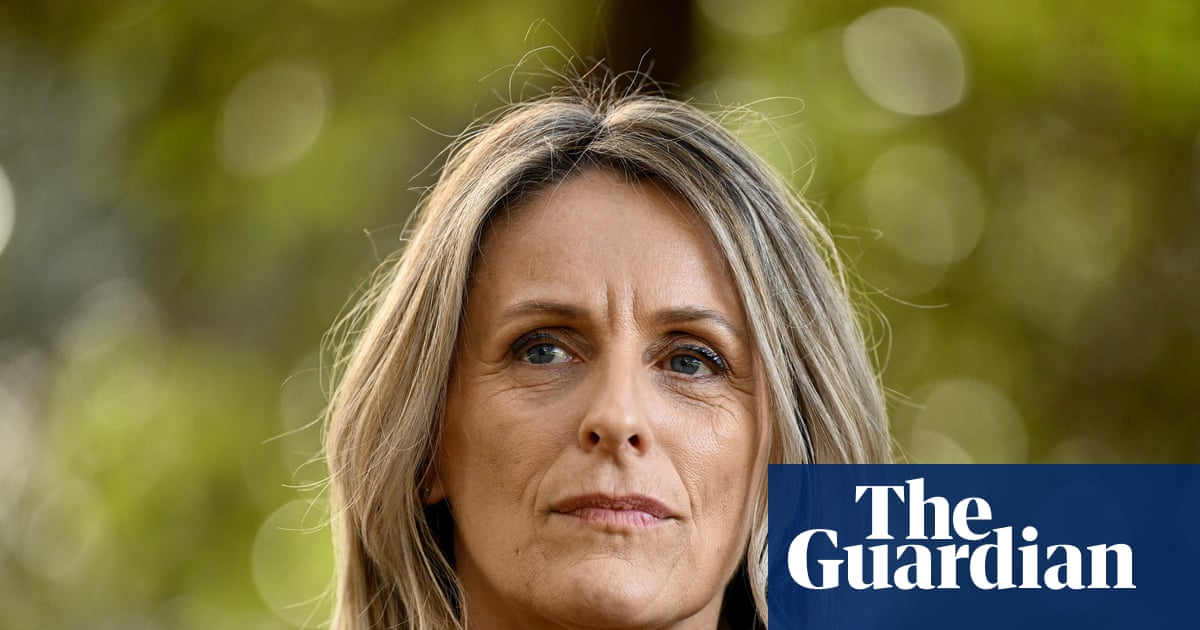
Corrective Services NSW says it is investigating the allegations raised by Greens justice spokesperson Sue Higginson. Photograph: Dan Himbrechts/AAPView image in fullscreenCorrective Services NSW says it is investigating the allegations raised by Greens justice spokesperson Sue Higginson. Photograph: Dan Himbrechts/AAPPolitician alleges NSW corrections illegally snooped on her calls with prisonersExclusive: Greens MLC Sue Higginson tells parliament that Corrective Services knew things ‘which made it very clear they had monitored our conversation’
Get our breaking news email, free app or daily news podcast
A New South Wales parliamentarian has alleged prison officers unlawfully listened to her calls with inmates and then threatened those who had sought her help.
The Greens’ justice spokesperson, Sue Higginson, alleged that her phone calls were “routinely” monitored despite it being against the law for corrective services officers to listen to calls between parliamentarians and prisoners.
Higginson said she had raised the issue multiple times with the corrections minister.
In NSW prisons, phone calls made by inmates are generally recorded and monitored. But their conversations with parliamentarians and legal practitioners are privileged and exempt from surveillance.
Higginson said inmates mostly contacted her office when they had concerns about another inmate’s welfare, or they were trying to access health services, “but just aren’t getting them”.
Read more“Those sorts of calls are frightening for us, and we expect people to be able to make those calls in confidence,” the upper house member said.
Higginson acknowledged she could have inadvertently been placed on a friends and family call list rather than the privileged calls list by inmates or corrective services staff. But she said it was up to the department to ensure it was following the law.
“It would not surprise me if no attention has been given to the requirements and regulations around exempt persons,” she said.
Corrective Services NSW said it was investigating the allegations.
“In line with legislation, we have robust practices and procedures in place around the monitoring of inmate phone calls,” a spokesperson said. “Ms Higginson has provided information to CNSW … and we are reviewing these claims.”
The corrections minister, Anoulack Chanthivong, said Higginson’s claim was a “very serious allegation”.
“If there are things that have gone wrong, then my expectation is that this needs to be fixed,” he said. “You can’t have a situation like this occurring in the future.”
Higginson recently raised in parliament two examples where she suspected her phone calls were monitored. In one instance, an inmate called her office trying to help another prisoner obtain medical assistance.
“[He] was threatened with a correctional centre offence and solitary confinement because he encouraged another inmate to contact my office,” she told parliament.
“How would Corrective Services NSW have known that the first inmate referred me to the second inmate if that conversation had not been monitored?”
Higginson said another inmate called her office to complain about his treatment during a transfer. They were later “threatened by Corrective Services staff in a way which made it very clear they had monitored our conversation”.
The number of adults in the state’s prisons reached record levels in December, exceeding the previous high set six months earlier. Last year also marked a record number of Indigenous deaths in custody, with 12 people dying.
Higginson, earlier this month, successfully moved a disallowance motion supported by the Coalition, which struck down a government regulation that increased the monitoring of inmates’ phone calls.
The government regulation, introduced in January, narrowed the scope of confidential calls and correspondence between prisoners and legal practitioners.
Labor wanted to be able to snoop on calls and correspondence unless the lawyer was currently representing the inmate, providing them legal advice or in the process of becoming their legal representative.
The leader of the government in the upper house, Penny Sharpe, said the change aimed to fix a “potential loophole” that could have seen legal practitioners not representing an inmate “engage in, promote or aid criminal activity totally unmonitored”.
But the shadow attorney general, Damien Tudehope, when supporting the Greens’ disallowance motion, criticised the government for not being able to point to a specific example.
“If government members had come to us and said, ‘We have a specific, concrete example of the abuse that is currently happening in the system that we need to fix’, then that would be a situation with more force for the regulation to exist,” the Liberal MLC said.
Higginson told parliament she was “astounded that the Minns Labor government is making regulations like this after the Astill inquiry”.
Prison officer Wayne Astill was in 2023 jailed for a maximum of 23 years for abusing his position and assaulting women at the Dillwynia correctional centre. A 2024 inquiry raised a number of issues with the monitoring of phone calls.
The inquiry found Astill “systematically” used information “gleaned from monitoring inmate calls, visits and letters as a means of intimidation”. A number of prisoners who gave evidence said they didn’t trust that their phone calls with lawyers were confidential – and so didn’t report his misconduct with them.
The inquiry recommended training for staff regarding which communications were privileged and confidential so they would not mistakenly be monitored.
Guardian Australia asked Chanthivong why the government made the regulation despite the concerns raised in the Astill inquiry.
“Being a correctional officer is probably one of the hardest, most complex and most volatile jobs you can have in the NSW government,” the corrections minister said.
“It wasn’t an easy decision to come to, but it is the decision that’s in the best interest of creating the safest work environment for the officers and for the inmates.”