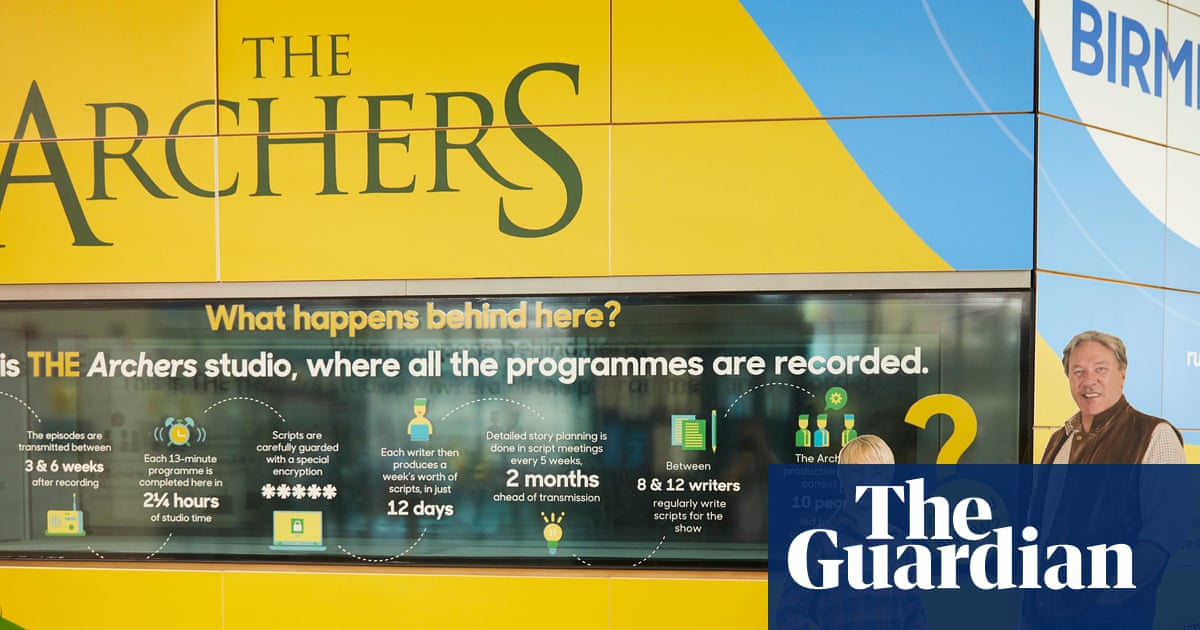
The Archers’ current recording studio at the BBC Mailbox in Birmingham. Photograph: Christopher Thomond/The GuardianView image in fullscreenThe Archers’ current recording studio at the BBC Mailbox in Birmingham. Photograph: Christopher Thomond/The GuardianBBC to stop recording The Archers in Birmingham for first time in its 75-year historyPlans for a new theatre for world’s longest-running soap in Digbeth scrapped as part of cost-cutting measures
The BBC is set to stop recording The Archers in Birmingham for the first time in the show’s 75-year history, after scrapping plans for a radio drama theatre that was to be the new home of the world’s longest-running soap opera.
A pledge to move recordings to the so-called tea factory, the BBC’s new Birmingham hub in Digbeth, has become the latest victim of the corporation’s £500m cuts plan.
While the soap’s production team are still scheduled to make the move, the BBC is now looking to record it at an existing UK studio.
It will also consider private studios in the West Midlands, but BBC insiders are already concerned that ending its Birmingham-based recordings and separating the actors from the production crew will have an impact on the show.
Production staff regularly engage with the actors at the last minute to tweak scripts and storylines, raising concerns that them being in different places will stifle creativity.
“It is going to weaken the show,” said a source. “It will change the DNA of the show.”
Read moreMoving the recording of The Archers from the BBC’s existing Birmingham base, The Mailbox, to the tea factory was due to take place in 2028.
In an email to staff last week, a BBC executive said: “After careful consideration and as part of the BBC’s wider drive to reduce costs, the decision has been made … to not build a new radio drama studio for The Archers in the Tea Factory in Digbeth.
“Consequently, options are being explored to identify suitable studio facilities where The Archers will be recorded. That currently includes looking into potential opportunities in the West Midlands, as well as across other parts of the UK.
“To be clear, no decision has yet been reached. The priority is to find the most cost-effective solution which will maintain The Archers’ high production standards in addition to delivering significant savings.
“The Archers is a jewel in the BBC’s crown. It’s been going for an incomparable 75 years – as has its connection with the West Midlands. It remains a hugely vital part of our future.”
The show has been associated with Birmingham since it started in 1951. Sources said it remained part of the cultural fabric of the city, with the show employing local writers and freelancers.
However, others said the show’s recording schedule meant actors were only in the studio for about eight days a month, while many of the cast live across the UK.
Some now fear recordings will default to London and that the show’s staff will eventually follow. However, the BBC has been clear that production staff will move to the new Birmingham headquarters as planned.
It is not clear whether Lisa Nandy, the culture secretary, was aware of the plans. Boosting BBC production outside London has regularly been at the top of her agenda.
It is a sign that even some of the BBC’s most revered titles are being affected by cuts, with more announcements expected in the coming days. Matt Brittin, the BBC’s director general, has already faced anger from staff who believe more of the corporation’s manager class should be targeted instead.
Read moreA BBC spokesperson said: “We recognise and value The Archers’ longstanding relationship with the West Midlands, which remains an important part of the programme’s future, and The Archers production team will remain in their current home in the Mailbox and move, as planned, to the Tea Factory in Digbeth in early 2028.
“However, after careful consideration, as part of the BBC’s wider drive to reduce costs, we are no longer building a new recording studio for The Archers in the Tea Factory.
“We’re currently assessing the BBC’s existing studio facilities around the UK as well as other external studio options in the West Midlands to find a more cost-effective solution.”