ETH-USD -0.82% NVDA -1.22% Trade ETH on Coinbase Trading disclosure Trading disclosure The above button links to Coinbase. Yahoo Finance is not a broker-dealer or investment adviser and does not offer securities or cryptocurrencies for sale or facilitate trading. Coinbase pays us for certain activity generated through this link. Prices displayed are informational.
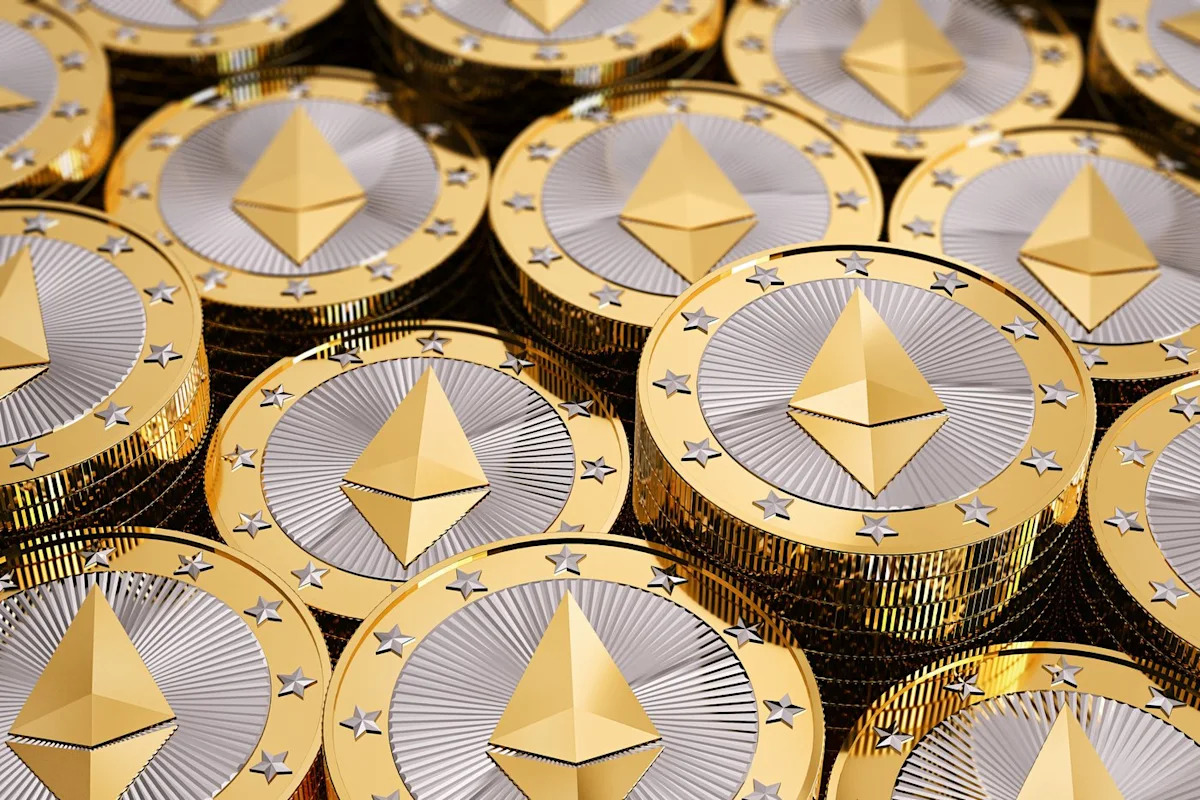
I'm of the opinion that Ethereum (CRYPTO: ETH) is a good investment that belongs in most crypto portfolios, so long as its slice never grows past 5% of your total diversified portfolio's value.
I use that rule to size my own Ethereum position, and I like owning it because it's the broadest single-coin bet on crypto's future. But I have two reasons I keep its allocation so constrained, so let me explain my logic.
Missed Nvidia in 2009? This Rare Signal Is Flashing Again. In 2009, a "Double Down" signal flashed for a little-known chipmaker called Nvidia. For the first time in years, that same "Total Conviction" signal is flashing for a company 1/100th the size of Nvidia. Continue »
Early Ethereum buyers -- of which I was not one -- were blessed to ride the asset through a once-in-a-generation run. Over the 10 years through Oct. 9, the coin rose 20,960%, meaning that an investment of just $500 would now be worth more than $105,310.
That's very unlikely to repeat. Its market cap was $303 billion on Oct. 9, so a 10x gain would put its value at nearly $3 trillion, above the $2.9 trillion value of the whole crypto market on Oct. 9.
Plus, from the perspective of a holder, there's no mechanism that might revive the odds of the coin's value exploding anytime soon.
Ethereum has no maximum supply. New issuance dilutes holders at nearly 1% per year right now.
The chain's staking rewards, which are the payments granted for locking up coins to secure the network, are issued fresh, causing dilution. Staking pays about 2.6% a year, so it won't help to generate big returns. And Ethereum's transaction fees, which burn the base portion of each fee paid, only manage to offset the issuance from staking when the network is extremely busy, so having just some traffic doesn't automatically create the conditions that reward people holding Ether in a well-balanced crypto portfolio.
In short, the above is why I would not suggest that anyone concentrate their portfolio heavily in Ethereum. But it's still very much worth owning, with the right expectations and in the right-sized allocation.
Ethereum is a good investment primarily because of its breadth. Many new crypto trends start on its network. Owning it means capturing upside from the growth of its diversified project ecosystem while avoiding the sharp downside risk you'd face by investing directly in those ecosystem project tokens.
One reason for its ability to incubate new crypto projects, and indeed entire new segments, is that it ranks first among all blockchains in decentralized finance (DeFi) deposits, with $51.4 billion; its next closest competitor, Solana, has just $6.3 billion. It also leads the crypto market in its base of tokenized real-world assets, meaning bonds and stock shares whose ownership is recorded on a blockchain, with $16.9 billion in value locked in tradeable stock asset tokens. Similarly, its base of stablecoins, which can be considered capital stored on its network and ready for possible investment into emerging projects, is also the biggest in the entire sector, with $151.4 billion in value.
All of that capital, in all those various forms, chose to come to rest on Ethereum rather than any of the other options available. And at its core, that's the biggest reason to own some of it.
But how much is right? Morgan Stanley suggested up to 4% in crypto for its most aggressive portfolios in an Oct. 1, 2025, note, while BlackRock suggested about 2%, per CoinDesk. Those figures are for the size of an entire crypto portfolio relative to an investor's larger diversified portfolio, though.
That's why my rule is that Ethereum should account for at the very most 20% of your crypto portfolio, and at most, 5% of everything.
Sizing this way makes volatility less troublesome and, more importantly, makes a crash survivable. Ethereum's worst five-year drawdown was 76.7%, so a repeat of that would only cost a 2% position approximately 1.5% of your portfolio's value. That would certainly sting, but it's unlikely to scare you into selling at the bottom.
The Motley Fool Stock Advisor analyst team just identified what they believe are the 10 best stocks for investors to buy now… and Ethereum wasn't one of them. The 10 stocks that made the cut could produce monster returns in the coming years.
Consider when Netflix made this list on December 17, 2004... if you invested $1,000 at the time of our recommendation, you'd have $379,123!* Or when Nvidia made this list on April 15, 2005... if you invested $1,000 at the time of our recommendation, you'd have $1,408,822!*
Now, it's worth noting Stock Advisor's total average return is 950% — a market-crushing outperformance compared to 215% for the S&P 500. Don't miss the latest top 10 list, available with Stock Advisor, and join an investing community built by individual investors for individual investors.
*Stock Advisor returns as of October 12, 2026.
Alex Carchidi has positions in Ethereum and Solana. The Motley Fool has positions in and recommends BlackRock, Ethereum, and Solana. The Motley Fool has a disclosure policy.
Is Ethereum a Good Investment? I Think So, but Only for 5% of Your Portfolio. was originally published by The Motley Fool