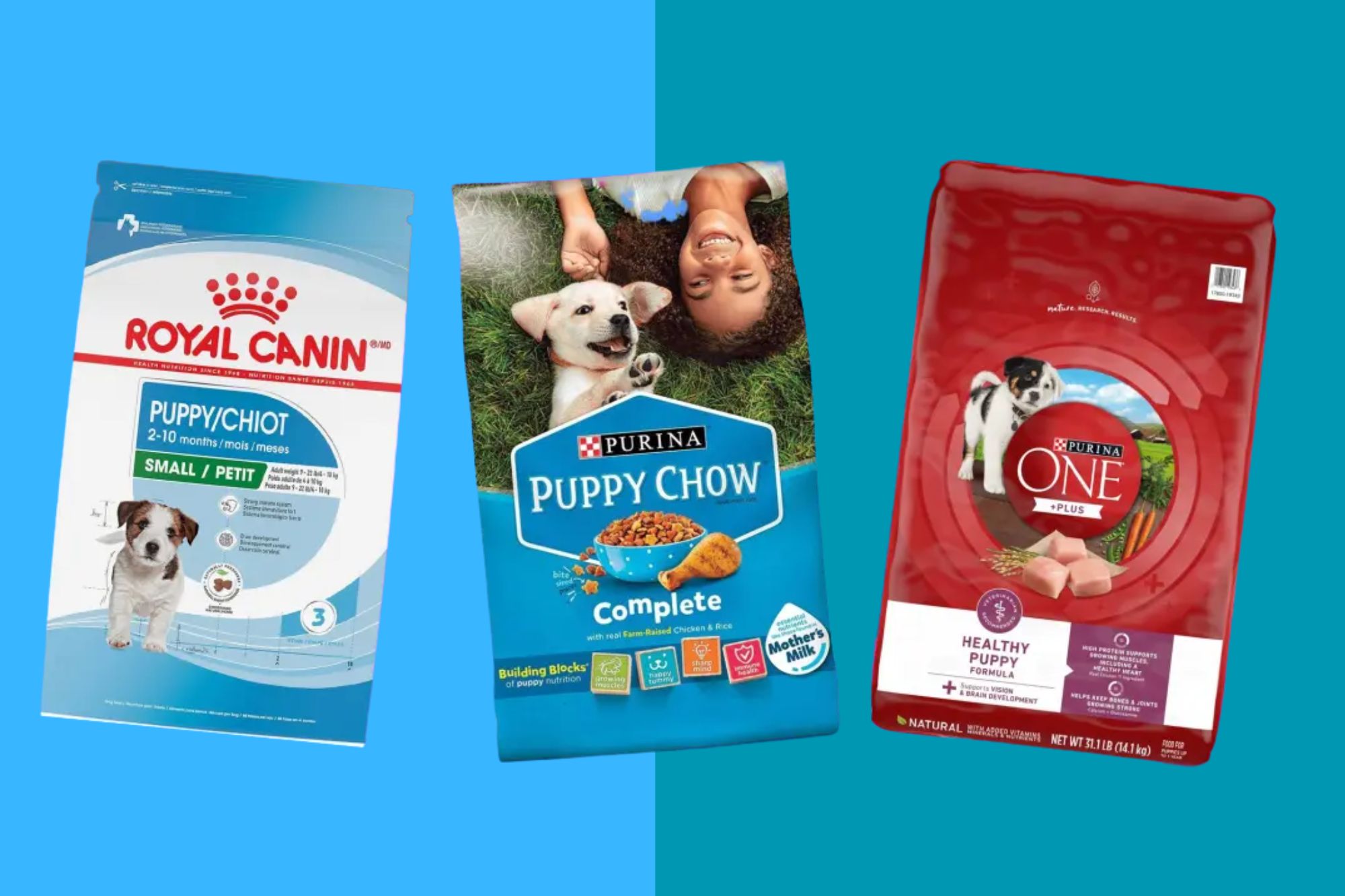
New York Post Composite Puppies are beyond the cutest things on this earth; you’re reading this article, so I think it’s safe to say we are of one mind. And beyond buying the very best dog beds and harnesses, we need to understand better what they need to eat for strong, healthy muscles.
Fortunately, thanks to the experts, we have all the research we need for the best dog food to provide the nutrition puppies require from wet to dry. Dr. Carrie Mann, DVM of Hudson Veterinary Hospital, advised us on what to consider when feeding your pup. “I trust brands that work closely with veterinary nutritionists, such as Hill’s Science Diet, Royal Canin, and Purina,” she told The Post.
REALTED: The best Chewy deals to shop now for pets: Toys, treats, food, and more
Often, people shy away from these companies because they are worried it might not be as fresh as human food but Dr. Mann assured us they are backed by scientific research. “Many do not realize these are the same companies that are performing extensive research on animal nutrition and how it benefits longevity, which is the ultimate goal. We all want our pets to live long, healthy lives.”
Additionally, Dr. Hannah Hart, a veterinarian who has been practicing veterinary medicine for over six years, gave us a good metric to help understand a puppy’s growth progress.
“You will know that your puppy’s growth is progressing well by monitoring his or her body condition score, a number from one to nine assigned based on the amount of lean muscle tissue and body fat, with one being emaciated and nine being obese,” said Dr. Hart. “The idea is four to five, and your veterinarian can help conduct examinations at frequent intervals to ensure your puppy is staying at the right body condition score.”
We’ve gathered the very best food for sensitive stomachs to tight budgets to fit every family’s pet needs online or in-store.
Spot & Tango’s UnKibble is a standout option for puppies, offering a smarter alternative to traditional kibble with fresh, human-grade ingredients in a shelf-stable format. It uses a proprietary fresh-dry process that locks in nearly 99% of nutrients, delivering the benefits of fresh food without refrigeration. Each plan is personalized based on your dog’s age, breed, weight, and activity level. This is key for supporting proper growth and portioning during early puppyhood. The recipes feature whole, recognizable ingredients and no artificial additives, which is perfect for what vets recommend. Developed with veterinary nutritionists, UnKibble is a strong choice for pet parents seeking a more thoughtful, convenient approach to feeding their puppy.
NY Post readers get 50% off with code NYPOST50.
For strong skin, a radiant coat, and a healthy immune system, this 31.1-pound Purina One fits the bill, matching a wide array of suggestions from our vets. It includes DHA for brain development and calcium for healthy bones and joints. Plus, it’s a “trusted” brand by Dr. Mann that works closely with veterinary nutritionists. Suitable for large-breed puppies to small breeds.
Complete with all the nutrients your puppy needs, this 30-pound bag is a budget-friendly option that checks all the boxes: calcium, high-quality protein, DHA, and antioxidants. Vet-approved and science-backed, it is available in 4- or 30-pound bags.
Chewy Pros: Top choice for sensitive skin and stomach Combines both meat and grains Cons: Only three sizes to choose from This 16-pound bag, which comes in three sizes, is packed with probiotics and is filled with rich protein, salmon, and rice.
“Alternative protein sources for some dogs can be plant-based beans, corn, whole grains, but very dog dependent and occasionally palatability can be an issue. Nutritionists often recommend diets with both animal and plant protein sources to maximize overall protein quality,” said Dr. Jessica Hockaday, a veterinarian from Chewy.
It’s a best-seller at Chewey for a reason: it’s created for sensitive stomachs that can’t process corn, wheat, or soy, yet it’s still high in protein.
This diet supports brain development, energy needs, and immune system health through antioxidants, all needed for a growing pup. It is best for pups ages between two to ten months, with an expected weight of nine to twenty-two pounds. Available in two sizes: 2.5-pound and 14-pound bags.
For those newborns gradually transitioning from their mother’s milk, this gentle formula crafted from an ultra-soft mouse ensures an easy and enticing feeding experience. Each can contains 5.1 ounces and is available in a case of 24.
This 15-pound bag of kibble contains high-quality protein, ideal for growing pups. It includes a blend of prebiotic fibers to promote gut health and plenty of DHA fish oil to support brain development.
When it’s time to graduate to adult dog food, Dr. Hockaday suggests using the same protein source during the transition as long as it is well received (good growth, no upset stomach, and enjoyment). So choose wisely and if in doubt, consult your veterinarian.
“This high-protein dog food with real, deboned lamb is not only delicious for your pup but full of amino acids that help maintain lean muscle mass, plus salmon oil and flaxseed provide omega-3 and 6 fatty acids, including long-chain DHA, help support your dog’s skin and coat health and brain and eye development,” said Dr. Katy Nelson, senior veterinarian at Chewy.
There are an array of sizes to order, should you shop at Chewy. We love the option to bundle and save, with two four-pound packages or two 12-pound bags, shipped right to your door. Available in 12-24 pound bags of Chicken & Sweet Potato or Lamb & Sweet Potato.
Chewy Pros: Best for puppies 15 months or over Cons: None we can list Dr. Hannah Hart, a veterinarian at Chewy, highly recommends Eukanuba as a trusted and science-backed product to promote your pup’s health. This rich-in-protein kibble is for puppies 15 months old with an expected weight gain of 55 pounds or more.
“The most important thing for avoiding rapid growth syndrome and ensuring a healthy growth rate is to feed a balanced large-breed puppy food at the recommended amount for the puppy’s size and body condition,” recommended Dr. Hart.
Large-breed puppies and smaller-breed puppies need different levels of fat, calcium, and a specific calcium-to-phosphorus ratio in their food. Reputable brands like Purina, Iams, Hill’s, Royal Canin, and Eukanuba formulate diets to meet these needs, helping prevent bone and joint issues.
Protein is crucial for building lean muscle and strong bones in puppies. Sources like fish, chicken, beef, and lamb are ideal and found in trusted commercial diets. Proper calcium levels and ratios in the diet are essential to avoid overly rapid bone growth and protect joints. Joint supplements with glucosamine and chondroitin can be beneficial but always consult a vet first.
Healthy growth is indicated by a body condition score of 4-5, with 1 being emaciated and 9 being obese. Concerns arise if the puppy is too thin, has excess body fat, limps, shows pain, has changes in appetite, has a coat condition, or experiences frequent infections. Consulting a veterinarian ensures a diet tailored to the puppy’s specific needs, predicted adult weight, and potential genetic risks. Vets can provide personalized recommendations and adjustments as the puppy grows.
When determining the best diet for a puppy, various factors, such as the puppy’s medical history and age, must be considered. Including some grains in the diet is often recommended, as feeding a grain-free diet has no medical or nutritional benefit. The veterinary community supports this stance with extensive research, highlighting the importance of grains in providing a balanced and nutritious diet.
This article was written by Emma Sutton-Williams, New York Post Commerce Reporter. Proud dog mom to a Mini Sheepadoodle named Lucy, Emma routinely tests top-rated pet products with her pup to find the best recommendations for fellow pet owners. In search of the best dog food brands, leashes, harnesses and more, Emma taps veterinarians and experts like Cesar Millan, better known as the “Dog Whisperer,” for pet health advice, FAQs and training secrets. In addition to her work at the Post, Emma’s byline has appeared in Rolling Stone, Oprah Daily, Parents, InStyle, StyleCaster and more.
Looking for a headline-worthy haul? Keep shopping Post Wanted.