@rockmarooned Published March 31, 2026, 9:00 a.m. ET Photo: Everett Collection Where to Stream: Under The Silver Lake Powered by Reelgood More On: Under The Silver Lake New On Tubi March 2026 ‘After Hours’ at 40: Was This Secretly Martin Scorsese’s Most Influential Movie of the 1980s? All A24 Movies Ranked: From ‘A Glimpse Inside the Mind of Charles Swan III’ to ‘Marty Supreme’ What Movie Should I Watch Tonight? ‘Poolman’ on Hulu The beloved indie studio/distributor A24 is known for its peerless self-curation. This is a company that’s released far fewer of its movies, among them some of the most acclaimed in recent American cinema, via the prestigious Criterion Collection because it essentially manages its own bespoke releases of high-price-point discs through its high-price-point online catalog. But what happens when an A24 movie doesn’t make the company’s own cut? You can certainly buy a standard Blu-ray of Under the Silver Lake, if that’s something you’re inclined to do – the characters in the movie would certainly think about it, though the lead might not be able to afford it – but mostly David Robert Mitchell’s third movie bounces around various streaming services. Currently it’s on Netflix, waiting for its latest rediscovery.
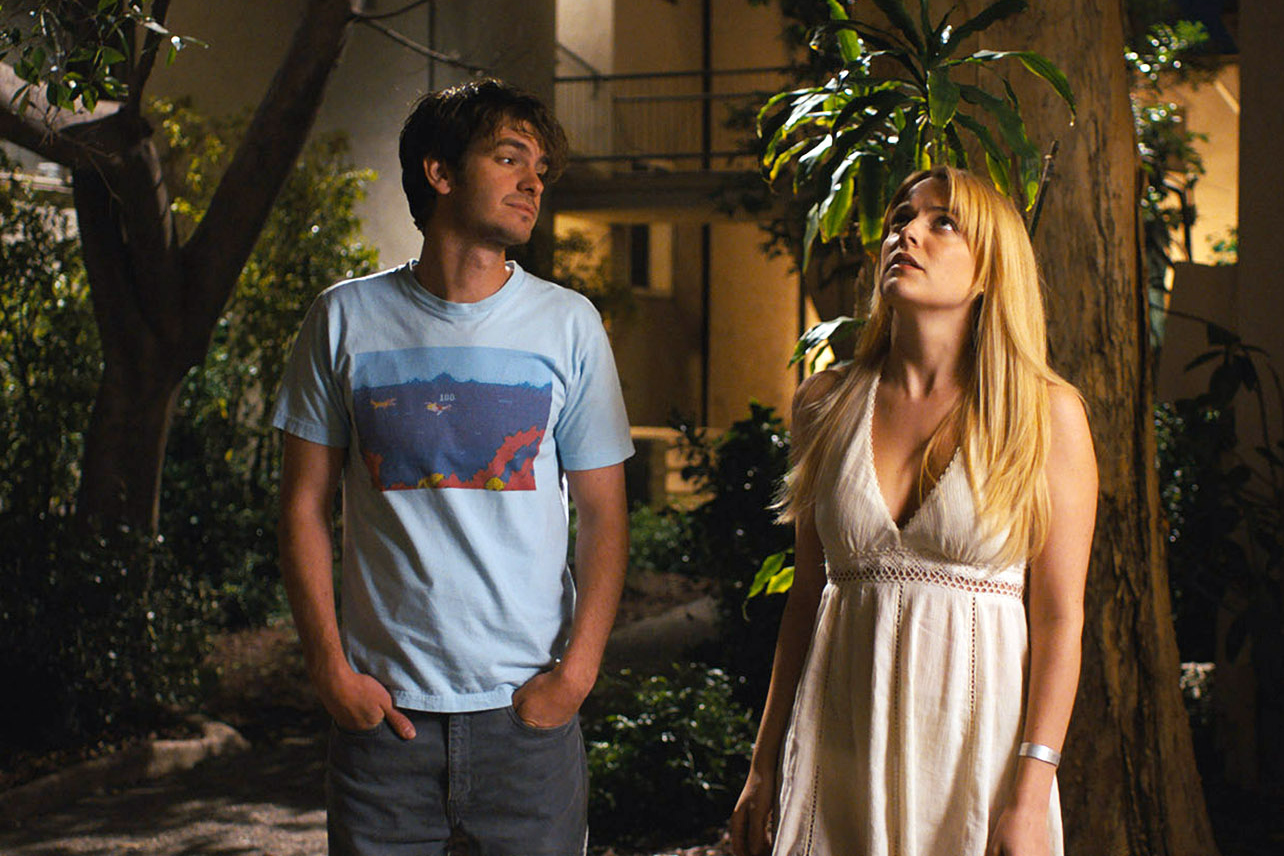
But as much as a tricked-out special edition of Under the Silver Lake would serve the movie’s fans, it probably makes sense for it to continue on as a curio more stumbled upon than lovingly placed on a shelf. The movie is, as the cliché goes, more relevant than ever, nearly eight years after it debuted to a reputation-torpedoing reception at the Cannes Film Festival (and seven years after the belated, barely-there commercial release that followed). It’s a sprawling Los Angeles neo-noir, following the thirtysomething layabout Sam (Andrew Garfield) – rarely referred to by his name, which evokes seminal private eye Sam Spade – as he attempts to track down his neighbor Sarah (Riley Keough), who he’s been ogling from afar. After they spend a single curtailed evening together, she disappears with little trace. Sam, a low-key conspiracy nut as well as an overall dirtbag, is convinced there must be something more to the story. He hunts for clues obsessively, both out in the world and online; Sam may not go an Reddit, but the movie sometimes resembles a thread on a particularly obsessive sub.
It’s difficult to depict this kind of online-coded rabbit-holing in a cinematic way, which is where Mitchell’s time-scrambling comes in handy. It’s characteristic of Mitchell’s films (which also include The Myth of the American Sleepover, featuring a young Sydney Sweeney, who also appears in Silver Lake, watching herself in the earlier film, as seen in the screenshot below; and It Follows) to elide precise signifiers of their time periods. Under the Silver Lake is a little easier to pinpoint as modern-ish. There are cell phones, the internet is ubiquitous, and at one point Sam’s similarly dirtbaggy friend (Topher Grace) uses a drone to spy on a model at home. (As they watch her in her underwear on his computer screen, the “real” voyeurism strikingly resembles any given internet porn, albeit much sadder when they catch the woman in a vulnerable moment, crying to herself.) Its time-jumping derives more from its influences. It has elements of a shaggy ’70s noir riff like The Long Goodbye; the amateurishness of its central detective also brings to mind The Big Lebowski, a ’70s-referencing movie released in 1998 and set seven years earlier. Some analysis has pointed out, too, that an archetypal “traditional” noir like The Big Sleep doesn’t actually make perfect sense, with at least one unsolved red herring.
Nonetheless, Under the Silver Lake felt very much of its moment upon its eventual 2019 release, though not necessarily for the same reasons it feels contemporary now. At the time, I was most attuned to its dizzying patchwork of pop-culture references, adding up to a damning critique of dead-end nostalgia and cultural recycling. This includes a scene where Garfield, five years after the Amazing Spider-Man 2 crash-out, gets his hands stuck to an Amazing Spider-Man comic book, which he whips off in disgust and frustration. His skin is sticky with chewing-gum residue, but given that this happens not long after he shows off a vintage Playboy as a key part of his sexual awakening, there’s an unmistakably (and hilariously) onanistic association with the image.
Sam reads as someone who came to Los Angeles hoping to make it big; he says at much at one point, though in a pointed omission on the movie’s part, he never mentions what, exactly, his field might be. Acting? Writing? When a sex buddy (Riki Lindhome) inquires about a pile of scribbled notes by his bed, she clearly expects that they might be story notes, or bits of a screenplay. Instead, they’re extensive analysis of Vanna White’s Wheel of Fortune glances, searching for a pattern therein. Sam barely seems to register that he’s sorting through pop-cultural detritus; his rant about Vanna White is immediately preceded by his dismissal of Lindhome’s bittersweet observation: “Every year, more and more celebrities and people I grew up with keep dying. Dick Clark, Elizabeth Taylor, Johnny Carson…” (This locates the movie sometime in the early 2010s, which is when Mitchell wrote it – though Carson died in 2005.) Sam shrugs it off immediately and nonchalantly: “Everybody dies.”
He’s technically correct and oblivious to the details. His sorta-romantic not-really-partner is trying to connect with him through culture, through the near-universal experience of the past century: Experiencing a succession of deaths of cultural icons. (Just look at this year’s Oscars, which seemed particularly staggered by the loss of Robert Redford, Rob Reiner, Robert Duvall, and Diane Keaton within a year.) Sam, though, is busy looking for an unrelated bigger picture: “Why do we just assume that all this infrastructure and entertainment and open information that is beaming all over the place all the time, into every single home on the planet, is exactly what we’re told it is?” This is where his friend steps out: “I’ll be back when the smell goes away,” she says. She’s referring to a skunk spray that Sam spends much of the movie marinating in – he’s ranting from a tomato-juice bath – but spiritually speaking, the smell doesn’t go away. We don’t see this character again.
Again, the movie ultimately proves Sam right, in a sense, while still making him feel wrong. He does piece together some absurdly obtuse clues, break some seemingly nonsensical codes, and find a solution to his mystery. Along the way, there’s more pop-culture business, like a creepy elderly songwriter who’s been an invisible-hand hitmaker for generations. But the ultimate answer is more evocative of what’s been all over the news in the past year: rich people engaging in culty sex trafficking.
The trafficking in Under the Silver Lake is rather less menacing and horrific than what’s referred to in the Epstein files, in deed and in volume. It involves adult women, some semblance of consent, and a more sealed-off sense of doomerism; these are people attempting to insulate themselves from the end of the world, not seemingly edging the world in that direction (at least not directly, as far as we can see). This feels contemporary, not because it downplays by proxy the vile crimes of Jeffrey Epstein or his various cohorts – likely Epstein wasn’t especially on Mitchell’s mind back in 2011 or so – but because it’s an answer that seems clear enough without offering Sam any real satisfaction. When he finds the truth he’s been chasing, he mostly just has to sit with it. Nothing will be done about it, except possibly retribution against him if he speaks out. What next? Break another code? To what end?
Under the Silver Lake is too interested in a solipsistic main character to really be about the culture of silence surrounding sexual abuse among the powerful. Like Eyes Wide Shut, its connection to the Epstein case allows it to remain superficially au courant, an enticement appealing to our own senses of conspiracy and justice. What stands out most powerfully years later is how Sam unwittingly fuses his cultural nostalgia (and personal emptiness) with those conspiracy theories; as disturbing as the theories are, they give him purpose and even comfort at a time when he can barely keep a roof over his head. It’s not that these weird rabbit holes shouldn’t ever be investigated. But Sam seems uncertain what to do when he re-emerges from a rabbit hole into daylight. The smell doesn’t go away.
Jesse Hassenger (@rockmarooned) is a writer living in Brooklyn podcasting at www.sportsalcohol.com. He’s a regular contributor to The A.V. Club, Polygon, and The Guardian, among others.