BRK-B +0.89% NVDA -0.52% Trade NVIDIA on Coinbase Trading disclosure Trading disclosure The above button links to Coinbase. Yahoo Finance is not a broker-dealer or investment adviser and does not offer securities or cryptocurrencies for sale or facilitate trading. Coinbase pays us for certain activity generated through this link. Prices displayed are informational.
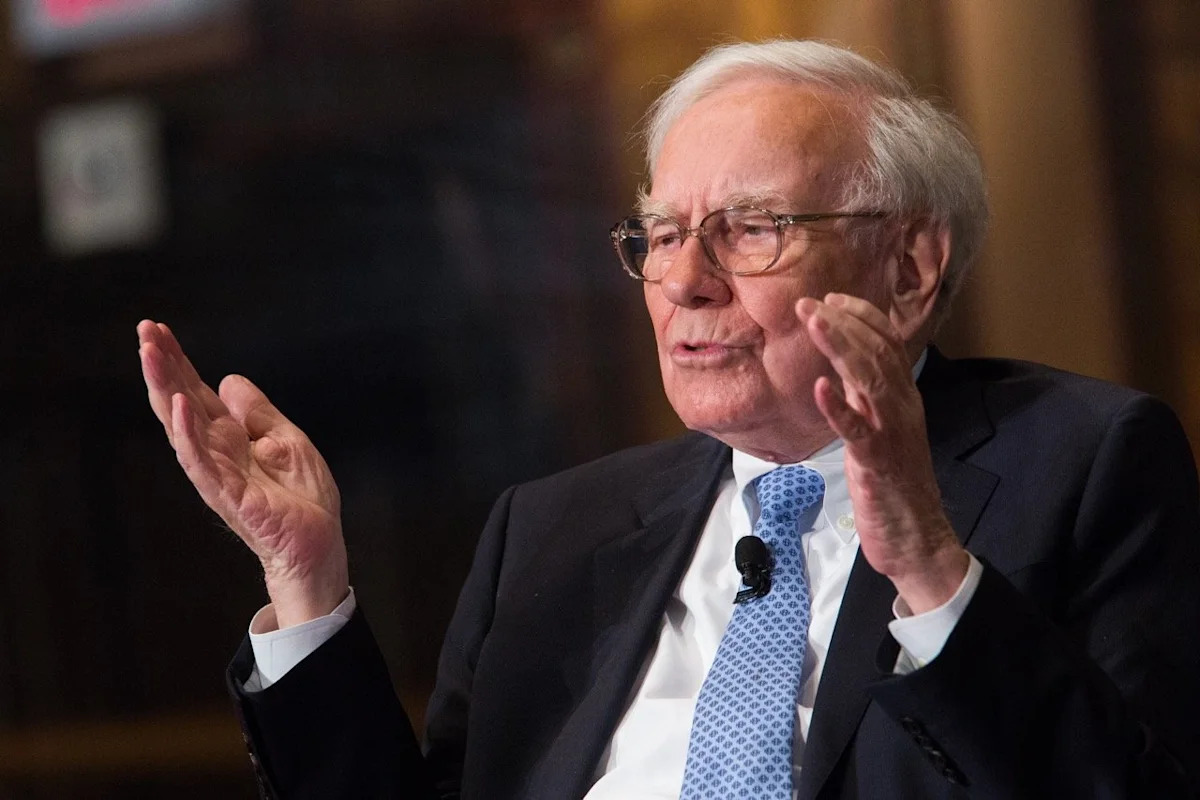
In September, Warren Buffett published his final letter to shareholders of Berkshire Hathaway. It was a relatively short one-pager. In it, he reflected on his six-plus decades at Berkshire, discussed his succession plan, and said the company would be in "excellent hands."
Throughout his career, Buffett has become well known for his nuggets of investing wisdom. This letter was no exception.
Missed AI's "Act 1"? Act 2 Could Be 14x Bigger. Most investors think they missed the AI boat because they didn't buy Nvidia in 2005. But according to our analysts, we're only at the end of "Act 1"—the R&D phase. "Act 2" is the global rollout. Continue »
Most people would probably say this quote was the highlight: "Father Time always wins. He has, however, been generous with me." But there was one other snippet in there that stood out to me. And I think it does the best job of highlighting the Buffett investing philosophy.
Buffett was a unicorn on Wall Street for several reasons, not the least of which is Berkshire Hathaway's extraordinary track record.
From 1965 to 2013, the stock produced an average annual total return of 19.7%, more than double the S&P 500's (SNPINDEX: ^GSPC) 9.8% return during the same period. What's perhaps most amazing about this is how he did it.
Wall Street focuses on what to buy now or what will perform best in the near future. But Buffett did it by buying stocks and holding them indefinitely. He identified good companies at attractive prices and simply gave them enough time for the story to play out. He was never a trader. He was an investor.
His quote that he was looking for owners of Berkshire Hathaway stock "who thought in decades rather than quarters" means he wanted investors just like him: people who focused on long-term goals, avoided the short-term noise and volatility, and were willing to give their investments the time necessary to perform.
Buffett went on to express confidence in Berkshire Hathaway's future under new Chief Executive Officer Greg Abel and new Chairman Howard Buffett. About his son, he said that he "will guard its culture and values -- both worth more than anything on our balance sheet."
One of the concern about Buffett retirement was that it might lose some of its aura as a conservative conglomerate. In his first quarter at Berkshire Hathaway, Abel made significant changes to the portfolio by selling several names and making Alphabet, one of the "Magnificent Seven" stocks, a top-three holding.
But Buffett reiterated that the Berkshire style won't be changing. The company will still be focused on investing in companies with durable competitive advantages, strong balance sheets, and industry leadership. These factors make companies successful over decades, not just quarters.
I think it's always important to remember the advice he gave to the trustee of his wife's inheritance about 13 years ago.
In his 2013 shareholder letter, he explained that he wanted the money invested in a simple portfolio with 90% in a low-cost S&P 500 index fund and 10% in short-term government bonds. He also famously said that he preferred the Vanguard S&P 500 ETF.
There was no mention of tech or artificial intelligence (AI) stocks. He didn't say to try to get out ahead of the next hot trend. He said that investors should simply invest in the index that includes hundreds of leading American companies and need not try to identify winners. By investing in a basket of the largest and most successful U.S. companies, investors simply get to participate in the growth of the American economy.
Wall Street may measure success by quarters or calendar years. Buffett built his fortune over decades. By following the Buffett blueprint, individual investors can enjoy long-term financial success.
Ever feel like you missed the boat in buying the most successful stocks? Then you'll want to hear this.
On rare occasions, our expert team of analysts issues a "Double Down" stock recommendation for companies that they think are about to pop. If you're worried you've already missed your chance to invest, now is the best time to buy before it's too late. And the numbers speak for themselves:
Nvidia: if you invested $1,000 when we doubled down in 2009, you'd have $596,081!*
Apple: if you invested $1,000 when we doubled down in 2008, you'd have $64,217!*
Netflix: if you invested $1,000 when we doubled down in 2004, you'd have $379,123!*
Right now, we're issuing "Double Down" alerts for three incredible companies, available when you join Stock Advisor, and there may not be another chance like this anytime soon.
*Stock Advisor returns as of October 5, 2026
David Dierking has no position in any of the stocks mentioned. The Motley Fool has positions in and recommends Alphabet, Berkshire Hathaway, and Vanguard S&P 500 ETF. The Motley Fool has a disclosure policy.
The 6 Words From Buffett's Farewell Letter Every Investor Should Hear was originally published by The Motley Fool