NVDA -0.52% Trade NVIDIA on Coinbase Trading disclosure Trading disclosure The above button links to Coinbase. Yahoo Finance is not a broker-dealer or investment adviser and does not offer securities or cryptocurrencies for sale or facilitate trading. Coinbase pays us for certain activity generated through this link. Prices displayed are informational.
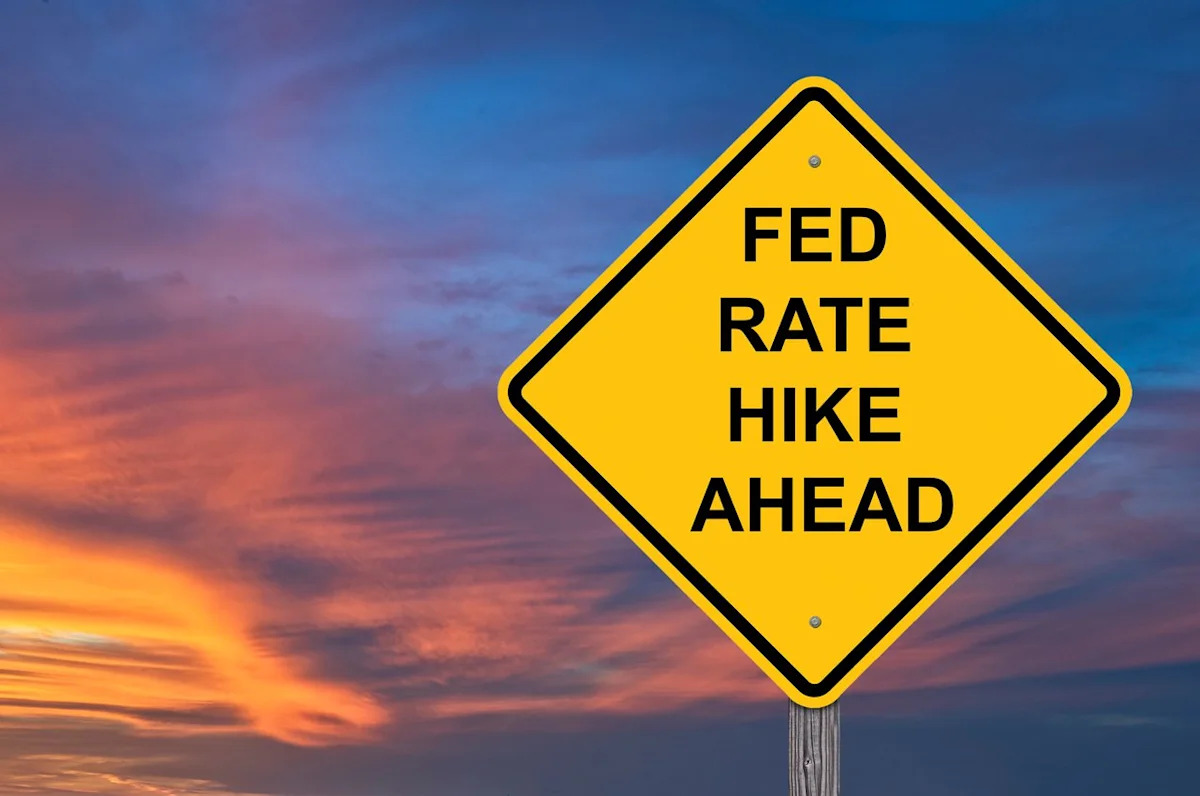
So far this year, the biggest story in the stock market has been the bond market. Yields on U.S. Treasury bonds are rising, driving up borrowing costs. Inflation still has not shrunk to the Fed's 2% target. The Fed hiked short-term interest rates at its Sept. 16 meeting, and futures traders are pricing in the chance of another Fed rate hike in December.
What's the Fed warning to stock market investors? Pay attention to what Fed Chair Kevin Warsh said at his Sept. 16 news conference after the most recent Fed rate hike. He said that "inflation is too high and has been for too long" and promised that "this Committee will deliver price stability."
Missed Nvidia in 2009? This Rare Signal Is Flashing Again. In 2009, a "Double Down" signal flashed for a little-known chipmaker called Nvidia. For the first time in years, that same "Total Conviction" signal is flashing for a company 1/100th the size of Nvidia. Continue »
If the Fed keeps hiking interest rates, it could signal to investors that stock prices are going down. But should Warsh's warning change the way you invest? Possibly not.
Let's look at what higher interest rates mean for the stock market -- and why most investors should probably stay the course.
The stock market is a highly competitive environment. Companies are competing for capital. Stock pickers and money managers are trying to outcompete each other and beat the overall market. But stocks are also competing for investors' money against other types of investments.
If interest rates go up, and investors can earn a guaranteed 5% yield for 10 years on U.S. Treasury bonds, more people might start moving more of their money into bonds -- and out of stocks. If interest rates go up, borrowing costs go up for businesses. That means it's more expensive for companies to invest in a new product or build a new factory.
Fighting inflation is important, and it's part of the Fed's mandate. High inflation is ultimately bad for almost everyone. But when the Fed hikes interest rates, it can be bad for stocks in the short run, because money gets more expensive.
Companies might get less profitable. Economic growth could slow. As a result of these headwinds, stock prices could go down.
Nothing is guaranteed in the stock market. Higher interest rates don't automatically lead to lower stock prices. Sometimes Fed rate hikes can be good news, because they're a sign of strong economic growth. A fast-growing economy can be a healthy reason to hike rates, and it doesn't mean the stock market will crash.
Research from Fidelity shows that based on previous history from January 1992 to April 2026, when the Fed has hiked rates in response to strong economic indicators such as strong durable goods orders, the S&P 500 (SNPINDEX: ^GSPC) has tended to go higher in the next 12 months.
S&P 500 index funds, like the Vanguard S&P 500 ETF (NYSEMKT: VOO), have delivered average annual returns of about 15% for the past 16 years, and about 13.8% in the past five years. This strong performance occurred despite the Fed's major rate-hiking cycle during 2022-2023.
If you believe that higher rates and higher inflation are here to stay, you might consider diversifying your portfolio with so-called inflation-proof investments like commodities or real estate. But many investors might want to just stay put and stick with their stock holdings. The stock market could keep growing even as interest rates rise.
Ever feel like you missed the boat in buying the most successful stocks? Then you'll want to hear this.
On rare occasions, our expert team of analysts issues a "Double Down" stock recommendation for companies that they think are about to pop. If you're worried you've already missed your chance to invest, now is the best time to buy before it's too late. And the numbers speak for themselves:
Nvidia: if you invested $1,000 when we doubled down in 2009, you'd have $596,081!*
Apple: if you invested $1,000 when we doubled down in 2008, you'd have $64,217!*
Netflix: if you invested $1,000 when we doubled down in 2004, you'd have $379,123!*
Right now, we're issuing "Double Down" alerts for three incredible companies, available when you join Stock Advisor, and there may not be another chance like this anytime soon.
*Stock Advisor returns as of October 5, 2026
Ben Gran has no position in any of the stocks mentioned. The Motley Fool has positions in and recommends Vanguard S&P 500 ETF. The Motley Fool has a disclosure policy.
What the Fed Warning Means for Stock Market Investors Based on Historical Trends was originally published by The Motley Fool