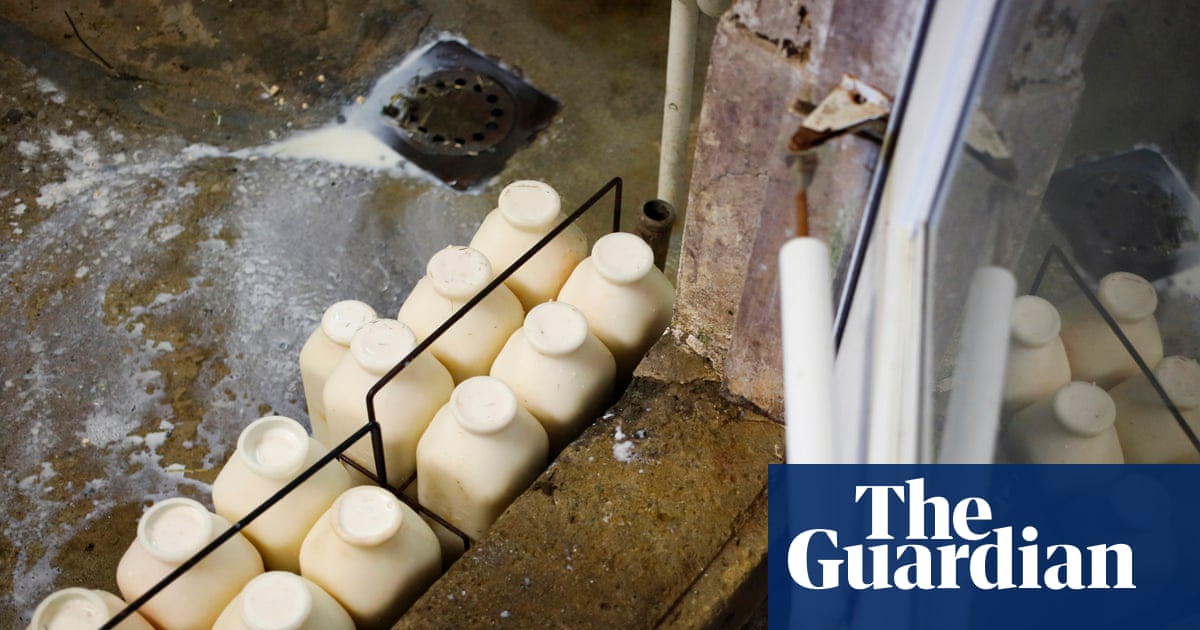
Bottles of raw milk at a dairy farm in Kentucky on 27 September 2021. Photograph: Luke Sharrett/Bloomberg via Getty ImagesView image in fullscreenBottles of raw milk at a dairy farm in Kentucky on 27 September 2021. Photograph: Luke Sharrett/Bloomberg via Getty ImagesPhysicians’ group calls for ban on raw milk – as it’s becoming increasingly popular in the USAs raw milk industry experiences record growth, experts say it might contain pathogens that can sicken people
As raw milk becomes increasingly popular among Americans, there have been several recent disease outbreaks tied to the product, alarming public health officials.
Last week, the American Academy of Pediatrics called for a ban on sales of unpasteurized milk in the United States.
More people have started drinking raw milk, doctors say, because of influencers who have touted its health benefits; Robert F Kennedy Jr, the US health secretary, who until recently promoted it; and a lack of trust in government regulators.
But there is no evidence for claims that it reduces lactose issues and can cure allergies and boost immunity, the Food and Drug Administration (FDA) and public health groups argue. And whereas raw milk producers say that pasteurization eliminates flavor and health benefits, public health officials say it keeps people safe.
Read more“I’m concerned about people consuming raw milk because while it isn’t a guarantee that you will get sick from it, there is a relatively high likelihood that you can get a pathogen, a bacteria that will make you sick,” said Petra Levin, a professor of biology at Washington University.
US businesses started using pasteurization, a process in which milk is heated to destroy pathogens and bacteria, in the late 19th century. As more producers adopted the practice and regulators started requiring it, the country saw a dramatic decrease in the infant mortality rate. In 1987, the FDA banned the interstate sale and distribution of raw milk, but businesses were still allowed to sell it within their states, depending on their laws.
During this century, more Americans started consuming raw milk and, over the last decade, many states have loosened their milk regulations. In 2024, raw milk sales increased by 17.6%, according to the market research firm Circana.
Before becoming the health and human services secretary, Kennedy said on stage that he only drinks raw milk and vowed that the “FDA’s war on public health is about to end”, including its “aggressive suppression” of raw milk.
Once in office, he took a shot of raw milk with Dr Paul Saladino, a psychiatrist and author of The Carnivore Code – but to the dismay of some in the industry, Kennedy has now apparently stopped advocating for it. The Trump administration now instead promotes whole milk.
Ben Beichler “fell in love” with milk cows while farming and, eventually, he and his wife started their own operation, Creambrook Farm, in Virginia. They now milk 150 cows and legally sell raw milk through a “herd share” loophole that allows consumers to buy a share of a cow.
He describes the Covid-19 pandemic as a “massive gamechanger” for his business because people started thinking more about how they could protect themselves from getting sick.
Plus, “for better or worse, I think there is a skepticism in society that didn’t exist pre-Covid, and people are willing to question things more than they used to. So that has made people question a lot of their dietary needs,” Beichler said. “I’m not necessarily saying that skepticism has been a good thing.”
Since 2020, his sales have increased between 30% and 50% annually, he said.
As evidence of raw milk’s benefits, Beichler and others point to studies such as a 2011 report in the Clinical & Experimental Allergy journal which stated that “consumption of farm milk may offer protection against asthma and allergy”.
But the FDA states that advocates have misused the findings because about half of the farm milk in the study was boiled. Also, the authors stated that they could not evaluate the “effect of pasteurized vs raw milk consumption because no objective confirmation of the raw milk status of the farm milk samples was available”.
“At this stage, consumption of raw farm milk cannot be recommended as a preventive measure,” the study authors stated.
To ensure his milk is safe, Beichler said, his farm tests every batch at its laboratory and then sends samples to a third-party lab. He declined to provide its name but said he would provide it to customers who ask for it.
“An honest and wholesome family who can provide safe and nutrient dense milk to the many people who are drinking raw milk these days,” one review stated.
Despite his belief in raw milk, Beichler said that “the consumer has to be judicious” about “where they are getting” it.
This summer, more than 100 people became sick after consuming raw milk, and 11 were hospitalized, according to National Public Radio. An E coli outbreak this year in California, Florida and Texas was also linked to cheese from the country’s largest raw milk distributor, Raw Farm. Most of those who fell ill were children ages three and younger.
Dr Brian Dawes, an infectious disease specialist at Stanford University, said raw milk is especially dangerous for children because “they have weaker immune systems, less overall physiological reserves, so when they get these infections, they tend to get much sicker”.
He supports a ban on raw milk. He said he also thinks public health leaders “have our work cut out for us to really regain public trust in the systems that have worked for milk for over 100 years, keeping people safe”.