Jeff Bezos issues blunt housing warning to young Americans: Don’t blame ‘greedy landlords’ — here’s his solution Jing Pan Thu, October 8, 2026 at 2:00 PM EDT 7 min read AMZN -2.04% Trade AMZN on Coinbase Trading disclosure Trading disclosure The above button links to Coinbase. Yahoo Finance is not a broker-dealer or investment adviser and does not offer securities or cryptocurrencies for sale or facilitate trading. Coinbase pays us for certain activity generated through this link. Prices displayed are informational.
Moneywise and Yahoo Finance LLC may earn commission or revenue through links in the content below.
For young Americans trying to find an affordable place to live, Jeff Bezos understands why the housing market can feel impossible.
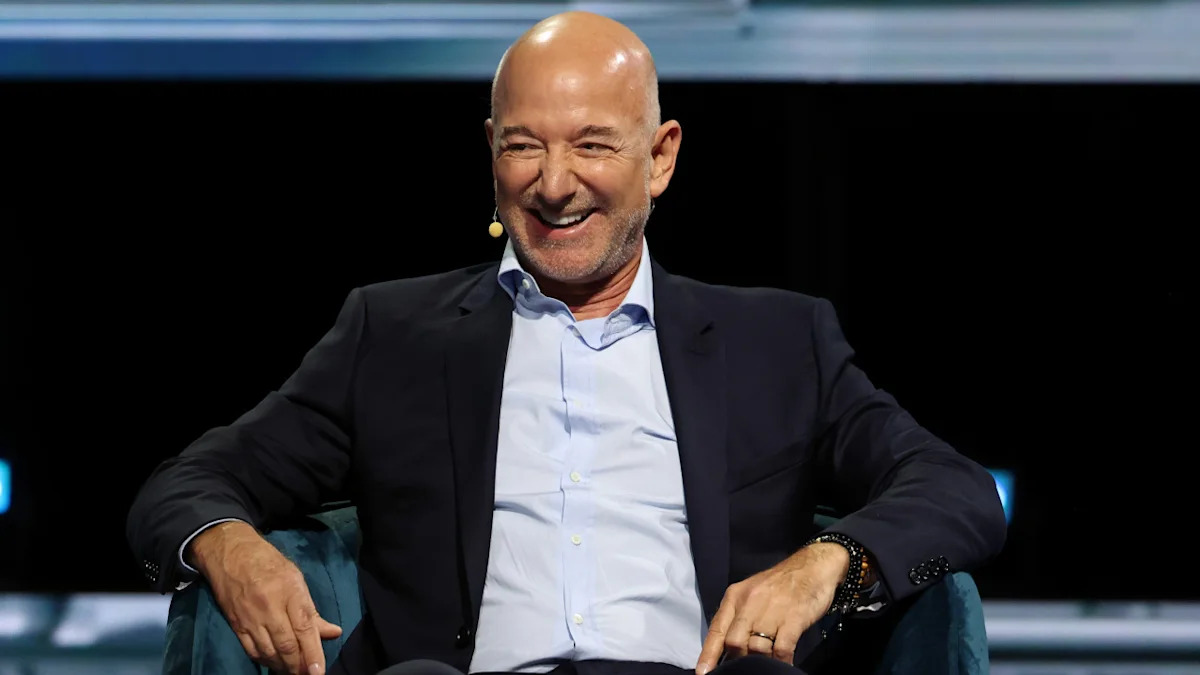
"Young people look at the cost of housing and think, 'Gosh, I have to live two hours out of town. I can't possibly live close to my job,'" the Amazon founder said (1) in a recent interview with Bret Baier on Special Report.
Jeff Bezos backs a platform that lets anyone invest in rental homes for as little as $100 — 6 ways to build wealth like a landlord without actually being one
A single line on your car insurance policy could be inflating your premium by up to 30% — here's what to change
A record 45% of central banks plan to grow gold reserves — and many investors are following suit. Get your free gold IRA guide from Priority Gold
Bezos acknowledged that the U.S. has "real affordability problems" and that the cost of housing is "very expensive."
But while the frustration is real, he says a familiar political explanation misses the mark: blaming "greedy landlords."
"Instead of working on the real solution, it's very common for — in the case of housing — certain politicians to point at landlords and say, 'This is the fault of greedy landlords.' This isn't what is going on," Bezos argued.
Instead, he called housing a "simple supply and demand situation," and pointed to government policies he believes are making it worse.
"It's Econ 101. If you put in place government programs that subsidize demand and constrain supply, you are going to get high prices," he said. "That's what many municipalities do."
The supply problem is substantial. According to Realtor.com, America is now short more than four million homes (2).
To show what a different approach can accomplish, Bezos pointed to Austin, TX.
"Over the last ten years, they have implemented many policies designed to make it easier to build houses," he said. "They have housing prices going down in Austin."
Recent local figures show relief for buyers and renters. According to Realtor.com's latest market summary (3), Austin's median listing price was $535,000, down 6.53% from a year earlier. Median rent was $1,950 a month, down 7.14%.
For Bezos, the lesson is straightforward: make housing more accessible by making it easier to build.
"So some politicians are governing correctly on this issue. Many are not," he said.
He also urged voters to look beyond the blame game when deciding whom to support.
"If there's a politician who's picking villains and pointing fingers, that probably means they don't have a solution," Bezos said.
"If they had a solution, instead of blaming somebody, they'd be working on the solution."
Read More: Vanguard reveals what's coming for U.S. stocks — and it could be bad news for this group of investors
Bezos's argument also highlights what makes housing an enduring investment: come what may, people need a place to live.
That essential demand is one reason investors have long turned to rental properties to generate recurring income and build wealth.
Real estate is also a popular hedge against inflation, as property values and rental income tend to rise alongside the cost of living.
However, while real estate investing has clear benefits, being a landlord comes with its challenges. Managing a property involves finding and screening tenants, collecting rent and handling maintenance and repair requests (out of your own pocket) — and that's assuming you can save enough for a down payment and get a mortgage to buy the property in the first place.
The good news? You don't need to buy a property outright — or deal with leaky faucets — to invest in real estate today. Real estate investment platforms like mogul offer an easier way to get exposure to this income-generating asset class.
As a platform offering fractional ownership in blue-chip rental properties, mogul gives investors monthly rental income, real-time appreciation and tax benefits — without the need for a hefty down payment or late-night tenant calls.
Founded by former Goldman Sachs real estate investors, the team handpicks the top 1% of single-family rental homes nationwide for you. In other words, you gain access to institutional-quality offerings for a fraction of the usual cost.
Each property undergoes a rigorous vetting process, requiring a minimum 12% return even in downside scenarios. Across the board, the platform features an average annual IRR of 18.8%. Their cash-on-cash yields, meanwhile, average between 10% and 12% annually. Offerings often sell out in under three hours, with investments typically ranging between $15,000 and $40,000 per property.
Another option is Arrived, a platform backed by investors like Jeff Bezos himself.
Arrived allows you to invest in shares of rental homes with as little as $100 — all without the hassle of mowing lawns, fixing leaky faucets or handling difficult tenants.
The process is simple: Browse a curated selection of homes that have been vetted for their appreciation and income potential. Once you find a property you like, select the number of shares you'd like to purchase and then sit back as you start receiving any positive rental income distributions from your investment.
And, for a limited time, investors can get a 2% account match when opening an account and adding $2,000 or more.
At the end of the day, building more homes may address the root problem. But it won't immediately change the monthly payment facing someone who needs to buy now.
One expense buyers can compare is the cost of borrowing.
Different lenders can offer different rates to borrowers with similar financial profiles. Accepting the first offer could mean leaving savings on the table.
In research published in 2023, Freddie Mac found (4) that during October and November 2022, borrowers obtaining two rate quotes could have saved as much as $600 annually. Those who received at least four could have saved more than $1,200 annually.
That's why Freddie Mac recommends shopping around, obtaining quotes from three to five lenders to secure the best mortgage rate possible. Even a small rate reduction can translate into significant savings over the life of a loan.
To make this process easier, platforms like the Mortgage Research Center (MRC) can help you quickly compare rates and estimated monthly payments from multiple vetted lenders. By entering basic details — such as your zip code, property type, price range and annual income — you can view mortgage offers tailored to your needs and shop with confidence.
The tax breaks in Trump's 'big beautiful bill' expire after 2028. Here are 4 moves to make before the window closes
Millionaires under 43 hold only 32% of their wealth in stocks. Here's where their money is actually going
Dave Ramsey says this 1 indulgent purchase stops Americans from becoming wealthy. Here's what he recommends instead
Your Social Security 'Trump Bump' in 2027 will be one of the biggest in 25 years — but there's a serious catch no one's talking about
Get Warren Buffett's best investing lessons, free. Join 250,000 readers getting Moneywise's sharpest money reporting every week. Subscribe and we'll send you our guide to the ideas that built Buffett's fortune as a welcome gift.
We rely only on vetted sources and credible third-party reporting. For details, see our ethics and guidelines.
YouTube (1); Realtor.com (2), (3); Freddie Mac (4)
This article provides information only and should not be construed as advice. It is provided without warranty of any kind.