Buffett Bet $1 Million That an S&P 500 Fund Would Beat Hedge Funds. He Won by Nearly 5 Points a Year Joel South Thu, October 8, 2026 at 1:26 PM EDT 6 min read ^GSPC -0.67% BRK-B +1.24% SPY -0.65% VFFSX -0.22% Trade SPY on Coinbase Trading disclosure Trading disclosure The above button links to Coinbase. Yahoo Finance is not a broker-dealer or investment adviser and does not offer securities or cryptocurrencies for sale or facilitate trading. Coinbase pays us for certain activity generated through this link. Prices displayed are informational.
Buffett's S&P 500 index fund returned 7.1% annually versus 2.2% for hedge funds, a 4.9-point yearly gap that compounded over 10 years.
Hedge funds lost primarily due to two fee layers: the standard '2 and 20' structure plus an additional fund-of-funds management fee charged every year.
Investors can replicate Buffett's winning strategy today through VOO, which charges just 0.03% and has returned roughly 324% over the past decade.
Just released. Our analysts combed the entire stock market and named the ten best stocks to buy right now, and Berkshire Hathaway didn't make the cut. Enter your email to see the names that beat BRK-B. The report is free. Enter your email and see if any of your stocks made the cut.
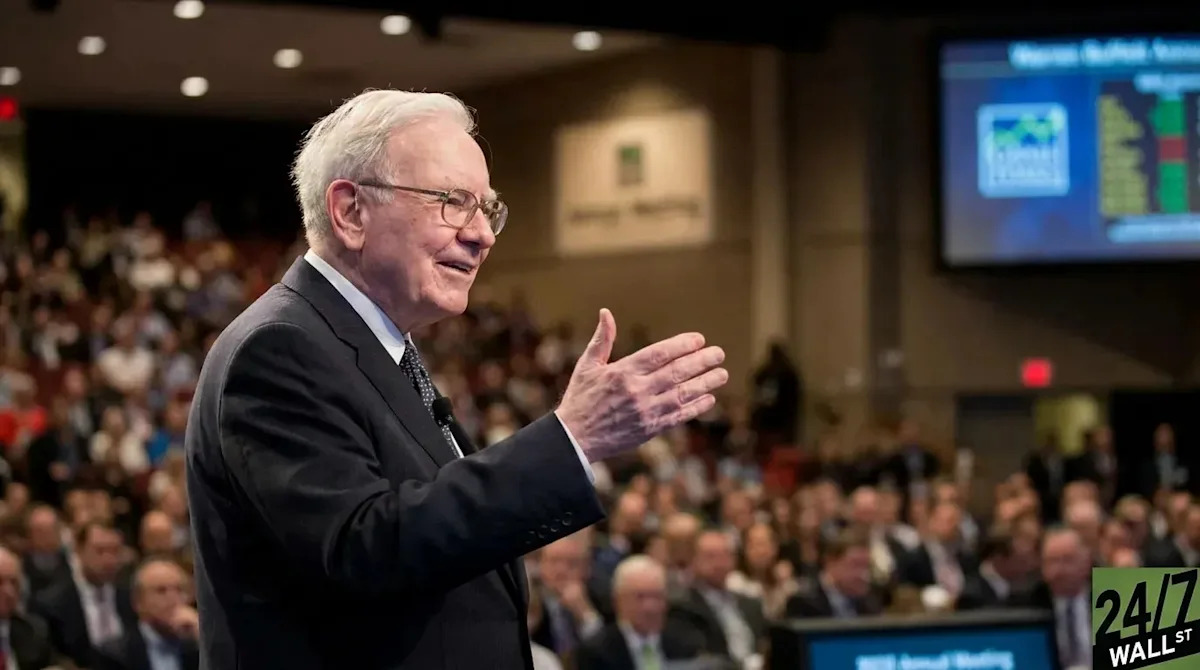
In 2007, Warren Buffett put up $1 million to back a simple claim. He said a plain S&P 500 index fund would beat a basket of hedge funds over 10 years. Protégé Partners took the other side. The contest ran the full decade and ended in 2017. Nobody called it early, and nobody changed the rules.
You have more at stake here than Buffett did. Pay a professional to beat the market. Trail it by a few points a year, and you give up a large part of your retirement balance.
Buffett picked the Vanguard 500 Index Fund Admiral Shares, which returned 7.1% a year. Protégé's hedge fund picks returned 2.2% a year. That works out to a gap of 4.9 percentage points a year.
A few points sounds small, but compounding makes the gap huge. Each year the index side earned returns on a bigger base, and that base grew faster than the hedge fund side's. After 10 years the index side is far larger. Buffett's prize money grew to about $2.2 million after a bond rally, and the money went to Girls Inc. of Omaha.
Why Didn't BRK-B Make The Top 10 List?
24/7 Wall St has helped investors make money for over two decades, and our top analysts just finished ranking the definitive Top 10 Stocks To Buy Now. Not the ten biggest companies. Not the ten everyone is arguing about. The ten best stocks to buy right now.
The report is free, and you can see why we think each stock is a top investment today.
Enter Your Email and See the Ten →
Protégé chose five funds of hedge funds. A fund of funds is a manager that hires other managers, and you give your money to the top layer, which spreads it across many hedge funds below. Both layers charge you.
Hedge funds have long used a model called "2 and 20". It involves an annual fee based on the assets they manage, plus a share of any profits. The fund-of-funds manager then adds its own annual fee on top, and sometimes takes its own cut of profits too.
Most investors miss how these fees work. The annual fee comes out every year, on every dollar, whether the manager adds value or loses money. Before the manager earns you a single dollar more than the market, they have to make up both layers of fees.
Profit fees make it worse. Say one hedge fund in the basket rises and another falls, and you pay a share of profits to the winner and still take on the loser's losses. Spread that across dozens of funds, and you can pay profit fees even when your overall result is average.
An index fund has neither layer. It buys the whole market and charges almost nothing to do it.
The hedge fund side deserves a fair hearing. This was one contest over one stretch of market history. The decade began just before the 2008 financial crisis, and U.S. large-cap stocks then spent most of the following years climbing.
Hedge funds often give up some upside to cushion crashes, and that trade-off loses ground when the market rises for most of a decade. A decade of flat prices or a long decline could narrow the gap. Some active managers do beat the index over certain stretches. This result says nothing about what the S&P 500 will return over the next 10 years.
The lasting lesson is about costs. Fees are certain and beating the market is uncertain, so an active manager has to overcome fees every single year. An index investor starts the race without that weight.
The same market exposure is available through an ETF. Vanguard S&P 500 ETF (NYSEARCA:VOO) has an expense ratio of 0.03%. Shares trade near $712. Including dividends, the fund is up about 324% over the past 10 years.
SPDR S&P 500 ETF Trust (NYSEARCA:SPY) has been trading since 1993 and has an expense ratio of 0.09%. It costs more than VOO, but both are tiny next to two layers of hedge fund fees.
Even Buffett's own company makes the point. Berkshire Hathaway (NYSE:BRK-B) Class B shares rose about 251% over the same 10 years. That trails VOO's gain, and Berkshire already makes up about 2% of SPY.
Look up every expense ratio you pay. Pull the fund list from your 401(k), IRA, and brokerage accounts. Compare each fund's expense ratio to VOO's 0.03%. Any fund charging many times that has to beat the market by at least the difference just to tie.
Count your fee layers. If an advisor charges a percentage of your assets and then puts you in actively managed funds, you are paying two layers of fees, the same setup that brought down the hedge fund side.
Run a cost comparison. FINRA's free Fund Analyzer shows how fees add up over the years you plan to hold a fund. Run it on your most expensive holding next to an S&P 500 index fund.
Judge results over full market cycles. Buffett's challenge took 10 years to settle. Grade any manager by returns after fees over a full up-and-down cycle, and ignore their best single year.
Buffett won by keeping costs close to zero. Every extra layer of fees you pay has to be earned back before you see a dollar of extra return.
If you have cash sitting in your account right now, give this two minutes. After more than two decades of helping investors beat the market, our top analysts at 24/7 Wall St. put together a definitive report on the Top 10 Stocks To Buy Today. And BRK-B wasn't one of them.
They combed the entire market. It's not 10 ideas, not 10 stocks everyone is talking about, it's what their research points to as the 10 best stocks to buy right now, and it's free. Read more here and see which stocks made the list -->>
Contact editorial@247wallst.com for any questions or corrections.