NVDA -0.22% ^GSPC -0.13% BRK-B -0.04% Trade NVIDIA on Coinbase Trading disclosure Trading disclosure The above button links to Coinbase. Yahoo Finance is not a broker-dealer or investment adviser and does not offer securities or cryptocurrencies for sale or facilitate trading. Coinbase pays us for certain activity generated through this link. Prices displayed are informational.
Despite the S&P 500's (SNPINDEX: ^GSPC) 13.3% gain thus far in 2026, there's still plenty bubbling beneath the surface that could trigger a sharp and sudden market crash. Stubborn inflation, the U.S. national debt sitting above $40 trillion, and fears of an artificial intelligence bubble are just a few concerns.
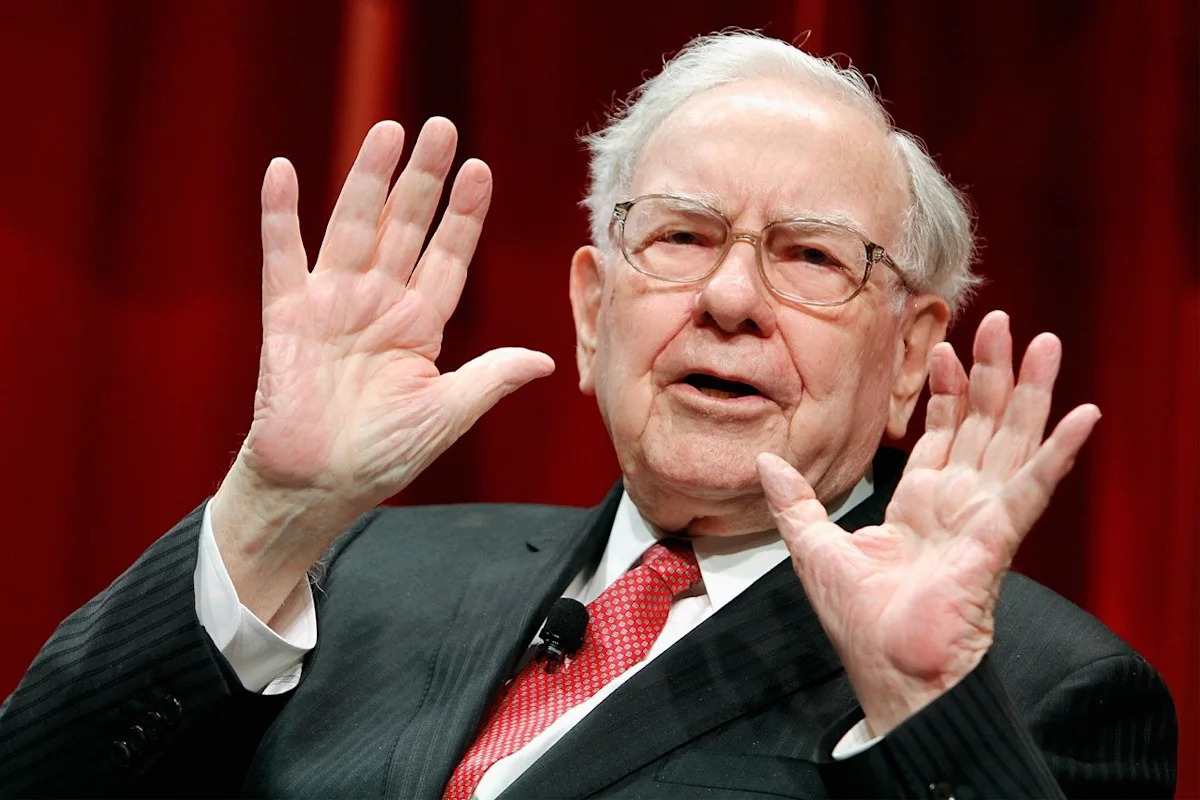
As one of the most successful investors of all time, Warren Buffett has some sage advice. It's found in the 1996 Berkshire Hathaway shareholder letter, which offered one of the top strategies for handling a market crash. The good news is that it can be followed before a crash even starts.
Missed Nvidia in 2009? This Rare Signal Is Flashing Again. In 2009, a "Double Down" signal flashed for a little-known chipmaker called Nvidia. For the first time in years, that same "Total Conviction" signal is flashing for a company 1/100th the size of Nvidia. Continue »
It's easy to feel panicked when the market starts tumbling, and making any kind of move, even if it's a knee-jerk reaction, can initially feel better than making no move at all. While that small voice whispering to "sell" may never go away during the initial waves of a market crash, it can be countered by being prepared in advance.
Buffett shared exactly how to counter it. In Berkshire's 1996 shareholder letter, he said, "If you aren't willing to own a stock for ten years, don't even think about owning it for ten minutes."
This allows someone to consider before even buying a stock how comfortable they would feel holding it if the market were to crash. That can help build a portfolio of high-conviction positions that an investor can hold for the long haul.
It seems paradoxical that some of the best days for the S&P 500 occur during bear markets. These are declines of 20% or more from recent highs, which are more prolonged than a sudden market crash and can cause people to panic even more. However, according to research by the asset management firm Hartford Funds, 48% of the best days for the S&P 500 between 1996 and 2025 occurred during bear markets. For the remaining periods, 28% of the best days were during the first two months of a bull market, while 24% were during the rest of a bull market.
Hartford Funds' data shows that missing any of those best days can be destructive to building wealth. A hypothetical $10,000 investment in the S&P 500 in 1996 would have grown to $192,167 by the end of 2025. Missing the 10 best days, however, would have shrunk that return by 56%, to $85,490. It gets worse from there. Missing the 20 best days would have resulted in a return of $49,551, and missing the 30 best days would have returned just $31,123.
For investors who can stay strong during downturns, the good news is that, even if a quick crash turns into a bear market, they typically last less than 10 months and average a 35% loss. In comparison, bull markets last around 2.7 years, and during bull markets, stocks gain an average of 112%.
Having those high-conviction positions doesn't just mean that it will be easier to stand firm during a market crash. It may also make it even easier to add to a position to build long-term wealth.
Before you buy stock in S&P 500 Index, consider this:
The Motley Fool Stock Advisor analyst team just identified what they believe are the 10 best stocks for investors to buy now… and S&P 500 Index wasn't one of them. The 10 stocks that made the cut could produce monster returns in the coming years.
Consider when Netflix made this list on December 17, 2004... if you invested $1,000 at the time of our recommendation, you'd have $375,887!* Or when Nvidia made this list on April 15, 2005... if you invested $1,000 at the time of our recommendation, you'd have $1,459,146!*
Now, it's worth noting Stock Advisor's total average return is 955% — a market-crushing outperformance compared to 215% for the S&P 500. Don't miss the latest top 10 list, available with Stock Advisor, and join an investing community built by individual investors for individual investors.
*Stock Advisor returns as of October 8, 2026.
Jack Delaney has no position in any of the stocks mentioned. The Motley Fool has positions in and recommends Berkshire Hathaway. The Motley Fool has a disclosure policy.
Warren Buffett's Top Strategy for Navigating a Market Crash was originally published by The Motley Fool