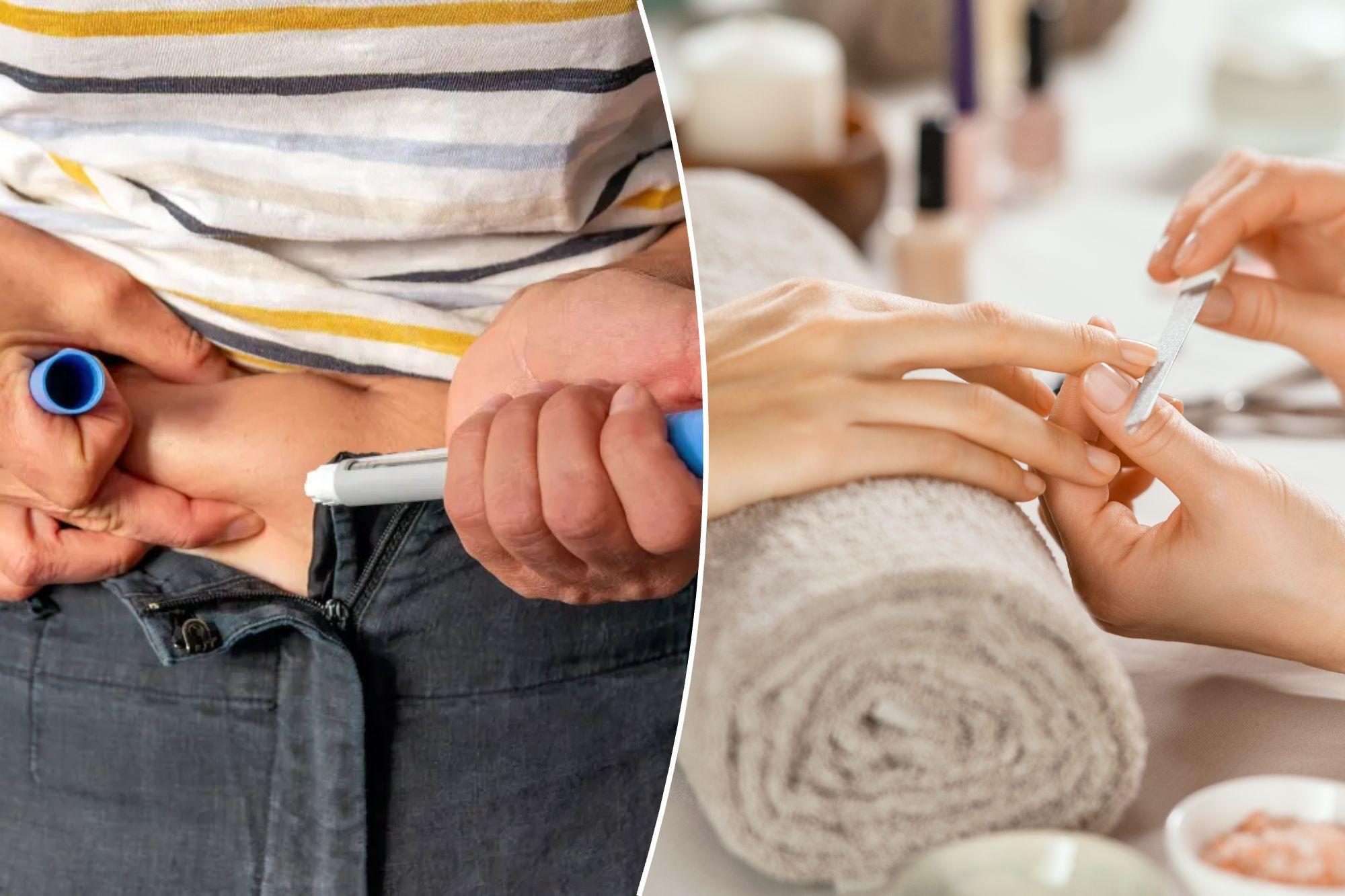
Ozempic and Mounjaro can cost an arm and a leg — and maybe a fingernail.
A new study found that people on GLP-1 drugs were nearly 25% more likely to experience a nail disorder than those not on the drugs.
And one particularly squirm-inducing problem was over four times more likely to appear in GLP-1 users.
More than one in ten US adults are on a GLP-1 medication. Yulia Antonova – stock.adobe.com The new study, presented at the European Academy of Dermatology and Venereology, found that 39% of GLP-1 users reported nail detachment — when the finger or toe nail separates from the nail bed — compared to just 9% of controls.
Once it’s detached, the nail can’t be reattached. It’ll take several months or over a year to regrow.
But that’s not all. Researchers report two thirds of GLP-1 users report at least one nail disorder, including nail discoloration — which appeared 2.7 more frequently in those on the meds.
“Until now, nail changes associated with GLP-1 therapies had essentially been anecdotal,” said study author Charles Taïeb.
In trials, GLP-1s have shown to cause up to 22% weight loss — while real-world loss is more around 2-8% in a year.
That weight loss can cause nail problems, though, from slower growth to brittle nails. This is connected to nutritional deficiencies as a result of less eating, and dehydration.
Researchers of the new study can’t say for sure whether it’s the meds causing nail issues, or primary effects like weight loss.
While researchers did try to adjust the results accounting for existing dermatological conditions, nutritional deficiencies, and weight loss, nail detachment and discoloration still showed up two to three times as often with GLP-1 users.
“Our findings show a clear association, but they also underline an important point: not everything that happens during GLP-1 treatment is necessarily caused by the treatment itself,” Taïeb said.
GLP-1 users are four times more likely to experience detached nails, a new study suggests. Rido – stock.adobe.com Nail and hair loss A companion study with the same participants in the first showed that hair loss was also significantly higher in those on a GLP-1 drug.
Unusual hair loss (noticeable shedding) was reported by 50% of GLP-1 users compared to 34% in those not on the drug.
Loss in volume or density (overall less hair that remains) was more than twice as common in those on the jab, and scalp redness was around three times as common.
Hair loss on GLP-1s are a known phenomenon. Experts say that it’s “almost always” temporary and a reaction to weight loss and rapid physical changes.
Authors of this study believe that something more than weight loss is at play, though. They note that hair loss was usually accompanied by itching, redness, or scaling — a sign that there’s “an inflammatory component” at play.
“Scalp inflammation was the rule rather than the exception, which clinicians do not currently look for and which may be treatable,” explained author Dr. Bruno Halioua. Doctors can prescribe special shampoos and topical medications to address inflammation on the scalp.
Authors stress these new results should be for “awareness rather than alarm.” Hair and nail loss, at the end of the day, is aesthetic and temporary, while weight loss has a huge long-term impact on many aspects of health.
“These changes are frequent, usually benign, and are not a reason to stop an effective treatment on one’s own initiative,” Halioua said. “Anyone who notices hair shedding, an itchy or red scalp or nail changes should mention it to their doctor rather than discontinue therapy.”