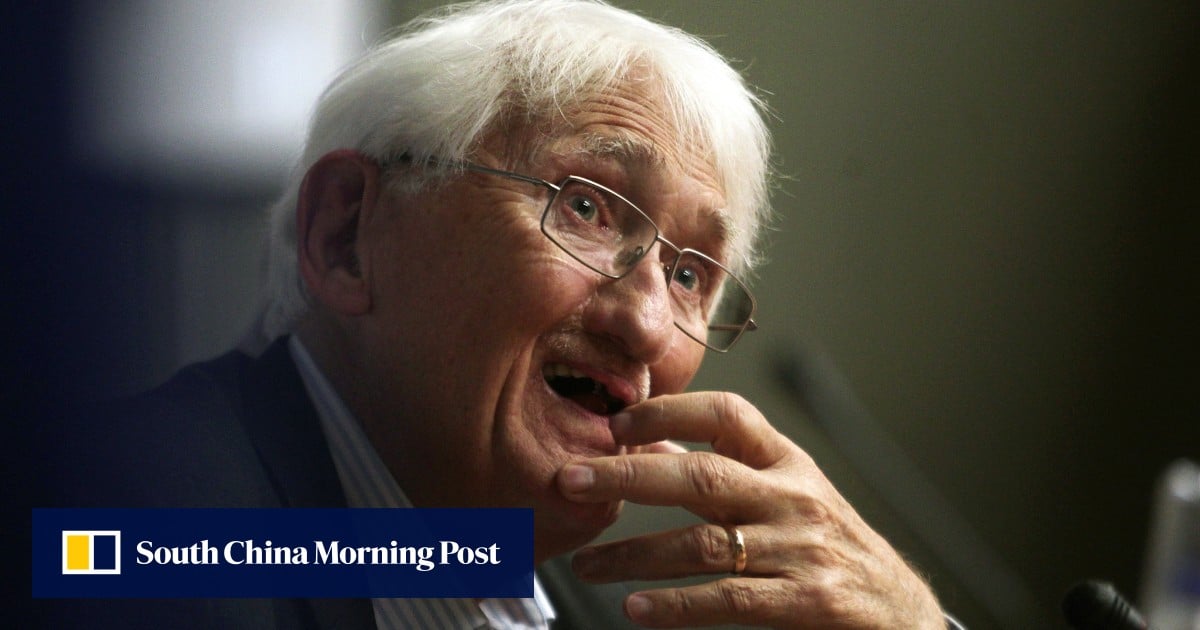
A critic of fascism and nationalism, his ideas remain relevant as post-war pacifism wanes and the far-right gains influence in Germany
3-MIN READ3-MIN ListenReutersPublished: 2:30am, 15 Mar 2026Jurgen Habermas, best known for his theory of political consensus-building, shaped the discourse of post-war Germany more than any other popular intellectual.
He died on Saturday, aged 96, in Starnberg, Germany, the publisher Suhrkamp said.
Over the course of seven decades, his public interventions – from searing critiques of fascist thought in the 1950s to more recent warnings against resurgent militarism and nationalism in Germany – steered the country at critical junctions.
Not only his longevity, but also the renewed relevance of his ideas are remarkable in a country where post-war pacifism is waning and the far-right Alternative for Germany (AfD) has become the second-strongest party in parliament.
Born on June 18, 1929 to a bourgeois family in Dusseldorf, Jurgen Habermas underwent two surgeries after birth and in early childhood for a cleft palate.
A resulting speech impediment is often cited as having influenced his work on communication.