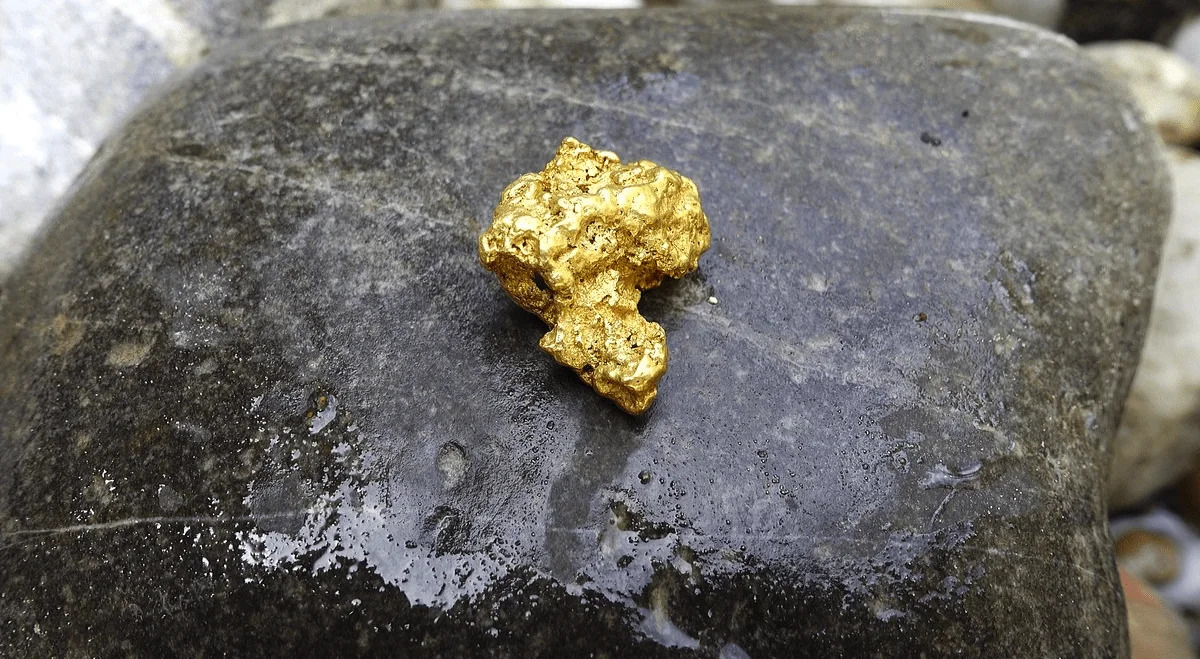
Gold Prices Stabilise After Two-Month Low as Investors Assess Federal Reserve Rate Outlook Fiona Craig Thu, October 8, 2026 at 5:56 AM EDT 3 min read GC=F +0.16% Small gold nugget ©Hans Gold prices recovered modestly on Thursday after falling to their lowest level since early August during the previous session, as investors assessed the prospect of further US interest rate increases alongside persistent geopolitical tensions in the Middle East.
At 04:42 ET (08:42 GMT), spot gold rose 0.3% to $4,123.76 an ounce, while US gold futures gained 0.2% to $4,148.30 an ounce.
The recovery followed renewed concerns about energy supplies after Iran intensified attacks on oil tankers travelling through the Strait of Hormuz, an important route for international oil shipments.
According to media reports, the White House was also considering possible military strikes against Iranian targets ahead of the US midterm elections in November.
Although oil shipments from the Middle East briefly returned to pre-conflict levels during September, renewed security threats around the Strait of Hormuz and the nearby Bab el-Mandeb Strait have driven shipping costs to record highs.
Neil Welsh, Head of Metals at Britannia Global Markets, highlighted the continuing diplomatic uncertainty surrounding the conflict.
"From a geopolitical perspective, nuclear negotiations between the United States and Iran remain stalled, with disagreements over uranium enrichment rights continuing to obstruct progress, while uncertainty across the Middle East persists," Welsh said in a note.
Energy market concerns have also intensified because of severe weather affecting production facilities along the US Gulf Coast.
According to Marine Minerals Administration data cited by Reuters, oil and gas producers had suspended more than a quarter of current oil production and over 16% of natural gas output in the region by Wednesday.
The disruptions have added to existing supply concerns linked to Middle Eastern shipping routes, contributing to higher energy prices.
Rising oil and gas costs have reinforced inflationary pressures, increasing the possibility that central banks will maintain restrictive monetary policies or introduce further interest rate increases.
Higher interest rates generally create difficulties for gold because the precious metal does not generate interest income, making yield-bearing assets relatively more attractive.
Minutes from the Federal Reserve's September monetary policy meeting indicated that all 19 policymakers supported the decision to raise interest rates.
Most officials also considered another increase appropriate before the end of 2026, although the minutes suggested limited urgency to act again at the October meeting.
According to CME FedWatch, financial markets were assigning approximately a 20% probability to an interest rate increase in October, compared with an 80% probability of a further rise by December.
Expectations of tighter US monetary policy have supported the dollar, placing additional pressure on gold prices.
Because gold is priced internationally in US dollars, a stronger American currency makes the metal more expensive for investors holding other currencies, potentially limiting demand.
The combination of elevated Treasury yields, dollar strength and expectations of additional monetary tightening has weighed on bullion despite continuing geopolitical uncertainty.
Demand from central banks has nevertheless provided an important source of support for gold prices.
Analysts at ANZ noted that continued official-sector purchases helped prevent a more pronounced decline in bullion during the recent market weakness.
China has remained a significant buyer, with the People's Bank of China increasing its gold reserves by 740,000 ounces in September.
The addition marked the central bank's 23rd consecutive month of gold accumulation.
Sustained purchases by monetary authorities have helped offset some of the pressure associated with higher interest rates and the stronger dollar.
Gold's near-term direction remains closely linked to developments in US monetary policy, energy-driven inflation and geopolitical tensions affecting international commodity markets.