Beirut – As Israel steps up its bombing campaign on Lebanon, many hospitals have had to close, leaving only a handful of healthcare facilities still operating. For patients with chronic illnesses — and the doctors and nurses treating them — every trip to the hospital now carries the risk of death. FRANCE 24 visited the Sacré-Cœur hospital near Beirut as it prepares its staff for the worst.
Issued on: 13/03/2026 - 16:11Modified: 13/03/2026 - 16:12
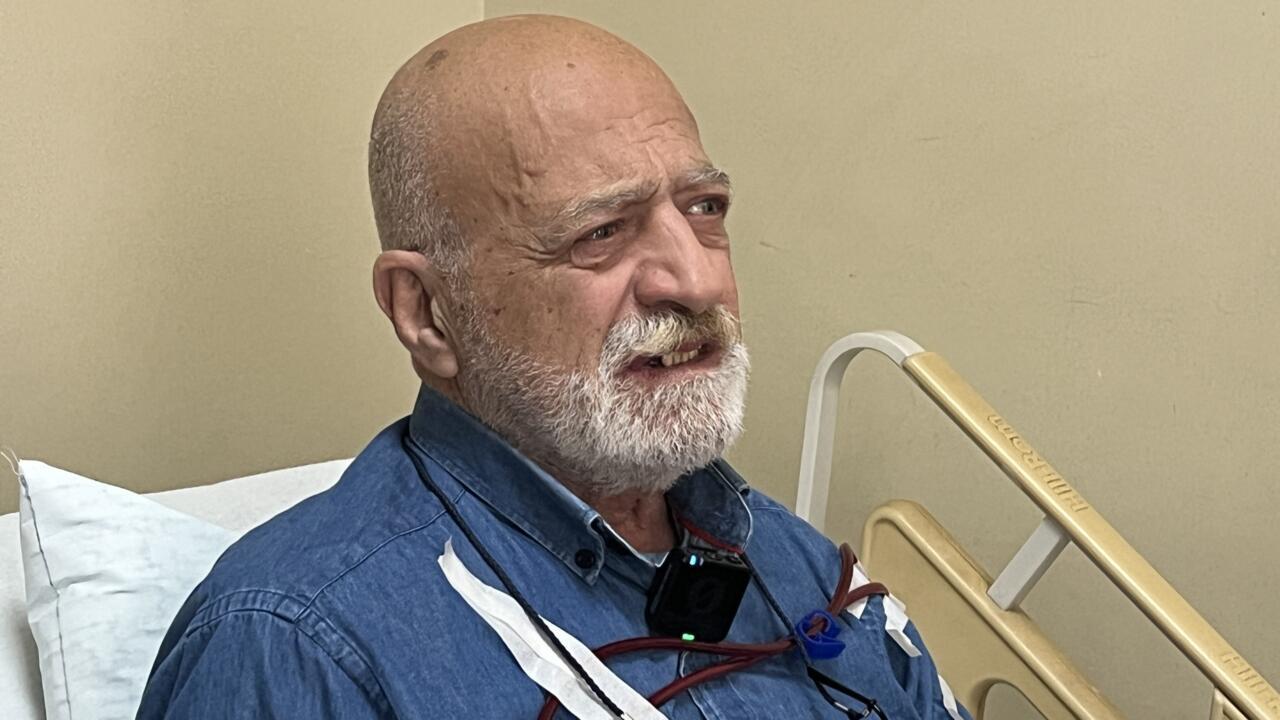
By: Assiya HAMZA Jean suffers from kidney failure and needs dialysis treatment three times a week. In Beirut, March 12, 2026. © Assiya Hamza, FRANCE 24 Jean is not in his usual dialysis ward, but in a small beige-coloured room nearby. The humming sound of the generator fills the tiny space, as his haemodialysis treatment has already gotten under way. It will take at least three hours. The pumps are steadily working to cleanse his blood before sending it back into his veins. As he lies back in bed, Jean, who is in his 70s and comes from the eastern Lebanese region of Baalbeck, does not seem to pay attention to the tubes hooking his left arm to the machine.
“It’s hard to have a chronic illness in a time of war because you have to travel under the bombs,” he says. “I have to get dialysis three times a week.”
Jean was diagnosed with kidney failure three years and two months ago. He keeps a count — most likely because the illness changed his life. Without treatment, Jean faces certain death.
Two nurses are taking care of Jean for his dialysis treatment at the Sacré Coeur hospital in Beirut, on March 12, 2026. © Assiya Hamza, FRANCE 24 Getting treatment has become increasingly difficult since the war broke out. Travelling — even to a hospital — now carries grave risk. According to the Lebanese health ministry, around 10 hospitals are already out of service, and around a hundred other healthcare establishments have had to shutter because of their dangerous locations.
Read more‘I left everything for my grandchildren’: In Beirut, displaced families exhausted by endless war
“The hospital [I usually go to] isn’t closed, but it’s in an area that is being bombed all the time,” Jean says. “Some patients are still there, but those who could leave, left.”
Jean and his family fled their village, Haouch Barada, after an evacuation order issued by the Israeli army. The Christian-Shia Muslim village was then subject to a particularly intense bombing campaign since Hezbollah was reportedly hiding arms and munitions there. Most residents took flight.
“Those who stayed, didn’t have a choice. They didn’t know where to go, or didn’t have the financial means to do so,” he says with a heavy voice.
Jean and his loved ones have since been lucky enough to find a rental not far from Sacré-Cœur.
“We received no indications [for how to continue the treatment]. Everyone just had to do the best they could.”
The non-profit establishment, run by the Sisters of Charity of Saint Vincent de Paul, has been solicited by a number of hospitals to help them care for their patients, as well as by the health ministry.
Doctor Wafaa Abi Haidar is the Sacré Coeur’s care director. In Beirut, on March 12, 2026. © Assiya Hamza, FRANCE 24 Read moreFrom Sudan to Lebanon: ‘Wherever we go, war follows us’
“When the bombing started, we received patients from the south, from the Baalbek region and Dahiyeh (a suburb south of Beirut), who were getting their dialysis treatments at al-Sahel hospital,” facility director Waafa Abi Haidar explains. “We had to mobilise all our staff to receive them and continue treatment. At the moment, eight more patients than usual are being treated by this department.”
Despite the fact that air strikes have ramped up in residential areas that have no direct or indirect links to Hezbollah, the hospital is not overwhelmed. At least not yet.
At the moment, the hospital is treating 11 people who have been wounded in Israeli air raids, a far cry from the many casualties seen during the Israel-Hezbollah war of 2024.
Sister Lamia Tamer oversees the hospital’s social services. Beirut, on March 12, 2026. © Assiya Hamza; FRANCE 24 “The hospital has been here since 1848. It has seen many wars in Lebanon,” Sister Lamia Tamer, who oversees the establishment’s social services, says wryly.
“Unfortunately, this is nothing new. 'Plan B', which was established in 2024, has been reactivated. Our operations have changed, of course, because we receive wounded and displaced people. Around 50 of our staff have also been displaced.”
But regardless of the circumstances, Sacré-Cœur is determined to continue treating patients at all costs.
“I’ve already thought about several solutions – like calling up nurses who aren’t working anymore, or healthcare workers whose establishments are currently closed,” Abi Haidar explains. “There must be staff that we could integrate in order to manage more shifts.”
Resident doctor Teresa Choufani, who is in her sixth year of medical school, examines a patient. Beirut, on March 12, 2026. © Assiya Hamza, FRANCE 24 Displaced nurses and doctors Sacré-Cœur’s resident doctors, some of whom live on the premises, are already lending a crucial hand.
“It’s difficult to get to the hospital because it’s close to areas where the strikes are happening,” says Teresa Choufani, a resident doctor who is in her sixth year.
“The roads aren’t always safe, and some resident doctors have been displaced very far from here. So we now have a special schedule that allows us to take alternating shifts and not be here every day.”
Israel has instructed its army to prepare for “expanding operations in Lebanon”, and the hospital fears the worst is yet to come.
“We’re preparing for all scenarios,” Abi Haidar says. “We have conducted simulations and held training sessions so we can handle a surge of patients. Our role is to treat people. We hope nothing will happen, but we’re preparing for it.”
Dede Hourani’s stained-glass artwork “Sacré Coeur” watches over the hospital’s visitors. In Beirut, on March 12, 2026. © Assiya Hamza, FRANCE 24 Relying on donations If the war drags on, or the casualty figures start mounting, the hospital could quickly run into difficulty.
“The Sacré-Cœur is self-funded,” sister Lamia explains. “If there were an influx of injured, we wouldn’t be able to cope without donations. In 2024, we were only able to operate thanks to private donations. Once again, we are now relying on everyone's generosity.”
In another part of the hospital, Jean is still getting his treatment. Connected to the haemodialysis machine, he is thinking about his home in Haouch Barada. Every two days he makes the 1.5-hour trip to go back, to make sure that his house is still standing.
“I want to go back to my village,” he says. “That’s what matters the most.”
This article was adapted from the original in French by Louise Nordstrom.
Page not found The content you requested does not exist or is not available anymore.