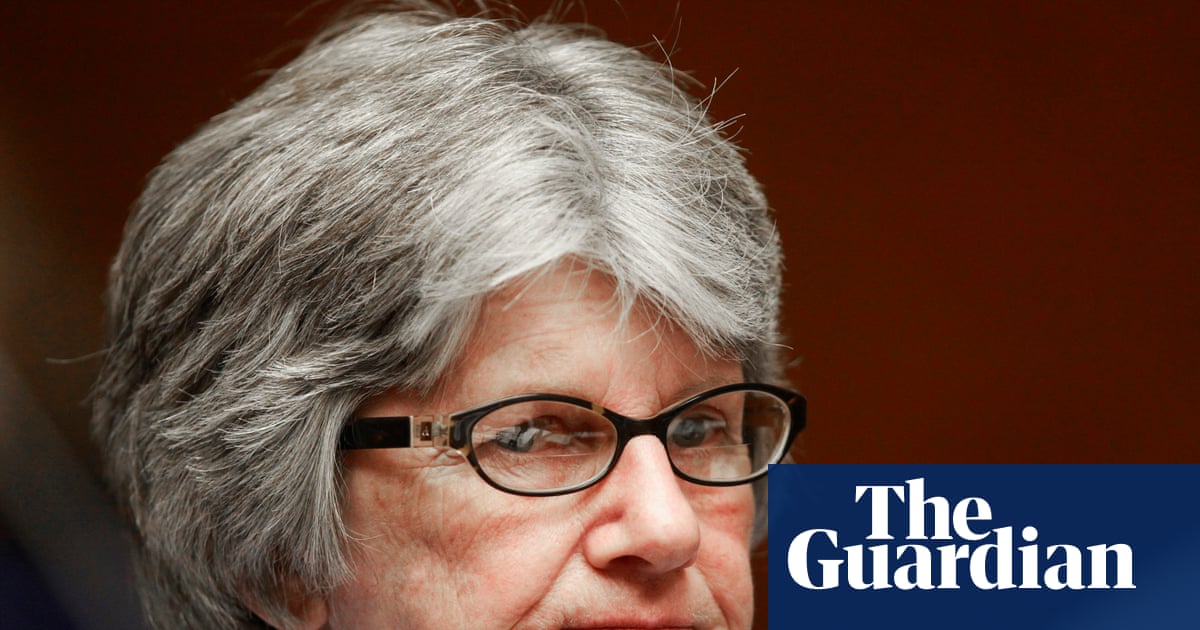
Patricia Krenwinkel listens to the ruling denying her parole on 20 January 2011. Photograph: Reed Saxon/APView image in fullscreenPatricia Krenwinkel listens to the ruling denying her parole on 20 January 2011. Photograph: Reed Saxon/APPatricia Krenwinkel, former Manson follower, granted parole for third timeThe 78-year-old has spent nearly six decades in prison and California governor has overturned last two parole grants
Patricia Krenwinkel, a former Charles Manson follower, was granted parole on Tuesday after nearly six decades in prison for her role in the infamous Tate-LaBianca murders in Los Angeles.
This is the third time that Krenwinkel, 78, has been approved for release by California’s board of parole hearings. After both of her last two parole grants, Gavin Newsom, California’s governor, reversed the parole board’s decisions and denied her freedom, and Krenwinkel’s attorneys are now urging the Democrat to allow this latest ruling to stand.
Krenwinkel, who was 21 at the time of the 1969 killings, has been imprisoned longer than any other woman in California, and the parole board has repeatedly acknowledged her record of rehabilitation over 57 years in prison, concluding she would not in her elderly age be a danger to society.
She was convicted in 1971 for her role in the violent crime spree over two nights that claimed the lives of actor Sharon Tate, who was eight months pregnant, and her four friends, and grocery owner Leno LaBianca and his wife, Rosemary. The killings were gruesome and became one of the most notorious crime stories in the US.
Krenwinkel was 19 years old when she “fell under Charles Manson’s control” and was exploited and psychologically abused by the cult leader, her attorneys have said.
“Reaching this moment has taken decades of hard, deliberate work to confront who she was, what she did, and the devastating harm she caused,” her longtime lawyer, Keith Wattley, said in a statement after the parole grant. “She fully accepts responsibility for her actions, everything she contributed to, and every life she destroyed in 1969. Pat does not excuse or minimize that harm.”
Over her decades in prison, Krenwinkel has had a clean disciplinary record, and nine consecutive psychological evaluations in the past 40 years have found her to be a low public safety risk, according to Wattley, who has represented Krenwinkel for 16 years. He said she has participated in extensive therapy and group counseling, earned a college degree and trained service dogs for people with disabilities.
“I have seen the depth of her remorse and the extraordinary work she has done to change her life. I firmly believe she is ready to return home,” Wattley added.
Debra Tate, Sharon Tate’s sister, has repeatedly objected to the release of Krenwinkel and other Manson followers.
When Newsom denied Krenwinkel parole in 2022, after the board first found her suitable for release, the governor acknowledged that she had been a “victim of Mr Manson’s abuse” and said she had “matured in prison and engaged in commendable rehabilitative efforts”. But he argued she had “not developed sufficient insight into the causative factors of her crime and her triggers for antisocial thinking” and was still dangerous.
When Newsom again denied her parole in 2025, he also acknowledged her “serious chronic medical conditions” had diminished her strength, but concluded she “must do additional work to deepen her insight before she can be safely released”.
The governor is required to consider her elderly age and that she committed the crime as a youth in his review of her case.
Krenwinkel’s attorneys and advocates have repeatedly argued the governor was caving to political pressures by denying parole to people convicted in high-profile cases. Newsom previously vetoed the release of Leslie van Houten, another former Manson follower, but an appeals court sided with her and granted her freedom in 2023. Newsom also faced scrutiny for overturning the parole grant of Sirhan Sirhan, convicted of assassinating Robert F Kennedy, even after two of Kennedy’s sons favored his release.
The push for Krenwinkel’s release comes at a time of growing concern about the increasing number of elderly people languishing in US prisons after decades of incarceration. Krenwinkel’s longtime friends from inside California’s women’s prison told the Guardian last year that she was a mentor and support system to others in the prison.
Wattley, founder of UnCommon Law, a non-profit organization that represents people at parole hearings, urged Newsom to “uphold the law” and approve Krenwinkel’s freedom: “The parole process exists because people can change, rehabilitation matters, and public safety must be grounded in evidence. Pat’s case raises a fundamental question: if three parole grants don’t lead to release, what is the point of this process?”
Spokespeople for Newsom did not immediately respond to an inquiry on Wednesday.