MKC -0.33% NVDA -0.74% Explore stocks on Coinbase Trading disclosure Trading disclosure The above button links to Coinbase. Yahoo Finance is not a broker-dealer or investment adviser and does not offer securities or cryptocurrencies for sale or facilitate trading. Coinbase pays us for certain activity generated through this link. Prices displayed are informational.
I've been investing since I was a teenager, thanks to my dad. At first, I saw the stock market as a way to "get rich quick." Over time, I realized that building wealth wasn't as simple as I thought, which dramatically changed the way I invest. And it all boils down to the real point of the stock market: a public forum where companies raise capital.
Essentially, the stock market allows investors to buy small pieces of a business. But too many people see those pieces as little more than a symbol on a brokerage statement, which is the opportunity for long-term investors. And why I'm buying consumer staples stocks like McCormick (NYSE: MKC) even as other investors sell them.
Missed AI's "Act 1"? Act 2 Could Be 14x Bigger. Most investors think they missed the AI boat because they didn't buy Nvidia in 2005. But according to our analysts, we're only at the end of "Act 1"—the R&D phase. "Act 2" is the global rollout. Continue »
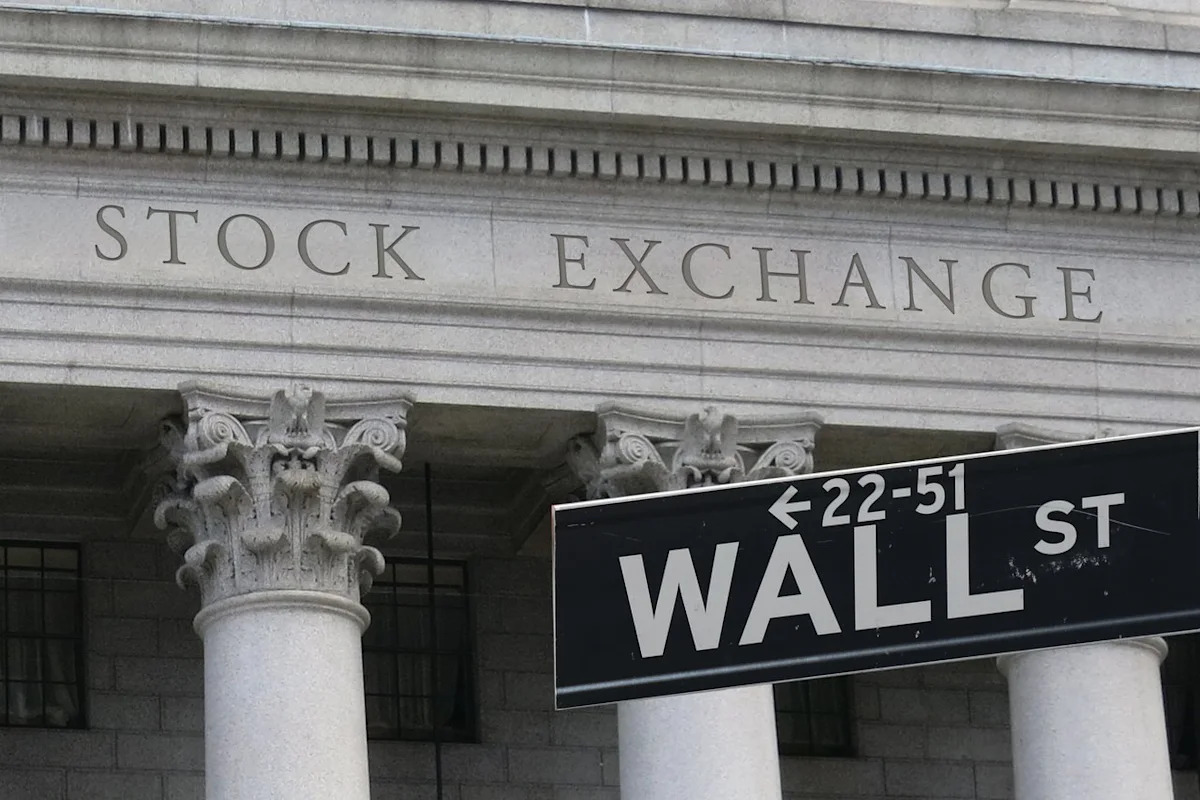
A stock exchange allows investors to trade stocks. At any given moment, a stock is worth whatever the seller is willing to accept and the buyer is willing to pay. But investors are driven by emotions over the short term, so stock prices can be highly volatile. Famous investor Benjamin Graham, who helped to train Warren Buffett of Berkshire Hathaway (NYSE: BRKA)(NYSE: BRKB) fame, likened Wall Street to a voting machine over the short term.
However, he also said that Wall Street was a weighing machine over the long term. This is actually the root of Warren Buffett's success: his investment approach involved buying good businesses at attractively valued prices and holding them for the long term. Essentially, he wanted to pay a fair price for a business and then benefit from the company's growth over time. As that growth shows up, stock market investors tend to reward a company with a higher share price, even though the share price will vary dramatically over the short term.
Unfortunately, too many people invest like I did when I was young. They are trying to make money as fast as possible, which leads them to trade frequently and aggressively. That pushes stocks to extremes, making them volatile, even if the underlying business has a long and successful history. Graham described this as Mr. Market.
Mr. Market is your partner, and he is highly emotional. Some days, he will sell you his share of a company for very little because he's despondent. Other days, he'll buy your share of a company for a shockingly high price because he's enthusiastic. If you can see this pattern, you can take advantage of Mr. Market's mood swings, buying when he's despondent and selling when he's enthusiastic.
Right now, Wall Street is very downbeat on consumer staples stocks. To be fair, there are reasons for this, including high rates of inflation and belt-tightening consumers. That mix has left consumer staples stocks with weak earnings. However, people still buy these companies' products because they are necessities. Even a bear market or a recession won't change that.
And some consumer staples companies are incredibly well-run businesses. I recently doubled my position in McCormick (NYSE: MKC), which is one of the world's largest spice manufacturers and flavor producers. Despite industrywide headwinds, it increased organic sales by 1.9% in the second quarter. And the stock fell anyway, because the company said that the operating environment was difficult, a fact that everyone was already aware of. Mr. Market is clearly fearful about the short term and trading based on that, not the long-term opportunity ahead.
To be fair, there are reasons to worry about McCormick, including its proposed acquisition of Unilever's (NYSE: UL) food business. That will roughly double the company's size, which is a huge change. Only McCormick has successfully executed multiple acquisitions in recent years and has a history of over 100 years as a business. It is a very well-run consumer-staples company with a differentiated business model, selling flavorings rather than food.
With a historically high dividend yield of 4%, I believe investors are underestimating the business opportunity ahead of McCormick. I'm taking advantage of the voting-machine nature of the stock market, believing that the weighing machine will eventually assign an appropriate value to McCormick's shares. Or, to put it another way, I'm happily buying Mr. Market's piece of McCormick while he's despondent, because I believe the business is well-run and likely to grow over the long term. In fact, I believe the Unilever foods acquisition could provide it with scale advantages and geographic diversification that will power its business for years to come.
The Motley Fool Stock Advisor analyst team just identified what they believe are the 10 best stocks for investors to buy now… and McCormick wasn't one of them. The 10 stocks that made the cut are built for long-term growth and could produce monster returns in the coming years.
Consider when Netflix made this list on December 17, 2004... if you invested $1,000 at the time of our recommendation, you'd have $370,440!* Or when Nvidia made this list on April 15, 2005... if you invested $1,000 at the time of our recommendation, you'd have $1,470,022!*
That performance is why people listen. With a track record of beating the S&P 500 by 4x, Stock Advisor offers a distinct advantage. Don't miss the latest top 10 list, available with Stock Advisor, and join an investing community built for the long haul.
*Stock Advisor returns as of October 7, 2026.
Reuben Gregg Brewer has positions in McCormick and Unilever. The Motley Fool has positions in and recommends Berkshire Hathaway. The Motley Fool recommends McCormick and Unilever. The Motley Fool has a disclosure policy.
Most Investors Misunderstand the Stock Market. Here's the One Sector I'm Buying Now. was originally published by The Motley Fool