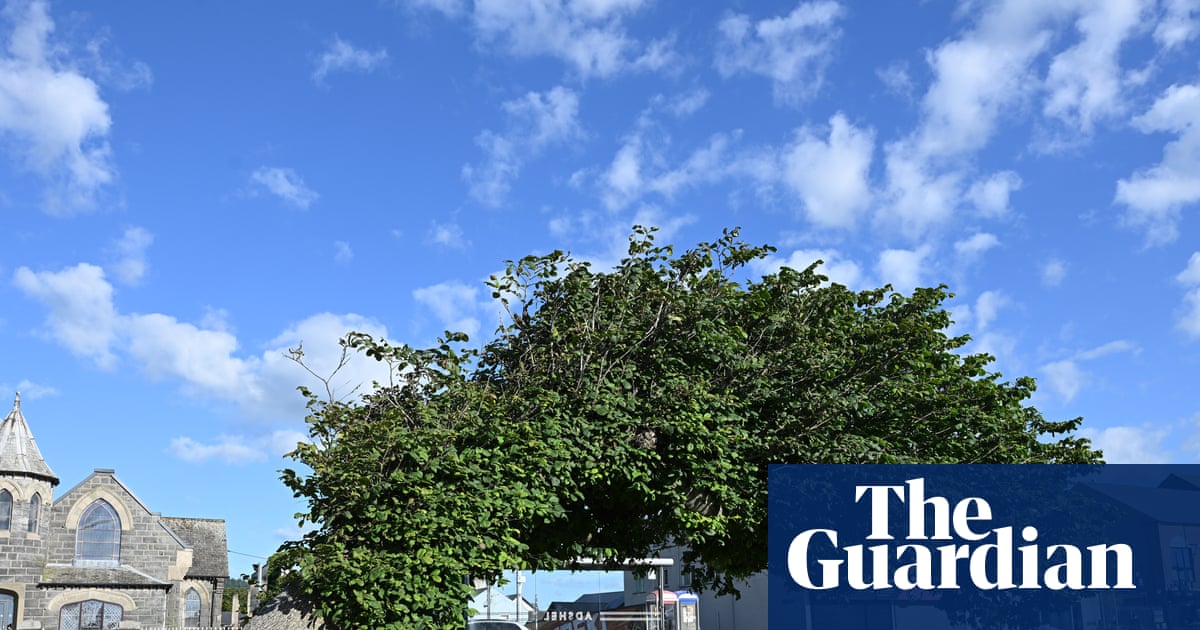
The tree has somehow resisted Dutch elm disease, a fungus that has destroyed most of the UK’s 30m elms. Photograph: Michael CooperView image in fullscreenThe tree has somehow resisted Dutch elm disease, a fungus that has destroyed most of the UK’s 30m elms. Photograph: Michael CooperBendy elm still standing against all odds crowned UK tree of the yearHundred-and-fifty-year-old Wych elm in Newcastle, Co Down has grown sideways owing to strong winds
The “astonishing and bizarre” Bendy Tree in Northern Ireland has been crowned the winner of this year’s tree of the year competition.
Read moreThe wych elm tree, located in Newcastle, County Down, owes its name to its near horizontal trunk, which has grown sideways owing to the strong seaside winds coming off the Irish Sea.
The 150-year-old tree has resisted Dutch elm disease, a fungus that has destroyed most of the UK’s 30m elms, making it a worthy winner of the competition’s “against the odds” theme.
The tree was originally planted in the mid-19th century as part of a row of wych elms along the town’s promenade to shelter the main street from sea winds. Many of those trees were felled during redevelopments of the town, with the bendy tree now the last one standing.
View image in fullscreenNewcastle’s bendy elm. Photograph: Michael Cooper“When you look at this astonishing and bizarre tree, there’s no doubt about what it has endured,” said May Chemais, ancient tree inventory lead for the Woodland Trust, the charity that runs the annual competition.
“We’ve all been through changes and hardships that have shaped who we are: I think that’s why the Bendy Tree has struck a chord with people,” she said.
For John Martin, director of the Woodland Trust NI, it is the whimsical nature of the tree that makes it a worthy winner.
Read moreHaving grown up visiting Newcastle as a child, Martin recalls seeing the tree out of the corner of his eye and being surprised to see a tree growing this way.
“You expect nature to behave in a certain way and we would expect a tree, most of the time, to grow upwards, whereas this one has grown sideways,” he said. “I guess it gives people a bit of a smile on their day.”
The tree’s unusual shape has also provided welcome shade to residents and visitors resting on the bench located beneath its branches.
“Older trees like this one are providing our communities with so much – from shade, wellbeing and health benefits, to stories, culture and pride of place,” said Chemais.
View image in fullscreenCrowhurst Yew in Crowhurst, Surrey. Photograph: Lee CooperOther trees nominated in this year’s competition included the Crowhurst Yew in Crowhurst, Surrey, England. Villagers hollowed out the trunk in 1820 to create a parish meeting room within the tree. The roof of this room collapsed during a storm in 1845, but the tree lived on, with the wooden door to the secret room remaining to this day.
Also in the top 10 shortlist was the Culmstock Yew in Culmstock, Devon, England. This tree is perched on top a 20-metre high church tower, with its existence pre-dating residents’ living memories.
View image in fullscreenCulmstock Yew in Devon. Photograph: Lee CooperLast year’s honour went to a 75ft ash tree that shades homes on one of Glasgow’s busiest roads.
The Woodland Trust has this week launched its Igniting Innovation competition for anyone aged 16 to 25 to share their ideas for projects that could benefit nature and make life better for woods, trees and people.
Three winners will receive £5,000 in funding and up to a year of expert mentoring to bring their projects to life.