As gold prices surge, Ghana has introduced a new 'sliding-scale' to capture more royalties from its mined gold. Mining giants say the new rates could scare away new investors and force some to move elsewhere.
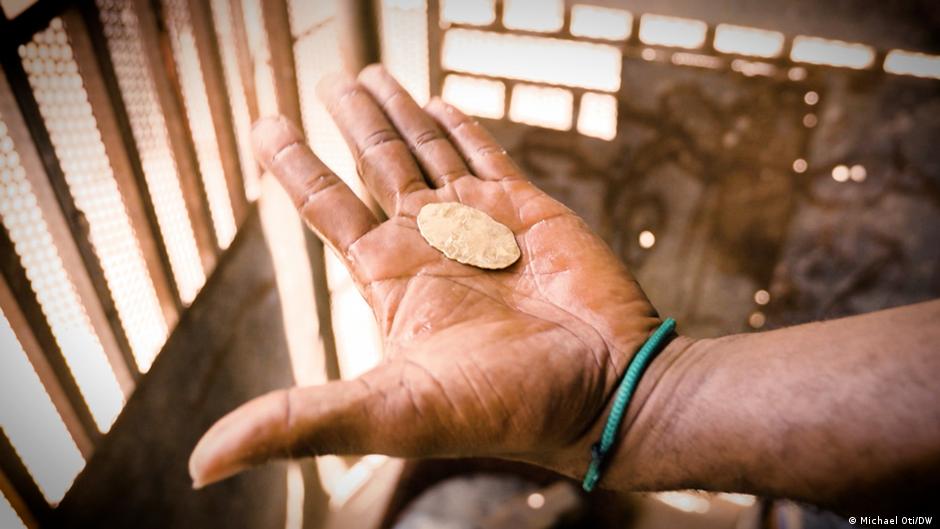
https://p.dw.com/p/5AKsFImage: Michael Oti/DW AdvertisementGold prices have soared past $5,000 (€4,363) per ounce—a record high. In response, Ghana's government, led by President John Mahama, quickly introduced sweeping mining policy reforms.
For over a decade, Ghana, Africa's top gold producer, levied a flat 5% royalty on gold production. Now, a sliding-scale royalty of 5% to 12% applies, tied to international gold prices. Rates rise to 12% when prices surpass about $4,500 per ounce, meaning the current record prices put Ghana at the top rate.
Ghana savors success as Africa's top gold producerTo view this video please enable JavaScript, and consider upgrading to a web browser that supports HTML5 video
Government officials argue that the previous fixed-rate cost Ghana billions in potential revenue and stalled investment in infrastructure, schools, hospitals, and community development. According to them, the new structure is expected to increase state revenues when mining firms are more profitable, while reducing government income when market prices are lower.
However, critics argue that the abrupt jump could cause unintended consequences for the sector and investor confidence, including potential delays or reductions in future mining investments. Kenneth Ashigbey, CEO of the Ghana Chamber of Mines, warns that higher royalties could push investment away from Ghana. "Investments, whether they are local or foreign, are rational. So, where they would get their best returns for their investments is where they are going to go," Ashigbey told DW.
According to 2025 figures from the Bank of Ghana and the Ghana Gold Board (GoldBod), Ghana earned nearly $21 billion in total gold exports. But Ghana's opposition has expressed concern about the long-term impact such a policy could have, particularly on jobs.
But major mining companies, including Newmont, Gold Fields, and AngloGold Ashanti, are unhappy. They say Ghana's upper-tier royalty rate could make the country one of the most expensive gold-mining jurisdictions in Africa, potentially reducing its competitiveness. They further warn that higher royalties could result in lower profit margins, discourage further investment, and make mining projects less attractive than those in neighboring countries, such as Guinea, Mali, or Cote d'Ivoire.
Diplomats from the US, UK, and China issued a rare joint protest, warning that the policy could curtail exploration and affect long-term production. Despite this, Ghanaian officials remain firm.
While acknowledging the backlash, Paa Kwesi Schandorf, Spokesperson and Media Relations Officer for the Ministry of Lands and Natural Resources, told DW the government is doing everything possible to make Ghana an attractive destination for investors. "Inasmuch as the sentiments are welcome and duly acknowledged, nothing [of the new royalty policy] will change as of now", he stressed.
Experts agree that Ghana's royalty framework needs reform, but caution that implementation must be carefully designed to avoid distortions. Bright Simons, Vice President of IMANI Africa, said the new threshold could be manipulated by traders.
"If you say that when the price hits $4,500, you will shift your royalty band, then why don't I keep it at $4,449 or $4,499, and I can do that through a range of offtake arrangements and several other marketing instruments", he told DW.
Simons suggested that Ghana should digitize its royalty system to eliminate abrupt transitions and reduce opportunities for gaming the rules.
The hidden cost of illegal gold mining in GhanaTo view this video please enable JavaScript, and consider upgrading to a web browser that supports HTML5 video
Public sentiment in Ghana generally favors the reform. Many say the country has long failed to claim a fair share of mineral wealth from foreign mining firms. "I think it's a good move. It's high time Ghana gets revenue. Because the foreigners come in and then they take whatever they want and leave us," Florence Mensah‑Sarpong, a business owner in Accra, told DW.
While several other Ghanaians echoed similar views, Simons cautions that Ghana must develop a more adaptive, data-driven policy as gold prices soar. "The rise in the price of gold raises concerns that are very fundamental about our ability to develop a responsive policy apparatus. You know, something that doesn't feel knee-jerked because in the same way that it's gone up, it can also crash. And then when it crashes, what is the response mechanism?," he quizzed.
Adwoa Tenkorama Domena and Eric Mawuena Egbeta in Accra contributed to this article