One Bay Area house hunter wanted to skip a bidding war so badly that they offered almost twice the asking price.
A buyer shelled out about $2.05 million for a 1906 Craftsman in Berkeley, a jaw-dropping 87% more than its $1.095 million price tag, after lobbing in an early offer that cut the rest of the field out of the running, The Post has learned.
The house at 2129 Roosevelt Ave. came to market Sept. 2 and was off the table four days later, according to listing agent Jodi Nishimura of Kai Real Estate. The markup alone comes to almost $1 million. The buyer has not yet been identified.
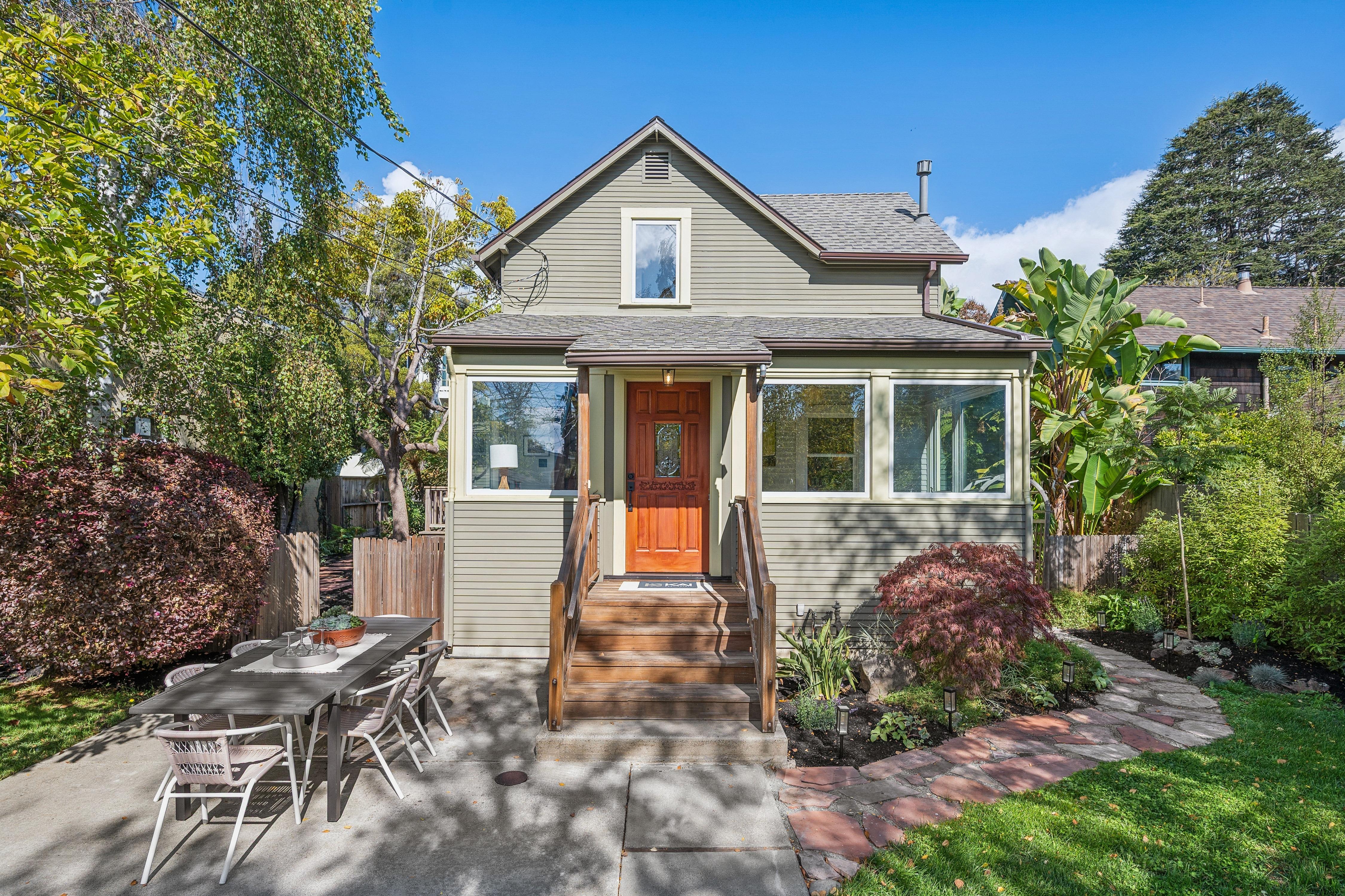
Offering three bedrooms, two baths, the property occupies 1,490 square feet with an oversized 6,500 square feet lot.
“The home was on fire from the start,” Nishimura told The Post. “The broker’s tour was extremely busy, so I knew pretty quickly that we had a hot property. What I wasn’t anticipating was receiving a preemptive offer.”
Agents packed the preview so tightly that a queue formed outside.
“The broker’s tour was so busy that, at one point, people were actually lining up to get through the front door,” she said.
A few wanted the disclosure packet before it was even finished.
“As soon as I sent them out, agents started reviewing them, and then late that same night, a surprise offer came in,” Nishimura said.
Then came a plot twist. The owner, who lives on the East Coast, had just been knocked over by her dog and broken her kneecap.
“She was in the emergency room and then in surgery, so between the time difference, her surgery, and her recovery, there wasn’t an immediate acceptance,” Nishimura said.
So the weekend showings went ahead as planned, pulling in upward of 200 house hunters.
Once the seller signed off, the would-be rivals were out of luck. Nishimura said she “received a lot of calls and texts from agents who were disappointed to see that the property was already pending.”
Berkeley is no stranger to runaway prices. Sellers there routinely list low to whip up competition, and Zillow’s most recent figures show 89.2% of the city’s homes going for more than the sticker price, with the median deal landing 29.6% higher. The San Francisco Chronicle recently found the city had the widest gulf between list and sale prices of any Bay Area community it studied.
Even so, the Roosevelt Avenue haul amounts to almost three times the usual markup.
“The 87% figure is definitely well above average,” Nishimura said. “I think it reflects a combination of strong execution and presentation, along with an element of luck and timing.”
It isn’t her first rodeo. Last year she put a John Hans Ostwald-designed home at 995 Spruce St. on the market for $795,000. More than 300 people turned up to see it, and it traded for $1.6 million, or 101% over.
This time there’s no marquee architect attached. The draw, Nishimura said, is the setting. The house sits far back from the road on an oversized lot, thick with tropical plantings the owner has long cared for.
“It almost feels like a secret garden,” she said.
Even after relocating, the seller never fully let go.
“She eventually moved to the East Coast and rented the property out, but kept a room for herself so she could come back regularly and continue tending to the garden,” Nishimura said.
Inside, period details share space with a new foundation, modernized systems and a refreshed kitchen.
“The property is really dreamy,” Nishimura said. “You have this lush garden surrounding you, and then the house itself has these beautiful old-growth redwood ceilings and wainscoting.”
The crowd skewed toward young families, she added.
“You could really see them imagining their kids playing in that yard while still having the ability to commute easily and enjoy all the conveniences of central Berkeley,” she said.
Early strikes like this home are becoming more common on the most coveted listings, Nishimura said, even if she has mixed feelings about them.
“It’s certainly not something I love when I’m representing a buyer, but as a listing agent, I’m required to present every offer,” she said. “When an offer is especially compelling, a seller may decide it makes sense to accept it.”
The Roosevelt Avenue scramble is part of a wider Bay Area fever. In San Francisco, where an artificial intelligence boom has created a growing class of buyers with big salaries and stock options, homes sold for 26% over asking in July, the biggest overbid in 21 years.
Compass data show 144 homes in the city went for at least $1 million above list in the first half of 2026, compared with just eight in the same stretch a year earlier. Crowds are part of the spectacle, with The Wall Street Journal describing a line of house hunters climbing eight flights of stairs to tour a two-bedroom co-op in Pacific Heights in January.