Chinese team’s semiconductor tech research combines power and memory, allowing for smaller and more powerful military electronics
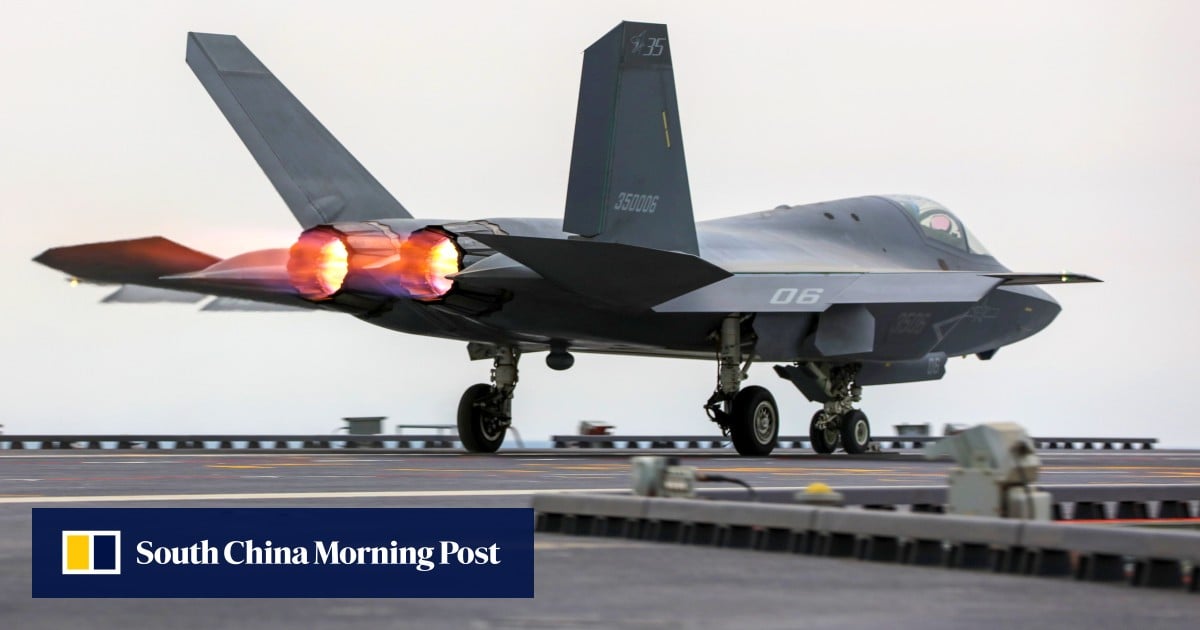
3-MIN READ3-MIN1 ListenShi HuangPublished: 8:00pm, 13 Mar 2026In the high-stakes race for radar supremacy, China could leap two generations ahead of the United States following an advancement in semiconductor technology published last month that is poised to redefine the future of military electronics.While the US Air Force struggles to modernise its fighter fleet with gallium nitride-based radar systems, Chinese engineers are already pioneering the next frontier: gallium oxide semiconductors with built-in data storage capabilities.Today’s Chinese fighters, from the older J-10 to the most advanced J-20 and J-35, have radars built on third-generation gallium nitride technology, giving them superior range, efficiency, and reliability over US counterparts such as the F-22, which still relies on ageing gallium arsenide-based systems.
A discovery by Wu Zhenping and his team at Beijing University of Posts and Telecommunications, published in the journal Science Advances on February 11, has opened a new front in the semiconductor arms race.
For the first time, they have confirmed through experiments that a specific crystal phase of gallium oxide, known as kappa-gallium oxide, exhibits stable ferroelectricity at room temperature, enabling it to store data intrinsically like a memory device, while simultaneously functioning as a high-power transmitting component.