The tech industry wants you to run AI models at home, but it's not for everyone Daniel Howley · Technology Editor Wed, October 7, 2026 at 3:53 PM EDT 4 min read MSFT NVDA GOOG META AAPL Explore stocks on Coinbase Trading disclosure Trading disclosure The above button links to Coinbase. Yahoo Finance is not a broker-dealer or investment adviser and does not offer securities or cryptocurrencies for sale or facilitate trading. Coinbase pays us for certain activity generated through this link. Prices displayed are informational.
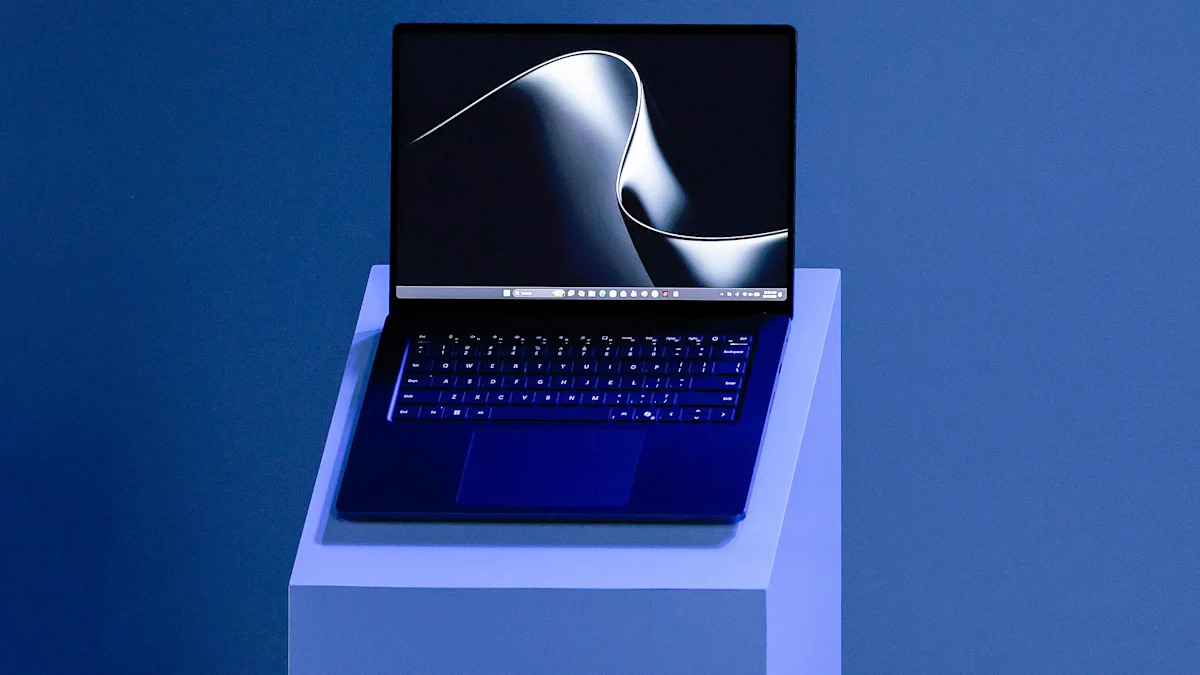
Microsoft (MSFT) on Wednesday unveiled its Nvidia-powered Surface Laptop Ultra, designed to let users run AI models at home without relying on the cloud.
Starting at $2,599, the Surface Laptop Ultra runs on Nvidia's (NVDA) Arm-based RTX Spark, which offers upwards of 128GB of onboard memory.
Most consumers and enterprise users access AI platforms through cloud services like OpenAI's (OPAI.PVT) ChatGPT, Anthropic's (ANTH.PVT) Claude, Google's (GOOG, GOOGL) Gemini, or Meta's (META) Muse. Microsoft and Nvidia, as well as rivals Apple (AAPL), Intel (INTC), and AMD (AMD), are increasingly pushing the concept of running AI software in the home.
The thinking is pretty straightforward. Rather than having to use an online AI service, you can instead install an app on your computer, download an AI model of your choice, and get to work.
There are some pretty compelling reasons to run AI services on your own machine if you're so inclined. But it's also not for everyone.
Running AI locally means you can use AI apps and agents how you see fit without usage limits. You can also choose from a variety of open-weight models from numerous AI developers, such as Google, Meta, and Nvidia, or from Chinese model developers like Moonshot AI and Alibaba Cloud.
Unlike closed-weight models, like OpenAI's GPT-6 Astra or Anthropic's Opus 5.5, open-weight models can be tuned to some extent. But the primary reason users download them is that they're largely free.
Local AI also provides better overall privacy, because your data stays on your machine rather than being sent up to the cloud, an important consideration for people working in fields such as law, medicine, or financial services.
More advanced users have also leaned into running AI on their systems to take advantage of AI agents like OpenClaw that can organize your email, launch and operate apps, and make purchases on your behalf.
The interest in agents sent early adopters scrambling for low-cost computers like Apple's Mac mini, which quickly became hard to come by in AI hotbeds like Silicon Valley.
More recently, AI agents like Meta's Muse and OpenAI's Dots have introduced similar capabilities via cloud computing. But to take full advantage of those bots, you have to connect things like your Gmail, Uber, and other accounts to them, which means putting a lot of trust in Meta and OpenAI to protect your information.
While using your computer to run local AI models and agents provides improved privacy and enhanced customization options, doing so is a lot more complicated than simply logging into ChatGPT or Claude.
Yes, you can choose from a variety of AI models, but the average user will be fine with signing up for one of today's popular AI services and using the best models on hand. A Google AI subscription, for example, gives you access to the company's Gemini 3.1 Pro and Deep Research in Gemini plus 400GB of cloud storage for $4.99 per month.
Running AI models on your own system also consumes a lot of resources. I downloaded LM Studio and Google's open-weights Gemma 4 model on my five-year-old MacBook Pro and could barely scroll through Slack messages while the AI processed my requests in the background.
Microsoft's new Surface Laptop Ultra can likely handle all of that with ease, but its price tag is a bit high for all but the biggest AI boosters and enthusiasts.
If you're looking to avoid paying for AI subscriptions, a privacy hawk, or just want to get in on the AI agent bonanza, running your own AI system might make sense.
Email Daniel Howley at dhowley@yahoofinance.com. Follow him on Twitter at @DanielHowley.
Click here for the latest technology news that will impact the stock market
Read the latest financial and business news from Yahoo Finance