To display this content from YouTube, you must enable advertisement tracking and audience measurement.
One of your browser extensions seems to be blocking the video player from loading. To watch this content, you may need to disable it on this site.
FRANCE 24 © 2026 12:19 Issued on: 13/03/2026 - 11:49
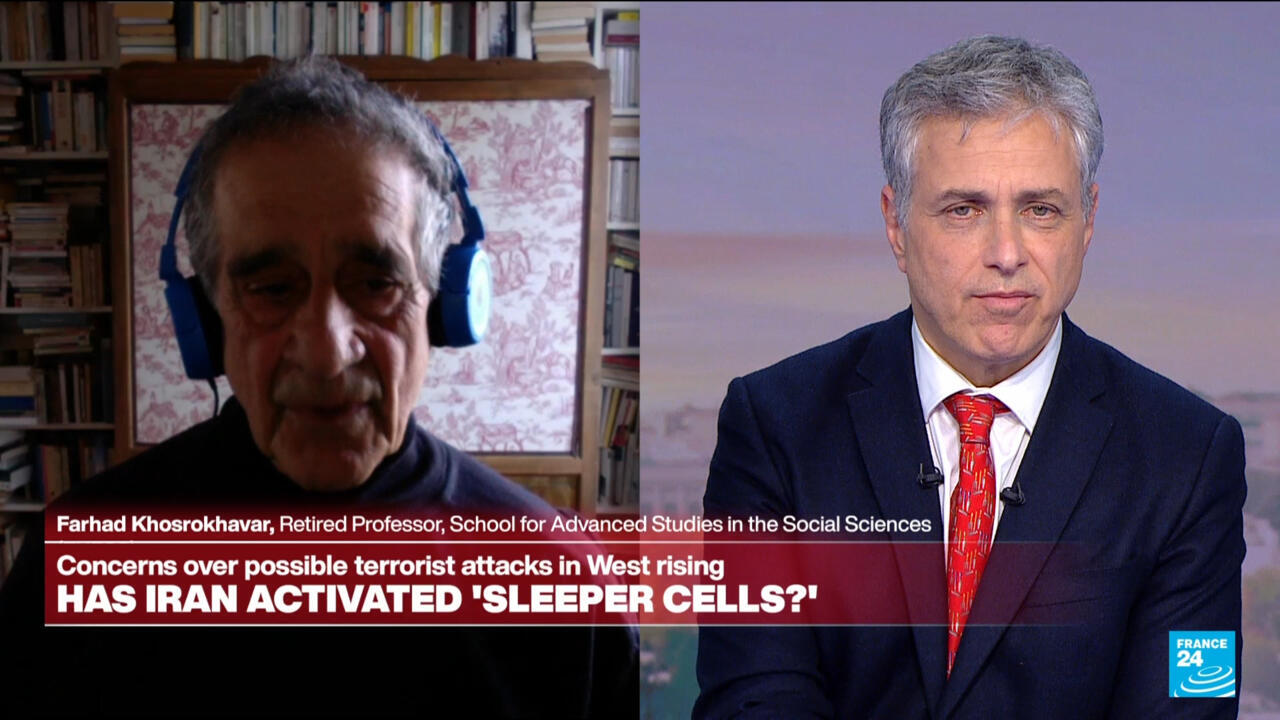
Play (12:19 min) From the show Reading time 1 min François Picard is pleased to welcome Farad Khajkvar, Director of Studies at the School of Higher Studies, EHESS, author of the forthcoming book in French, Iran: The End of Totalitarianism. He sees today’s Iran as a system in which religion has become subordinate to politics, and politics itself is increasingly subordinate to the Revolutionary Guards. In his view, the succession after Khamenei does not reflect institutional legitimacy so much as coercive power, and the new leadership appears far weaker and more dependent than the previous one.
At the same time, the regime survives not because it commands broad popular support, but because it still knows how to exploit fear, repression, geopolitical limits, and the vulnerabilities of stronger adversaries.
According to Khajkvar, Iran is not strong, but it remains dangerous precisely because weakness can produce improvisation, retaliation, and creative forms of asymmetric disruption. Khajkvar describes the web as "the revenge of the weak against the strong". Cyberterrorism can be a highly effective tool for Iran, to level the playing field, and make up for the "obvious disproportion between the Iranian military and the American forces".
In this sense, explains Khajkvar, 'Iran is playing the game' with a powerful weapon that can take on American might by unleashing "mental, subjective impact" that will also garner heavy media coverage.
François PICARD Ilayda HABIP Video by: François PICARD Advertising Related keywords Iran conflict Middle East Americas USA cyberattacks FRANCE 24 guest FRANCE 24 Page not found The content you requested does not exist or is not available anymore.