Adam Spatacco, The Motley Fool Wed, October 7, 2026 at 3:35 PM EDT 5 min read MU +4.06% NVDA -0.74% AVGO +0.19% Explore stocks on Coinbase Trading disclosure Trading disclosure The above button links to Coinbase. Yahoo Finance is not a broker-dealer or investment adviser and does not offer securities or cryptocurrencies for sale or facilitate trading. Coinbase pays us for certain activity generated through this link. Prices displayed are informational.
Micron Technology (NASDAQ: MU) has crossed into territory that would have sounded ridiculous a few years ago: the stock has risen 485% over the last year, now trading above $1,000 per share and valuing the company at $1.2 trillion. Naturally, this ascent raises an obvious question. Is a stock split coming?
Plenty of technology companies have split their shares after big rallies in recent years. In the semiconductor landscape, Nvidia and Broadcom both completed a 10-for-1 split in 2024. Micron presents an interesting case. The company is generating record profits and mountains of cash thanks to the artificial intelligence (AI) memory boom.
Missed AI's "Act 1"? Act 2 Could Be 14x Bigger. Most investors think they missed the AI boat because they didn't buy Nvidia in 2005. But according to our analysts, we're only at the end of "Act 1"—the R&D phase. "Act 2" is the global rollout. Continue »
During the company's fiscal fourth quarter earnings call last week, management told investors exactly what it wants to do with excess cash. That plan centers on buying back stock -- not splitting it.
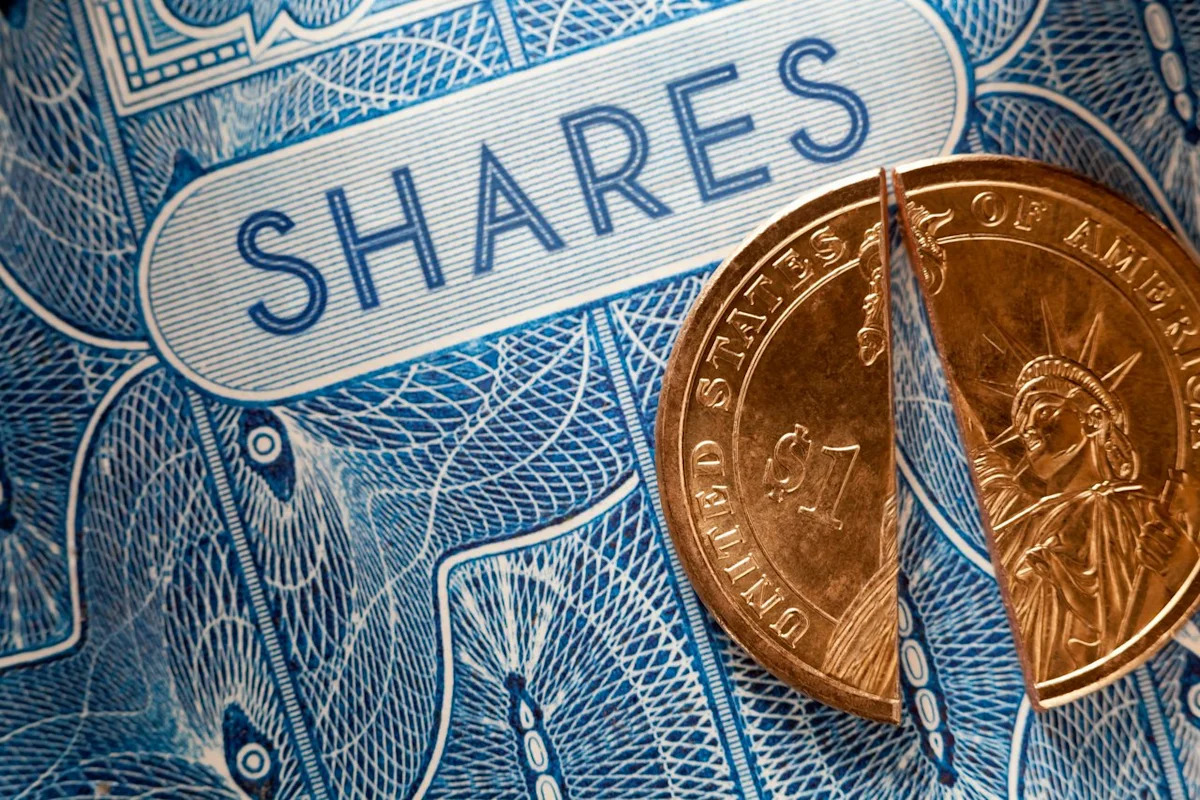
Investors should understand what a stock split does -- and what it doesn't do. If Micron announced a 10-for-1 split with its shares trading around $1,100, an investor owning one share worth $1,100 would instead own 10 shares worth $110 apiece.
As you can see, Micron's market capitalization wouldn't suddenly change. The reason is because a stock split does not make the underlying business any more valuable. In reality, stock splits generally made shares more accessible to smaller investors. That's less important today because many brokerages offer fractional shares, allowing someone to invest $50 in Micron regardless of whether a full share costs over $1,000.
While a split would make Micron's shares appear more affordable and potentially increase interest among retail investors, it would mostly just be for optics. As a result, any pop Micron stock could experience after conducting a split would likely be a fleeting byproduct of momentum traders.
The AI memory supercycle has completely transformed Micron's business. AI data centers require enormous amounts of high-bandwidth memory (HBM) and high-capacity DRAM used alongside AI accelerators.
In fiscal 2026 (ended Sept. 3), Micron generated record revenue of $133.2 billion -- up 256% from the prior year. Management believes this growth isn't a one-quarter windfall. Micron has signed 26 strategic customer agreements (SCA), which are estimated to account for over 35% of revenue through 2030. Meanwhile, remaining performance obligations (RPO) have reached approximately $150 billion.
Tight industry supply combined with surging demand from hyperscalers has pushed memory pricing sharply higher over the last year. The company's net income reached nearly $85 billion in fiscal 2026, while adjusted free cash flow soared from just $3.7 billion in fiscal 2025 to an astounding $62.3 billion.
That brings me to share repurchases. Micron spent just $650 million buying back shares under its repurchase program last year. That's barely 1% of the free cash flow it generated. Micron's CFO Mark Murphy told investors that the company wants to return excess cash primarily through share repurchases. Per management's commentary, capital returns are expected to begin around Dec. 9.
While Micron will need cash to expand manufacturing capacity and fund research and development (R&D), AI-driven memory demand remains strong. Micron exited fiscal 2026 with a $68.3 billion net cash position while generating $62.3 billion of adjusted free cash flow. Management actually expects first-quarter fiscal 2027 free cash flow to be "significantly higher" than the $33.2 billion generated during the fourth quarter. To me, the company has substantial room for larger buybacks in the coming years.
So, will Micron stock split? It's certainly possible, and the four-digit stock price gives management a logical reason to consider one. But there is currently a more direct way to create shareholder value right now.
Micron is producing more cash than at any point in its history, and management is focused on sending excess cash back to shareholders. When speaking about additional buybacks, Murphy stated, "You can assume that we will seek additional authorization in the near term."
Investors shouldn't buy Micron stock because you're hoping a stock split will lead to a new rally. Instead, smart investors should watch what happens if management follows through with substantially larger stock buybacks. Over time, the declining share count could matter far more to investors than whether Micron trades for $1,000 or $100 per share in the near-term.
Before you buy stock in Micron Technology, consider this:
The Motley Fool Stock Advisor analyst team just identified what they believe are the 10 best stocks for investors to buy now… and Micron Technology wasn't one of them. The 10 stocks that made the cut could produce monster returns in the coming years.
Consider when Netflix made this list on December 17, 2004... if you invested $1,000 at the time of our recommendation, you'd have $370,440!* Or when Nvidia made this list on April 15, 2005... if you invested $1,000 at the time of our recommendation, you'd have $1,470,022!*
Now, it's worth noting Stock Advisor's total average return is 955% — a market-crushing outperformance compared to 215% for the S&P 500. Don't miss the latest top 10 list, available with Stock Advisor, and join an investing community built by individual investors for individual investors.
*Stock Advisor returns as of October 7, 2026.
Adam Spatacco has positions in Nvidia. The Motley Fool has positions in and recommends Broadcom, Micron Technology, and Nvidia. The Motley Fool has a disclosure policy.
At $1,069, Is Micron Stock Going to Split? was originally published by The Motley Fool