STLA NVDA Explore stocks on Coinbase Trading disclosure Trading disclosure The above button links to Coinbase. Yahoo Finance is not a broker-dealer or investment adviser and does not offer securities or cryptocurrencies for sale or facilitate trading. Coinbase pays us for certain activity generated through this link. Prices displayed are informational.
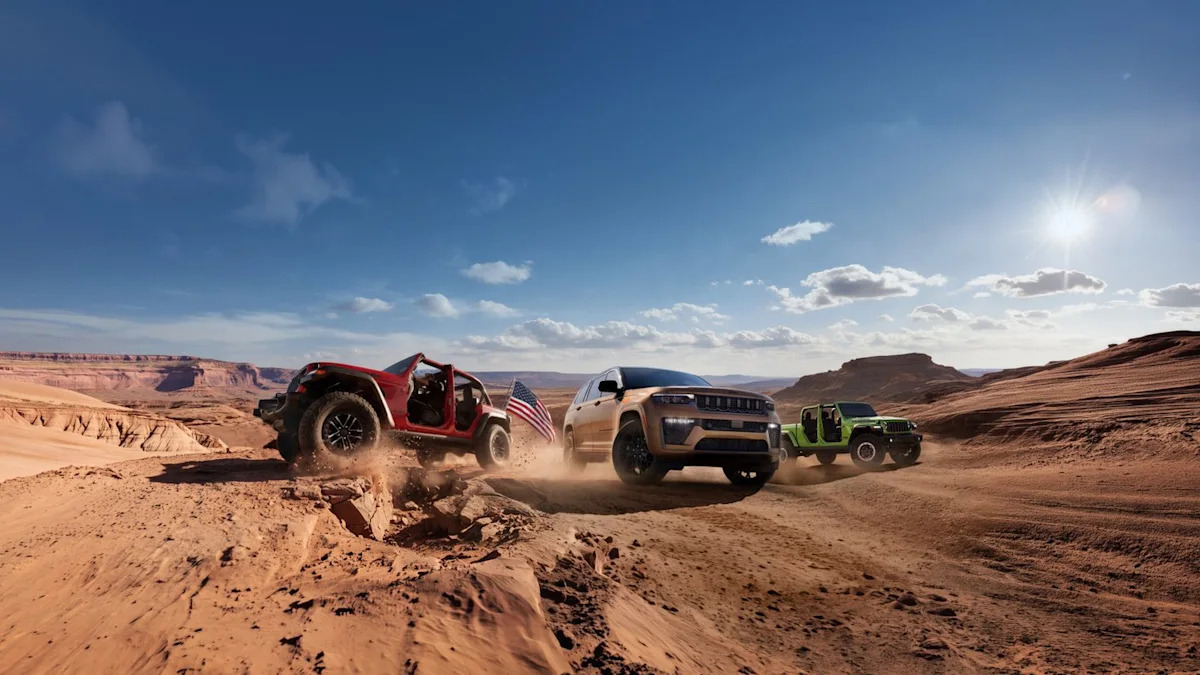
If you follow the automotive industry, you've almost certainly heard of Stellantis' (NYSE: STLA) massive $70 billion turnaround plan thoughtfully named "FaSTLAne 2030." The plan gives the automaker more of an identity than it's had in many years, with a focus on its four core brands -- Jeep, Ram, Fiat, Peugeot -- which boast more scalability and profitability than the remaining 10 brands under its umbrella.
It's also focusing on expanding high-margin brands and sub-brands within Ram and Jeep, while also hitting the growing affordability crisis in the U.S. with plans for nine vehicle launches in North America priced under $40,000 (and two under $30,000).
Missed AI's "Act 1"? Act 2 Could Be 14x Bigger. Most investors think they missed the AI boat because they didn't buy Nvidia in 2005. But according to our analysts, we're only at the end of "Act 1"—the R&D phase. "Act 2" is the global rollout. Continue »
But what might be most important for Stellantis' turnaround -- and one could easily argue Stellantis, after a massive sell-off over the past three years, has huge upside through 2030 -- is fixing its quality issues. Already, we're seeing some of the plans CEO Antonio Filosa is cooking up, and investors should be optimistic.
One development at Stellantis that was largely overshadowed by massive headlines focused on its overall $70 billion strategy was the fact that the automaker hired more than 2,000 engineers in 2025 alone. What's even more important about this is that many of those engineering hires are focused on improving quality amid a sweeping overhaul of its organization, operations, and production.
"We launched almost 50 quality war rooms where we have tons of engineers and quality people and manufacturing people and supplier quality engineers working together on components and systems where we know are important to fix," said CEO Antonio Filosa Sept. 30 at the Automotive News Congress in Detroit. "We are fixing them very, very, very quickly. We have a target to get, in 2028, first quartile in quality with all the segments and markets where we compete, and we will get there."
There is certainly work to do. In J.D. Power's 2026 Initial Quality Study, Jeep and Ram tracked below the industry average in problems per 100 vehicles with 182 PP100 and 222 PP100, respectively. That was behind the industry average of 175 PP100, and discouraging when compared to Ford Motor Company (NYSE: F), which has suffered years of quality woes and rebounded to the highest mainstream brand in the rankings at 152 PP100. General Motors' (NYSE: GM) Chevrolet brand also checked in better than average at 171 PP100.
There is an important balance to note. Stellantis is trying to drastically improve its vehicle quality while also using its "Value Creation Program," consisting of about 3,000 engineers, to generate about $7 billion in savings by 2028. It's an incredibly fine balance to maintain, but if Stellantis can execute large cost savings and significant quality improvements while holding value for consumers, it would be a huge boost across the company's entire product portfolio.
It wouldn't only be a success in one market, or a success with core brands, but a top-to-bottom boost to the entire company and an opportunity to strengthen its connection to consumers, regain market share, and reach its targets for revenue and profitable growth.
There's even another aspect, arguably even more overlooked than its quality focus: development cycles. In an effort to match "China Speed," with Chinese automakers producing vehicle cycles at about half the historical length of time for the auto industry, Stellantis is trying to compress its vehicle development schedule from 44 months down to 24 months. Cutting down its research and development hours on a vehicle project will save massive amounts of capital and leave the automaker more flexible to consumer and market shifts.
Not only is this a big deal for Stellantis' savings target, but it also underpins its ability to unleash 60 new vehicles and 50 refreshes by 2030, as well as attack pent-up demand for more affordable vehicles before competitors can do the same. These are overlooked aspects of its broader turnaround plan, but savvy investors know if Stellantis is going to deliver upside as an investment through 2030, improved quality, development cycle speed, and capital savings will be critical.
Remember Stellantis' major upside potential, considering its paltry market capitalization around $12 billion, a fraction of its rivals Ford and GM, and even below Rivian Automotive's $19 billion.
Before you buy stock in Stellantis, consider this:
The Motley Fool Stock Advisor analyst team just identified what they believe are the 10 best stocks for investors to buy now… and Stellantis wasn't one of them. The 10 stocks that made the cut could produce monster returns in the coming years.
Consider when Netflix made this list on December 17, 2004... if you invested $1,000 at the time of our recommendation, you'd have $370,440!* Or when Nvidia made this list on April 15, 2005... if you invested $1,000 at the time of our recommendation, you'd have $1,470,022!*
Now, it's worth noting Stock Advisor's total average return is 955% — a market-crushing outperformance compared to 215% for the S&P 500. Don't miss the latest top 10 list, available with Stock Advisor, and join an investing community built by individual investors for individual investors.
*Stock Advisor returns as of October 7, 2026.
Daniel Miller has positions in Ford Motor Company and General Motors. The Motley Fool recommends General Motors and Stellantis. The Motley Fool has a disclosure policy.
1 Overlooked Factor That Could Drive Stellantis to Double or Triple by 2030 was originally published by The Motley Fool