HSBC’s AI Push Comes for the Advisers Mark Nichols Wed, October 7, 2026 at 12:00 PM EDT 4 min read NVDA -0.92% HSBC -4.17% HSBC -4.17% Explore stocks on Coinbase Trading disclosure Trading disclosure The above button links to Coinbase. Yahoo Finance is not a broker-dealer or investment adviser and does not offer securities or cryptocurrencies for sale or facilitate trading. Coinbase pays us for certain activity generated through this link. Prices displayed are informational.
Our analysts just identified a stock with the potential to be the next Nvidia. Tell us how you invest and we'll show you why it's our #1 pick. Tap here.
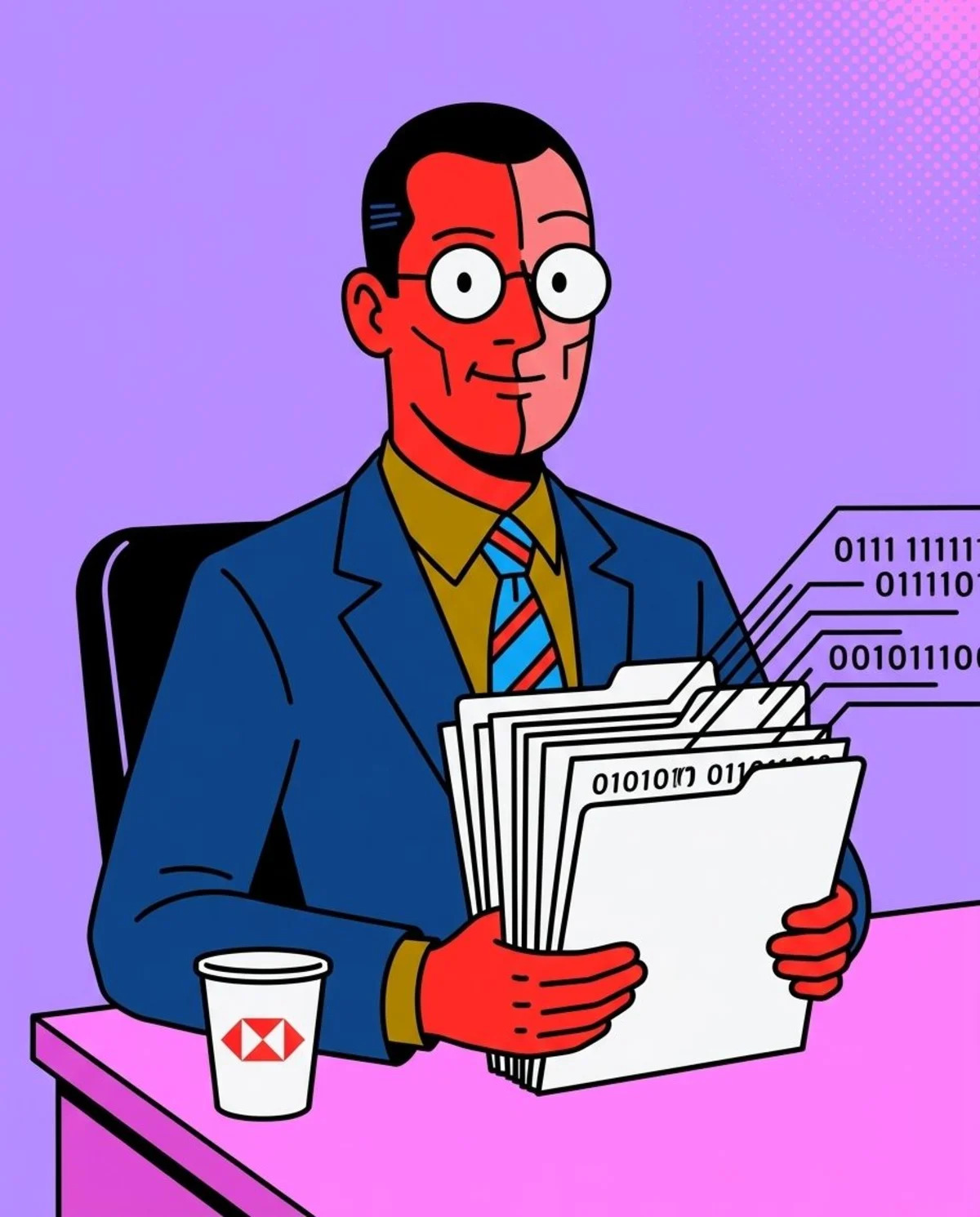
HSBC has spent the last few years talking about using AI to make bankers more productive, but its U.K. wealth business is showing what the next phase could look like. The bank is reportedly considering removing around 70% of financial adviser roles and half of management and specialist positions, turning financial services into one of the clearest tests of how rapidly AI can reshape white-collar employment.
HSBC shares fell roughly 2% during Wednesday trading after reports that the bank is preparing sweeping cuts across its U.K. wealth-management operation.
Around 70% of financial adviser positions could disappear, while approximately half of management and specialist roles are also under review.
The bank does not disclose exactly how many people work across the affected operation, although it employs hundreds of relationship managers around the country. Staff are currently being consulted, with affected employees potentially leaving by the end of October.
HSBC said it continues to evolve its U.K. wealth business toward more digitally enabled products and customer journeys.
The changes represent a sharp reversal from the expansion strategy the bank was pursuing only a couple of years ago, when it planned to increase adviser numbers as it chased a larger share of Britain's affluent wealth market.
Chief executive Georges Elhedery has since placed artificial intelligence and organizational simplification at the center of his strategy.
HSBC has already removed around $1.5 billion of costs ahead of schedule, partly by eliminating duplicated management positions, and is deploying AI across areas including customer service, markets, risk and wealth management.
Earlier this year, the bank was also reported to be examining a broader multiyear transformation that could eventually affect around 20,000 roles globally, particularly in middle- and back-office functions.
The U.K. wealth restructuring suggests client-facing positions are no longer outside that conversation.
Financial advisers were supposed to sit relatively high on the list of jobs protected from generative AI because wealthy customers do not simply need information.
They need someone to understand tax circumstances, family goals, risk tolerance, market anxiety and the emotional consequences of moving large amounts of money.
HSBC itself recently highlighted that distinction in research showing affluent investors increasingly use AI to research opportunities but still turn to human professionals when making important decisions.
One stock. Nvidia-level potential. 30M+ investors trust Moby to find it first. Get the pick. Tap here.
That makes a 70% reduction particularly significant.
The likely model is not AI replacing every adviser conversation with a chatbot. Instead, technology can automate much of the work surrounding those conversations, including portfolio analysis, market research, meeting preparation, suitability documentation, follow-up communications and personalized investment content.
If one adviser equipped with those tools can handle far more clients, the bank needs fewer advisers even if humans remain involved in every important decision.
That is where the employment disruption becomes broader than HSBC.
Banks employ enormous numbers of people to gather information, summarize documents, prepare reports, reconcile data and turn standardized financial products into personalized recommendations. Those are exactly the knowledge-heavy, repeatable workflows where generative AI is improving quickly.
HSBC's restructuring also shows that disruption may arrive unevenly. Private banking serving ultra-wealthy clients remains a growth priority and is reportedly outside the latest cuts, because customers with complicated estates, businesses and cross-border assets still demand high-touch relationships. Mass-affluent advice can be much easier to standardize.
The industry therefore risks developing a barbell model in which wealthy clients retain dedicated human bankers while everyone else receives increasingly automated advice with humans supervising larger pools of customers.
There is a financial attraction for shareholders. Wealth management can produce attractive recurring fee income, but adviser salaries and support teams are expensive. If digital tools let HSBC grow assets without growing headcount at the same pace, margins can expand significantly.
The risk is damaging the customer relationship the bank is trying to monetize.
Investment decisions involve trust, and AI errors carry unusually high consequences when retirement savings or family wealth are involved. Regulators will also expect banks to remain responsible for advice regardless of whether a human or algorithm produced the underlying analysis.
The immediate question is how many proposed redundancies survive the consultation process and which activities HSBC actually transfers to AI-enabled systems once staff leave.
Third-quarter results on October 27 should give investors another opportunity to question management about cost savings, restructuring charges and whether broader workforce reductions are likely.
The longer-term implications stretch well beyond HSBC. Banks have spent the first phase of the AI boom buying technology and experimenting with internal tools, while the second phase increasingly looks like redesigning how many employees are required to perform each job.
HSBC is still betting heavily on wealth management. The difference is that it increasingly believes considerably fewer humans may be needed to deliver it.