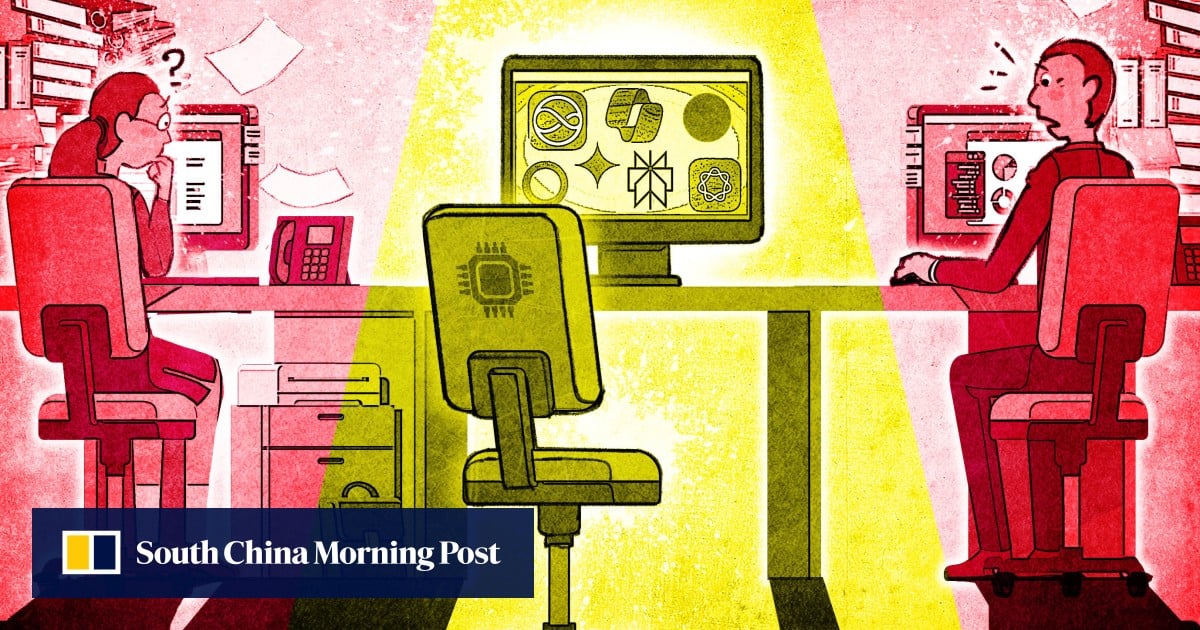
In the first of a two-part series on AI in Hong Kong, Harvey Kong reports on the plight of young people worried about their future as firms use the tech for lower-level jobs and experts warn of a ‘broken talent chain’
7-MIN READ7-MINHarvey KongPublished: 8:01am, 13 Mar 2026Updated: 8:05am, 13 Mar 2026Trina Lau spent nearly three months looking for work after she was laid off from an e-commerce firm in Hong Kong in December.
It was the 23-year-old’s first job after graduating with a communications degree last year. The position only lasted for six months.
She sent out more than 50 job applications but only received calls for interviews for six of them.
Lau conceded that it was slow going because the economy was not picking up as quickly as she would have liked.
But now, she said, she had the added worry that her main competitor would be rapidly rising and evolving artificial intelligence (AI), which would make junior workers like her redundant.
“For instance, if I get a job in e-commerce, and suppose I rise to a senior position in two to three years, my job could be replaced by AI, and I will have to change industry,” she said.
Lau is among the tens of thousands of fresh graduates caught in a bind, analysts say, as they find themselves not fully immersed in the world of AI while jobs are being transformed by this new technology.