TER -5.30% AMZN +0.19% NVDA -1.05% Explore stocks on Coinbase Trading disclosure Trading disclosure The above button links to Coinbase. Yahoo Finance is not a broker-dealer or investment adviser and does not offer securities or cryptocurrencies for sale or facilitate trading. Coinbase pays us for certain activity generated through this link. Prices displayed are informational.
Amazon (NASDAQ: AMZN) built one of the market's great fortunes by getting in early on a massive technology shift. Now, Teradyne (NASDAQ: TER) is betting on an opportunity that could be even bigger: robotics and physical AI. The question for investors is whether this setup can produce the kind of early-mover payoff that turned Amazon shareholders into millionaires.
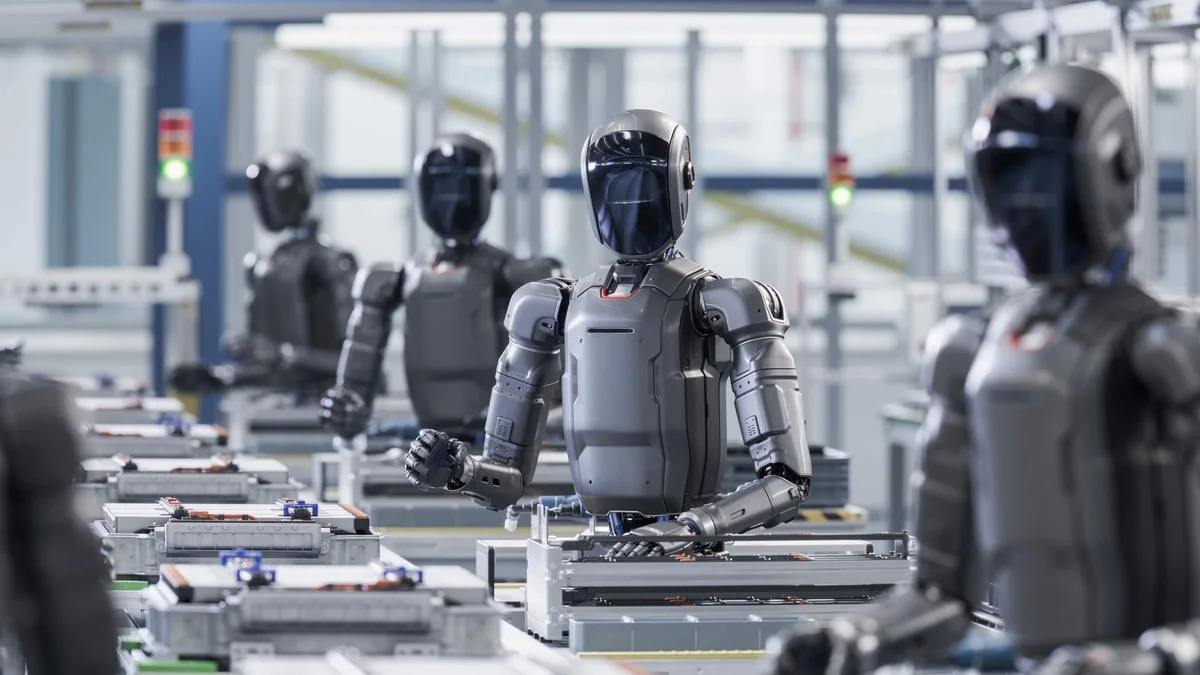
Teradyne's robotics business is moving beyond traditional automation toward what the company calls physical AI, robots that make decisions and handle tasks that were previously hard to automate.
Missed Nvidia in 2009? This Rare Signal Is Flashing Again. In 2009, a "Double Down" signal flashed for a little-known chipmaker called Nvidia. For the first time in years, that same "Total Conviction" signal is flashing for a company 1/100th the size of Nvidia. Continue »
For example, at Automate 2026, Teradyne Robotics showcased its production-ready applications across logistics and manufacturing, including its MiR1200 Pallet Jack, which uses AI to operate in dynamic environments.
That matters because it gives Teradyne exposure to a much larger robotics market rather than simply selling robotic arms. Just like Amazon in its early days, Teradyne is built around an emerging technology before it has reached anything close to its full potential.
On top of that, Robotics revenue reached around $100 million in the second quarter of 2026, marking the fifth consecutive quarter of growth. Teradyne said demand was particularly strong from electronics manufacturing and semiconductor customers, which had become the segment's largest end markets.
That brings us to one of Teradyne's strongest moats.
Teradyne says its robotics business has sold more than 110,000 cobots, short for collaborative robots, worldwide since its Universal Robots subsidiary introduced its commercially viable cobot in 2008. These robots are designed to integrate into existing production environments, working alongside human employees.
That installed base can become increasingly valuable as robotics gets smarter. Teradyne already has robots in factories, so it doesn't have to convince manufacturers to completely overhaul their operations. Instead, newer AI capabilities can simply be added to existing deployments, which means the opportunity lies in making those cobots increasingly capable over time.
Like Amazon, Teradyne has an established customer base today and can easily sell more sophisticated technology to those customers in the future.
But one of the most interesting developments is Teradyne's push to combine robotics with physical AI. Nvidia identified Universal Robots among the robotics companies building on its technology as the industry moves toward production-scale physical AI. Teradyne Robotics is also using Nvidia's Physical AI Data Factory Blueprint to speed up robotics development.
Plus, Teradyne has also been moving toward applications that can handle messy environments, including AI-powered bin picking and logistics, areas where robots need more than simple repeatable movements. From there, Teradyne is making another move that could remove a huge barrier to adoption: complexity.
Teradyne Robotics partnered with Vention to develop a digital twin platform for Universal Robots. The idea is simple: Manufacturers can design and simulate robotic work cells digitally before building them. The platform also comes with ready-to-use Universal Robots setups, proven automation templates, and compatible components.
That could make automation less intimidating for companies without large robotics engineering teams. In other words, that's another part of the Amazon-like setup worth watching. Amazon's early strategy wasn't simply having an online bookstore. It was about building the systems, customer relationships, and infrastructure that could support much broader adoption over time.
Teradyne is following a playbook similar to Amazon's, which could make it just as good an investment.
Teradyne has the kind of setup that can make an emerging-technology story interesting, similar to Amazon in its early days. It has an established business, exposure to physical AI, and a robotics platform that could grow as adoption picks up. If physical AI and robotics take off, Teradyne could have the kind of long-term growth setup that turned early Amazon investors into millionaires.
The Motley Fool Stock Advisor analyst team just identified what they believe are the 10 best stocks for investors to buy now… and Teradyne wasn't one of them. The 10 stocks that made the cut are built for long-term growth and could produce monster returns in the coming years.
Consider when Netflix made this list on December 17, 2004... if you invested $1,000 at the time of our recommendation, you'd have $370,440!* Or when Nvidia made this list on April 15, 2005... if you invested $1,000 at the time of our recommendation, you'd have $1,470,022!*
That performance is why people listen. With a track record of beating the S&P 500 by 4x, Stock Advisor offers a distinct advantage. Don't miss the latest top 10 list, available with Stock Advisor, and join an investing community built for the long haul.
*Stock Advisor returns as of October 7, 2026.
Rick Orford has positions in Amazon. The Motley Fool has positions in and recommends Amazon, Nvidia, and Teradyne. The Motley Fool has a disclosure policy.
1 Robotics Stock With the Kind of Setup That Built Amazon Millionaires was originally published by The Motley Fool