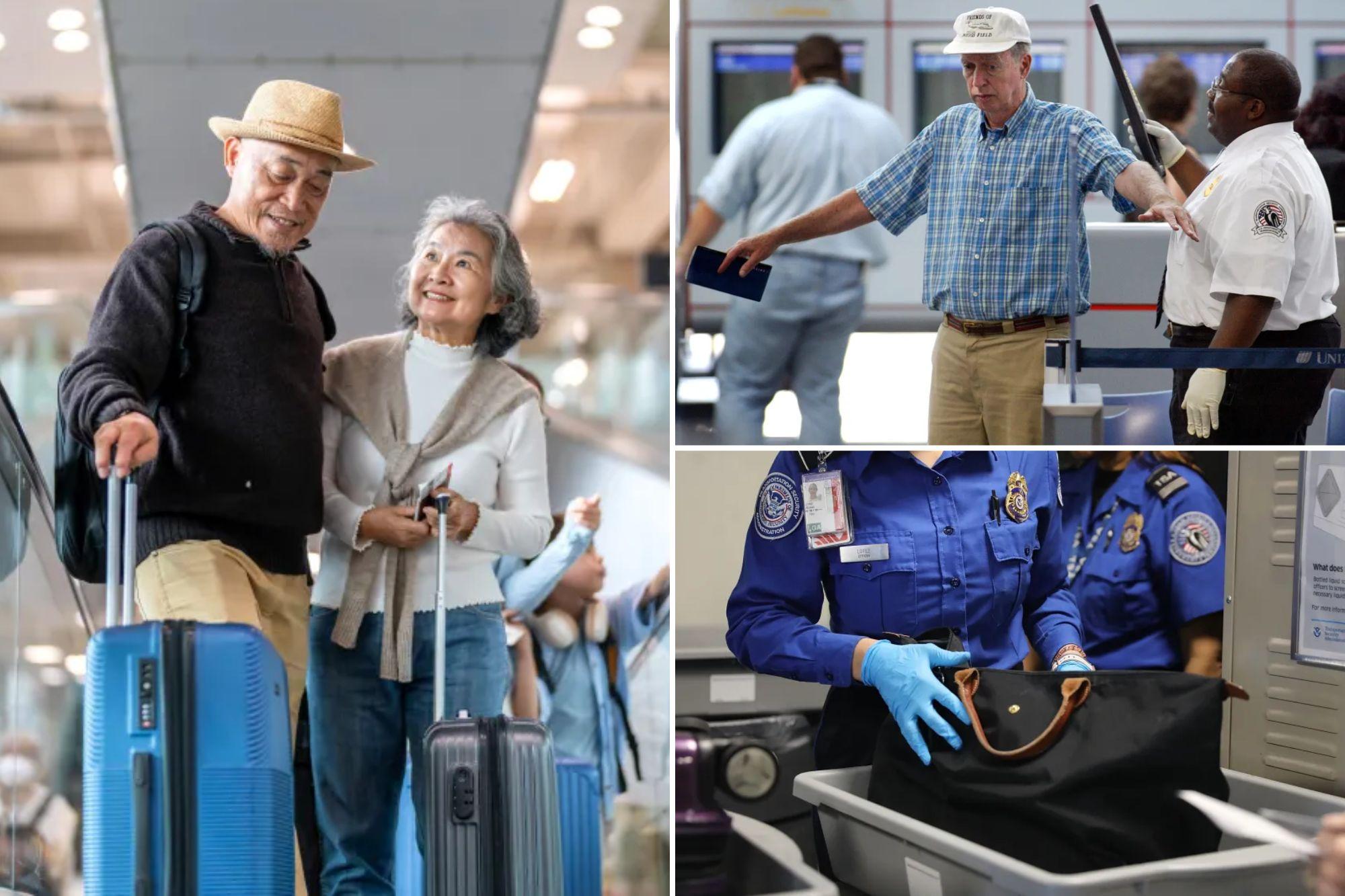
Make New York Post a Preferred Source Air travel is undeniably a slow and stressful endeavor, all the more so for seniors.
Elder travelers often deal with mobility issues and unfamiliarity with tech and packing protocols, which can slow them down at security.
To help smooth the process, TSA agents are sharing 3 common mistakes seniors make in the security line and a holy trinity of advice to speed things up, ensuring they can fly high at any age.
One of the most common mistakes seniors make is not separating and properly labeling their medications before travel.
While an officer may not always require a traveler to remove these items, it is a possibility, and having these items labeled and located in one specific location rather than in multiple unlabeled bags and bottles ensures a swifter security experience.
Because certain medications require refrigeration, experts underscore the importance of using TSA-approved ice packs.
“Items that do not meet requirements may need to be discarded or placed in checked baggage if time allows,” a TSA spokesperson told Travel+Leisure. They report that while gel ice packs are ideal for reuse, they must remain solidly frozen when going through security.
“Passengers sometimes arrive at the checkpoint without ready access to their ID, passport, or boarding pass,” a TSA spokesperson shared.
To keep things organized and at the ready, they recommend keeping all sensitive documents, including passports, visas, and credit cards, in a passport wallet or holder.
A neck wallet or an easy-to-spot neon passport holder can further reduce the hassle of searching for your ID and other necessities in the security line.
Many seniors saunter through the metal detector without alerting an agent they have a pacemaker.
“This can be dangerous, and they may think the metal detector is a safe option instead of the body scanner, which is what they should be using,” Caleb Harmon-Marshall, a former TSA agent who now operates the travel newsletter Gate Access, told T+L.
Harmon-Marshall recommends keeping their medical card or a note reminding them to declare their pacemaker in a bag with a clear front pocket.
Another option is to wear a medical ID bracelet or attach a custom medical keychain to your luggage that indicates you have a pacemaker or a titanium hip or knee replacement, which typically sets off metal detectors.
“For any senior citizen who isn’t sure what machine to use, they should always request a physical pat-down,” says Harmon-Marshall.
Experts note that some TSA officers may request proof of the procedure, so they recommend keeping an official doctor’s card in your personal item with your travel documents.
And despite the hassles of air travel, plenty of evidence suggests it’s well worth the effort.
Research suggests that traveling can benefit your brain, with some studies finding it may help dementia patients and even fend off cognitive decline.
However, where those seniors should be seated on an aircraft remains a source of debate.
A 2024 study found that the increase in seniors taking to the skies could risk the safety of other passengers on board — sparking concerns about whether airlines can still meet the required 90-second emergency evacuation mandate.
Over the last few decades, average life expectancy in the United States has risen to nearly 80 years — and the post-COVID era has shown that travel has become a priority for at least 70% of the population aged 50 and above.
With the surge in older travelers boarding planes, scientists have suggested that elderly travelers should be spread across a plane’s seating chart for everyone’s safety.