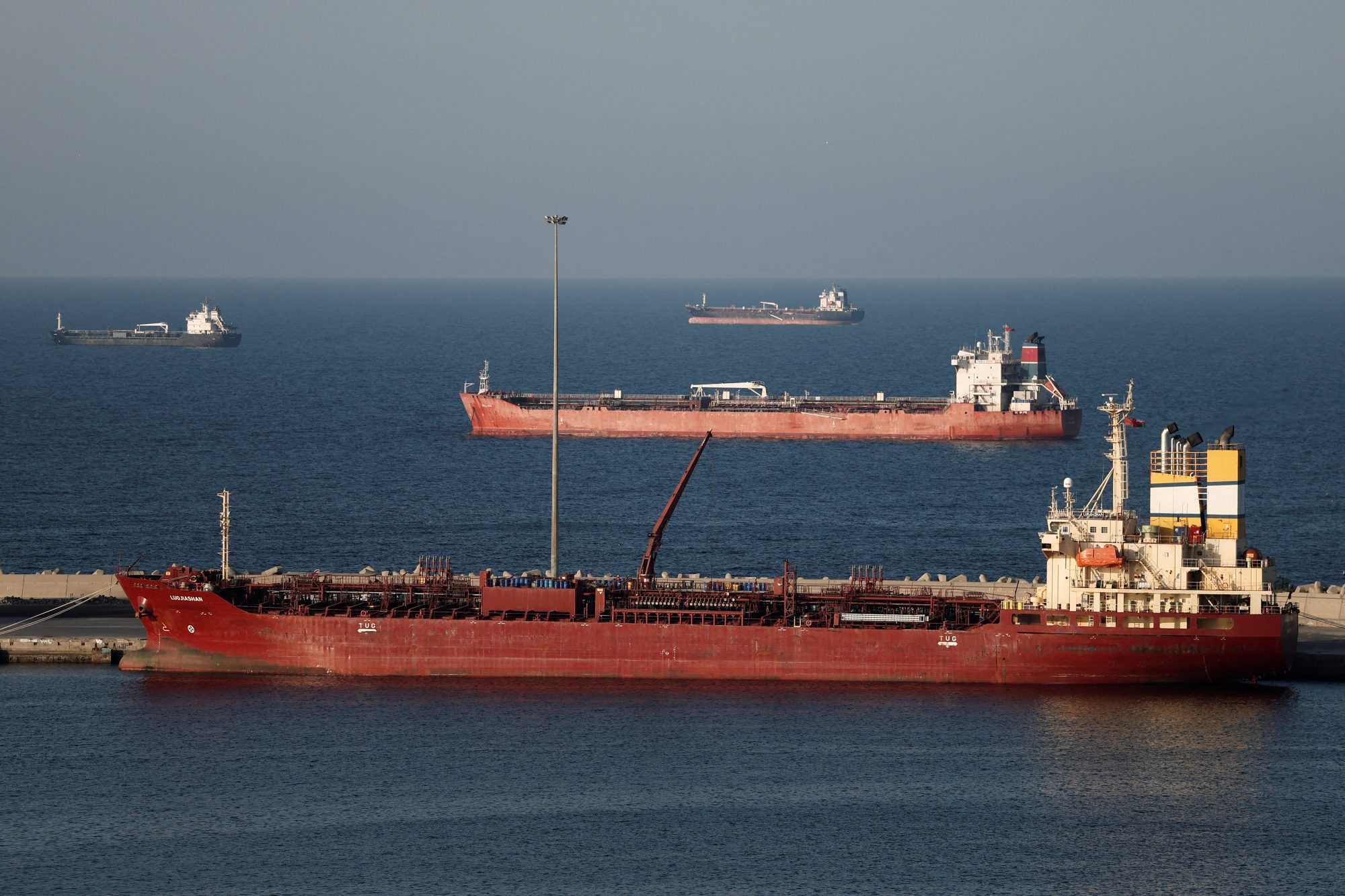
Luojiashan tanker sits anchored in Muscat, as Iran vows to close the Strait of Hormuz, amid the U.S.-Israeli conflict with Iran, in Muscat, Oman, March 7, 2026. REUTERS The Strait of Hormuz is on fire. And the Iranian regime wants to keep it that way.
On Wednesday, Tehran warned that it “will never allow even a single liter of oil to pass through the Strait of Hormuz.”
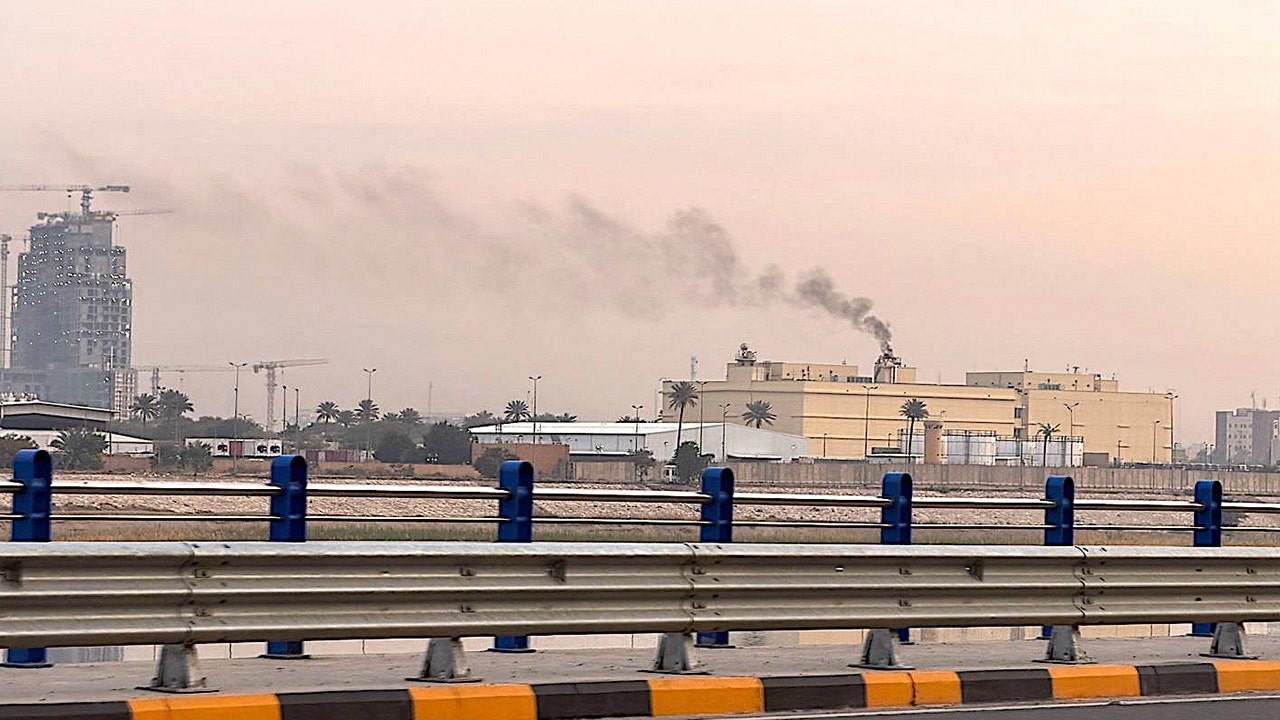
Hours earlier, Iranian drones slammed into oil storage facilities at Oman’s Salalah port.
Oman suspended terminal operations at the port indefinitely; oil spiked over $100 a barrel.
It was the latest energy domino to fall in the Persian Gulf.
Since the start of Operation Epic Fury, the Islamic Republic has launched hundreds of strikes against targets across the region, disrupting oil and gas facilities in Qatar, Kuwait and Saudi Arabia.
On Monday, Bahrain’s national oil company declared force majeure after an Iranian strike sent its main refinery ablaze, allowing it to skip contracted deliveries without penalty.
The United Arab Emirates suspended operations at its largest oil refinery the next day.
Not every strike has produced equal damage, nor are the stakes of every shutoff equal.
But there’s no doubt global energy markets are caught in the crosshairs of this war.
And that gives the United States several opportunities.
Oil and gas are effectively the Islamic Republic’s kneecaps — and if its means of production are hit, the regime will buckle.
Tehran raises roughly half of its revenue from oil and gas. Without that revenue, it will increasingly struggle to fund its war machine.
This is a critical vulnerability that the United States can exploit.
President Donald Trump can leverage the threat of US attacks on Iranian energy infrastructure to deter Iranian attacks against Gulf infrastructure — and as a bargaining chip in future negotiations.
In the meantime, the effects of Iranian strikes on energy facilities continue to ripple around the globe.
In Europe, gas prices spiked as much as 50% and gasoline prices by nearly 30% during the war’s first week.
Americans are also feeling it at the pump: By Thursday, the average price of gas in the US hovered around $3.60 — up more than 20% from last month.
Yet prolonged disruptions to Gulf energy shipments, particularly Qatari liquified natural gas (or LNG), could hit Asia hardest.
More than 80% of Qatari LNG is destined for Asian markets, including China, South Korea and India.
Qatar’s national energy company suspended LNG production on March 2 and formally declared force majeure on March 4.
Taiwan, at least, has already reportedly started to look for alternative suppliers.
If Iran’s dependence on energy revenue gives the United States leverage, the impact of the war on global energy markets offers economic opportunity.
With Gulf production largely offline, the door is open for the United States to assert leadership.
Last year, Trump set up the National Energy Dominance Council to “expand all forms of reliable and affordable energy production.”
In an effort to ease energy prices, members of the International Energy Agency agreed on Wednesday to release a combined 400 million barrels of oil “from their respective reserves.”
Washington will pitch in 172 million barrels — and is uniquely positioned to do more.
As the world’s leading LNG producer, the United States should move to maximize domestic production and export capacity to assure the market that an adequate and available energy supply exists.
American exports only stand to grow more valuable the longer Gulf flows remain constrained.
Trump’s administration can go further still, locking in new long-term LNG contracts with customers looking to replace Gulf supply.
Opportunities also exist beyond America’s shores.
The energy fallout in the Gulf gives Washington an opening to advance the India-Middle East-Europe Corridor project.
Launched in 2023, IMEC aims to connect India, Europe and the Middle East “through an integrated rail and shipping corridor.”
Seen to fruition, IMEC will offer shipping routes that bypass the Strait of Hormuz.
As the war with Iran has demonstrated, such an alternative is critical.
Iranian threats to close the Strait of Hormuz have caused maritime insurers to cancel plans or hike up premiums.
Traffic is down, and Trump plans to offer naval escorts and maritime risk insurance through the US Development Finance Corporation — stopgap measures at best.
But imagine if a pipeline linking Saudi Arabia through Israel to the Mediterranean Sea and onward to European markets existed.
Italy and India are already revved up: Senior officials spoke about IMEC during a March 9 phone call, confirming “how crucial it is to strengthen investments in new infrastructures and secure trade routes.”
Iran is betting that bleeding energy markets will end the war.
Trump should see that bet and raise it — advancing American energy dominance and promoting Middle East prosperity in the process.
Natalie Ecanow is a senior research analyst at the Foundation for Defense of Democracies. X: @NatalieEcanow.