As Israel and the United States continue their war on Iran, settlers are pushing deeper into Palestinian land in the West Bank. At least five Palestinians have been killed in a series of recent attacks by settlers.
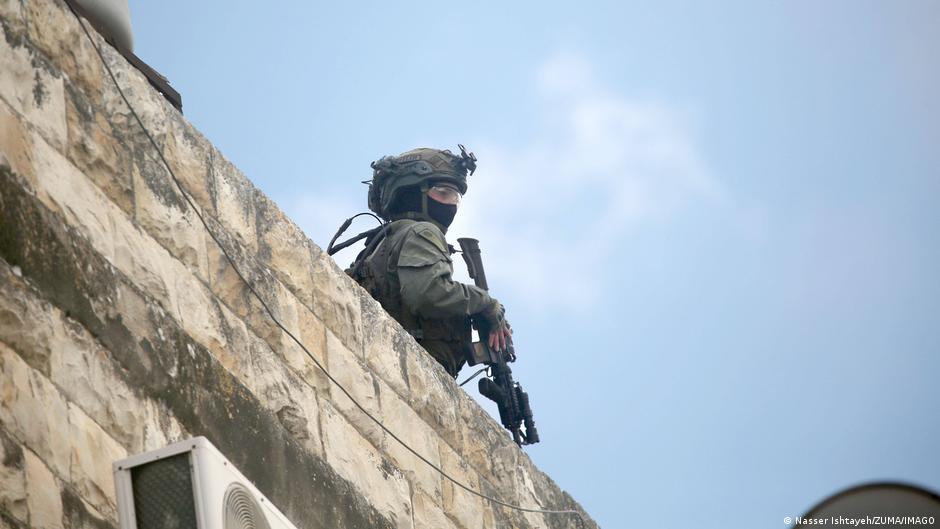
https://p.dw.com/p/5AHEvIsraeli troops often intervene on the side of settlers during disputesImage: Nasser Ishtayeh/ZUMA/IMAGOAdvertisementHuman rights groups and international observers have sounded the alarm over the latest surge in violence by Israeli settlers against Palestinians and their property as diplomatic and media attention has been diverted by the war on Iran. Settlers have killed five Palestinians in the occupied West Bank since Israel and the United States launched their war on Iran on February 28.
"Under the cover of war, the cooperation between the military and Israeli settler militias is deepening the ethnic cleansing of the West Bank,” the Israeli rights group B'Tselem wrote on social media on March 6, ahead of Monday's report detailing the killings of several Palestinians. "As soon as the Israeli American offensive against Iran began, Israel imposed sweeping movement restrictions on Palestinians in the West Bank.”
According to B'Tselem, "settlers deliberately graze livestock in Palestinians' cultivated fields, destroy crops and stored food, steal livestock, and vandalise solar panels and water tanks.”
After the latest shooting, on Sunday, the European External Action Service said in a statement that "the level of violence in the West Bank is unacceptable.” The EEAS called on Israeli authorities to "take immediate and effective action to prevent further attacks against Palestinians and ensure accountability.”
Over the first 10 days of the war on Iran, Israeli rights group Yesh Din documented 109 separate incidents of settler violence against Palestinians in 62 communities — including shootings, physical assaults, property damage and threats
On March 2, two days after the start of the war, two Palestinian brothers were killed when they tried to prevent Israeli settlers from damaging an olive grove in Qaryut, a small village in the northern West Bank. Mohammed Taha Muammar was shot and killed alongside Fahim Taha Muammar.
The Times of Israel reported that the suspected shooter was a member of the IDF's so-called area defense forces, known by the Hebrew acronym Hagmar. These usually comprise settlers serving as reservists.
On March 7, a settler shot and killed 28-year-old Amir Muhammad Shanaran and critically injured his brother Khaled in Wadi A-Rakhim, in the South Hebron Hills. A video circulated by B'Tselem showed an armed settler who appeared to be in a military uniform at the scene.
Palestinian and Israeli rights groups have documented close collaboration between settlers and the Israeli military, with soldiers failing to enforce laws designed to protect Palestinians from settler violence. Some of the violence has been driven by reserve soldiers drawn from settlements who are deployed in the occupied West Bank. Those units and privatized guard units have been operating openly against Palestinians in recent months.
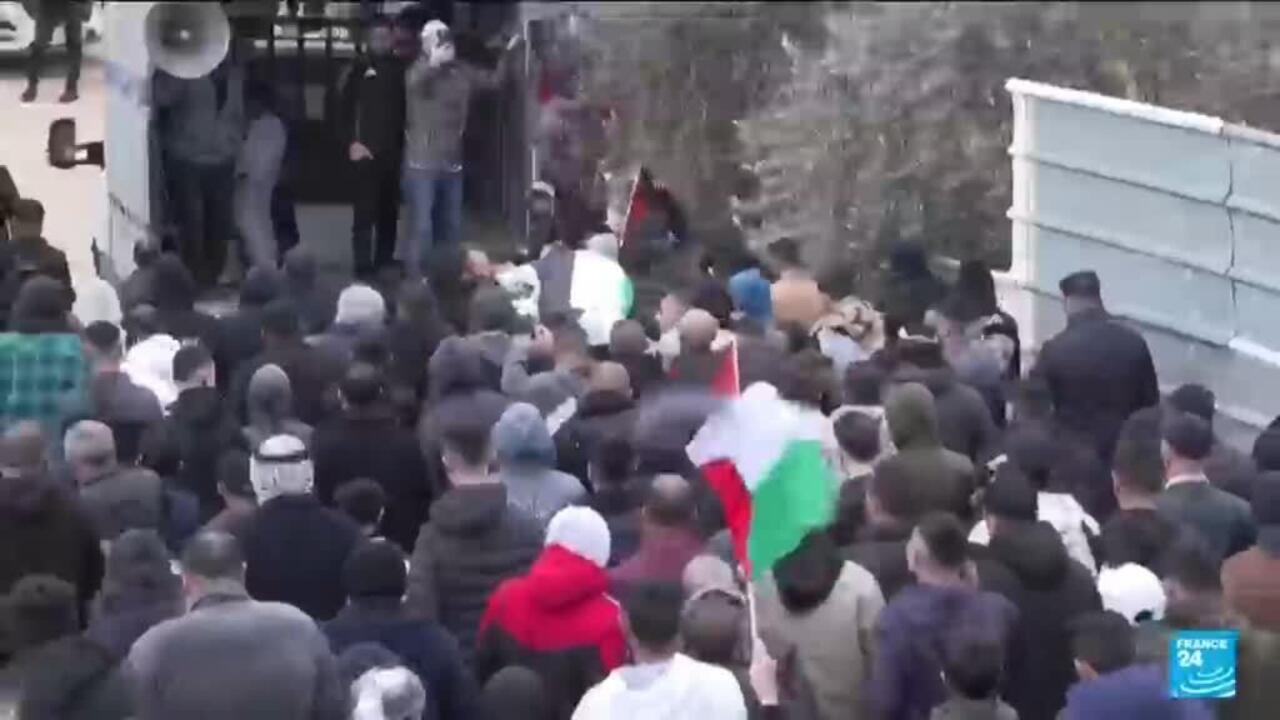
The third deadly attack occurred on in the early hours of Sunday, in Abu Falah, a village near Ramallah. Villagers said they tried to stop a mob of masked Israelis from vandalizing olive trees in fields surrounding the village. Dozens of armed settlers later raided the town and killed Thaer Faruq Hamayel and Fara Jawdat Hamayel. Both men had been shot in the head, according to Palestinian rescue services.
Work for West Bank Palestinians increasingly restrictedTo view this video please enable JavaScript, and consider upgrading to a web browser that supports HTML5 video
Israeli forces arrived later and fired tear gas into the village, according to eyewitnesses. Another villager died after suffering from cardiac arrest, most likely due to gas inhalation, the Palestinian Health Ministry in Ramallah reported.
The commander of the IDF's central command, which is responsible for the occupied West Bank, Avi Bluth, called the incident "unacceptable.” In a statement, he said: "There will be zero tolerance for civilians who take the law into their own hands. These actions are dangerous, they do not represent the Jewish people or the State of Israel, and they divert us from our mission of defending the population and thwarting terrorism, while also undermining security and stability in the area.”
It is unknown whether any perpetrators have been detained at this stage.
Since the Hamas-led attacks on October 7, 2023, and the war in Gaza, the United Nations and Palestinian and Israeli rights groups have documented a massive increase in settler violence against Palestinians across the occupied West Bank, where at least 45 communities have been driven from their homes.
On March 5, the UN Office for the Coordination of Humanitarian Affairs (OCHA) reported that eight Palestinian families, totalling around 45 people, had been forced to leave their community in the Nablus governorate following a series of attacks and threats by settlers from a newly established outpost. Such Israeli settlements and outposts are illegal under international law.
Israeli settler attacks on West Bank Palestinians increaseTo view this video please enable JavaScript, and consider upgrading to a web browser that supports HTML5 video
OCHA also reported that, since the strikes on Iran began, more checkpoints had been blocked and road gates leading to villages and towns had been closed, severely restricting people's ability to move around freely.
In its 2024 advisory opinion on the legal consequences of Israel's policies and practices in the occupied Palestinian territories, the International Court of Justice concluded that Israel's prolonged occupation and systematic settlement enterprise violate the Palestinian people's right to self-determination, ruling the occupation illegal.