Will AI Take Your Job? Microsoft's AI Chief Now Points To Nobel Laureate's Research Saying Only 5% Of Human Work Is At Risk Yuvraj Malik Wed, October 7, 2026 at 1:47 AM EDT 4 min read MSFT +0.78% Trade MSFT on Coinbase Trading disclosure Trading disclosure The above button links to Coinbase. Yahoo Finance is not a broker-dealer or investment adviser and does not offer securities or cryptocurrencies for sale or facilitate trading. Coinbase pays us for certain activity generated through this link. Prices displayed are informational.
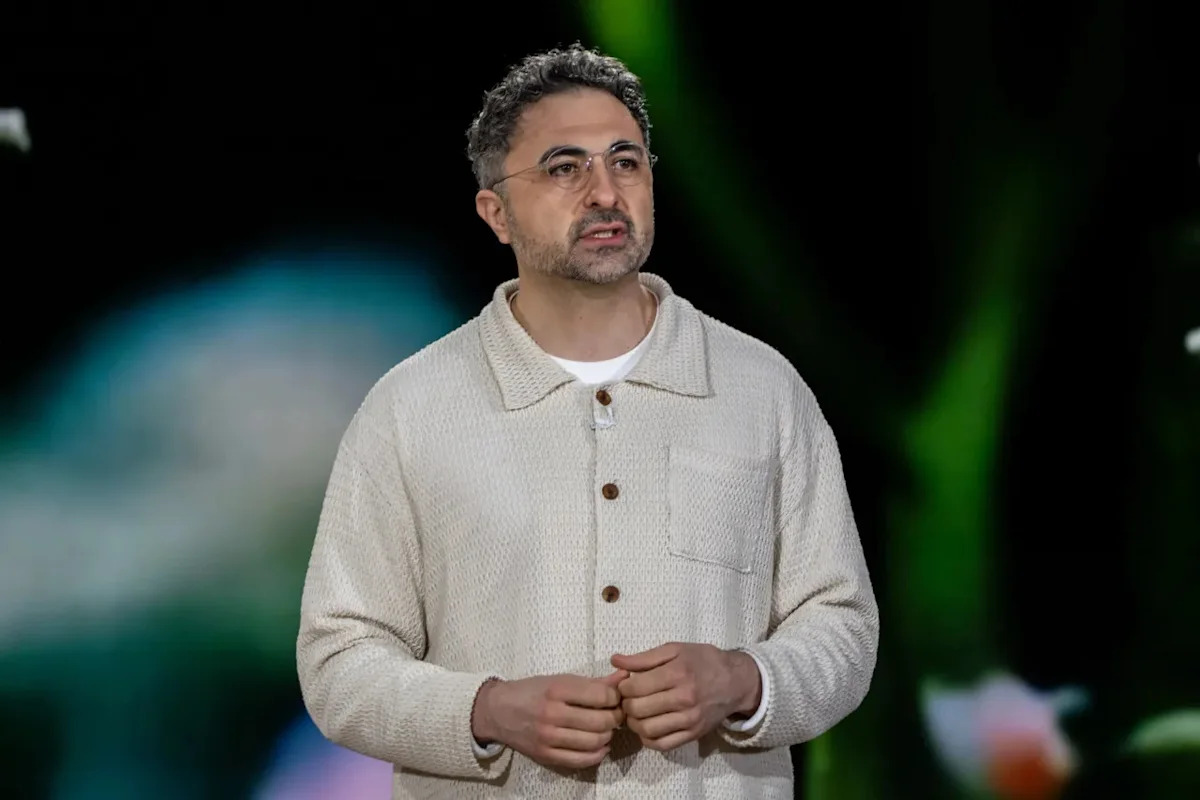
Mustafa Suleyman, CEO of Microsoft AI, argued AI should augment workers rather than simply replace them.
Venture Capitalist Bill Gurley said both AI optimism and doomerism have become too extreme.
Surveys suggest that AI-related job anxiety is on the rise.
Microsoft AI chief Mustafa Suleyman on Tuesday amplified research from Nobel laureate economist Daron Acemoglu, arguing that AI will replace only about 5% of what humans do over the next decade, pushing back against the more extreme predictions surrounding the technology's impact on jobs.
Curiously, his latest view departs from the grimmer comments he made a few months ago. In May, Suleyman had predicted that AI would reach human-level performance across most professional tasks in 12 to 18 months, naming accounting, legal, marketing, and even project management as vulnerable sectors.
See what 10M+ investors are talking about. Get the Stocktwits Daily Rip for what retail is watching right now, free to your inbox
In a blog post on X on Tuesday, Suleyman pointed to Acemoglu's estimate that AI could add roughly 1.5% to GDP over 10 years and suggested that the industry should focus less on building AI to replace workers and more on developing tools that make people better at their jobs.
"Even 99% accuracy isn't enough for full automation. The last 1% is the hard part," Suleyman wrote, adding that AI systems and human intelligence are fundamentally different and should ultimately be paired rather than treated as substitutes.
Benchmark venture capitalist Bill Gurley responded by praising Suleyman but warned that both sides of the AI debate have become too extreme.
"Mustafa is the statesman AI needs. We all need to take the 'hyperbole' way down," Gurley wrote in an X post. He argued that AI doomerism is "the mirror image of the positive hyperbole," adding that both narratives feed each other.
"We are going to cure cancer in three years!" Gurley wrote. "No you won't. Wish you were. But no."
The comments come as AI-related job anxiety continues to rise. A 2026 American Psychological Association survey found that 48% of workers worry AI could make some or all of their job duties obsolete, the highest level recorded since the question was introduced.
A separate Pew Research Center survey found 71% of Americans believe AI will lead to fewer jobs in the U.S. over the next 20 years, up from 64% in 2024.
Significant workforce reductions in the tech sector have continued into 2026. The tech sector has seen 131,382 layoffs across 313 companies this year, according to Layoffs.fyi.
Amazon cut about 16,000 corporate roles in January, although the company framed the reductions around reducing managerial layers and bureaucracy. Microsoft eliminated about 4,800 roles in July, including significant cuts at Xbox.
Some companies have been more explicit about AI. Oracle said in a regulatory filing that adopting and deploying AI technologies has resulted, and could continue to result, in workforce reductions.
GitLab cut roughly 350 employees while redirecting resources toward AI infrastructure, while Monday.com announced plans to eliminate more than 600 jobs as part of an AI-focused restructuring.
Coinbase also laid off about 700 employees in May while saying it would rebuild around "AI-native" teams, although its CEO also cited crypto-market conditions.
Microsoft has been a key beneficiary of AI thanks to its early partnership with OpenAI. Azure growth accelerated to 43% in Microsoft's fiscal fourth quarter, while the company guided to 45% growth for Q1 2027.
MSFT stock is nearing an all-time high after having surged nearly 38% from July through September, marking its best quarterly performance since 1998 and the strongest gain among the Magnificent Seven during the period.
On Stocktwits, retail sentiment for MSFT shifted to 'neutral' from 'bullish' the previous day.
For updates and corrections, email newsroom[at]stocktwits[dot]com.
Yuvraj Malik has no position in any of the stocks mentioned in this article. StockTwits' news team content is for informational purposes only and is not intended as investment advice. For more, see our editorial policy. This article was originally published on StockTwits.
Why BlackRock Thinks AI Agents Could Run On Stablecoins And Bitcoin
RUM Stock Jumps Premarket: Analyst Sees Over 200% Upside, Says AI Shift Not Yet Priced In
INTC Stock Jumps Overnight: CEO Says Intel Will Keep Working With Musk's Terafab Amid TSMC Partnership Buzz