Data from the Stockholm International Peace Research Institute indicates that while military spending across the Western Balkans has increased, Serbia is the Number 1 importer of major weapons systems in the region.
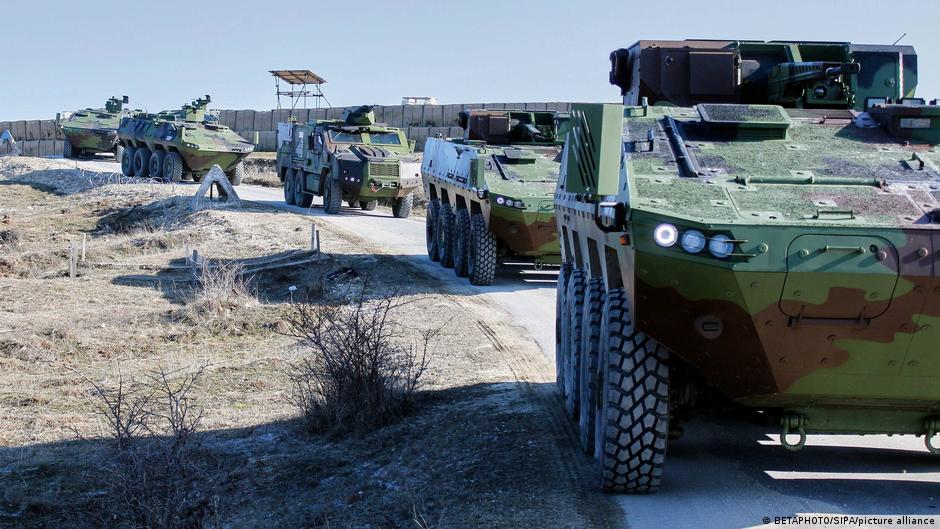
https://p.dw.com/p/5AHLwSerbian President Aleksandar Vucic recently announced that the country plans to double its military capabilities within the next 18 monthsImage: BETAPHOTO/SIPA/picture allianceAdvertisementSerbia has imported more major weapons systems than any other Western Balkan country in the past five years, according to the latest data from the Stockholm International Peace Research Institute (SIPRI).
While other countries in the region have also increased military spending, the difference in procurement levels remains substantial.
Serbia ranks 37th in the world in terms of major arms imports, ahead of some EU member states in the region such as Croatia and Bulgaria.
"An increase in defense spending has been most visible and sustained in Serbia," SIPRI researcher Katarina Djokic told DW. "Over the past decade, there has been pressure to replace weapons inherited from the Yugoslav People's Army, while the political leadership has also recognized the political and symbolic value of such investments."
"Tensions with Kosovo have likely reinforced the perception that a stronger arsenal can be a useful bargaining chip in negotiations with international actors," she added.
In addition to the highest volume of major weapons systems imports, Serbia also has the largest defense budget in the region.
Between 2020 and 2024, the real value of Serbia's defense spending was roughly six times higher than Albania's, the second-largest spender in the Western Balkans.
Serbian President Aleksandar Vucic recently announced that the country plans to double its military capabilities within the next 18 months.
For military analyst Aleksandar Radic, this is not a new trend. He notes that the intensification of rearmament began around 2016, when Vucic — as Radic put it — recognized the political and economic potential of arms procurement.
"Arms purchases are often driven by political motives. Sometimes it even seems that the military itself is surprised by what it receives, because the key factor is who the equipment is bought from, rather than what is actually being purchased," Radic told DW.
"For example, if Vucic travelled to Beijing, you could expect negotiations on military equipment from China to follow soon after," he added.
According to SIPRI data, Serbia has imported major weapons systems from 13 different countries over the past five years. China has been the largest supplier, mainly due to the acquisition of medium-range air defense systems.
The largest military donations have come from Russia and Belarus.
Katarina Djokic feels that this structure could soon change. Serbia has already signed contracts with France and Israel. If these are implemented, these countries could become Serbia's main suppliers in the coming years.
"To me, this diversity of suppliers indicates two things. First, Serbia has no single military ally. Second, it has sufficient resources and willingness to take out loans to buy expensive weapons systems, which makes it an attractive customer for different exporting countries," she told DW.
Other Western Balkan countries import much lower volumes of arms. Albania ranks second in the region, but only 103rd globally, with imports roughly six times smaller than Serbia's, according to SIPRI estimates.
Kosovo ranks 118th, North Macedonia 138th, Bosnia and Herzegovina 144th and Montenegro 152nd among a total of 166 recipients of major arms worldwide.
"NATO countries in the region initially responded to pressure during the first Trump administration to increase defense spending and investment in military equipment. After Russia's full-scale invasion of Ukraine, we saw an additional increase in arms orders," Djokic explained.
The situation in Bosnia and Herzegovina, however, is developing differently.
"We do not observe a significant increase in military spending there, but rather more investment in police equipment, which can also influence perceptions of threat between the two entities, given the way policing is organized," she adds.
Most other Western Balkan countries traditionally rely on the United States and Turkey as their main suppliers and donors of military equipment. Such procurement often also strengthens political ties with NATO allies.
"As defense spending plans increase, the region is becoming an interesting market for other arms exporters as well, particularly France, from which several countries expect deliveries of different weapons systems," said Djokic.
She also points to the bilateral relationship between Albania and Italy as an example: "Italy has already donated a patrol boat to Albania and is also responsible for delivering light armored vehicles in the coming period, financed by the European Union."
Despite these developments, Djokic stresses that the overall volume of arms acquisitions in the region remains relatively modest on a global scale.
"When countries move from zero procurement to acquiring several systems, it can appear dramatic in percentage terms. Combined with belligerent rhetoric from political elites and sensationalist reporting, this can create a sense of insecurity among neighbors and often serves as justification for further arms purchases," she said.
Such rhetoric is further fueled by recently signed military cooperation agreements — between Serbia and Hungary, and between Croatia, Albania and Kosovo — which political leaders sometimes portray as new military alliances.
"In Albania, the Serbian threat is often exaggerated, just as in Serbia, political rhetoric exaggerates threats from surrounding countries," said Radic. "It is a combination of politics and propaganda that helps justify arms procurement. Croatia, for its part, seeks to build a particular role in the region, especially vis-à-vis Serbia, while other countries largely follow the broader regional trend," he added.
Both Radic and Djokic stress that these agreements cannot be considered genuine military alliances.
"They mainly concern training, joint military exercises and coordination of activities that would largely take place within NATO structures anyway," Djokic explains.
In such circumstances, she adds, NATO remains the key deterrence factor in the region, although its future role will also depend on broader dynamics within the alliance itself.