A rise in violent crime has pushed South Africa to deploy the military to major cities. Supporters see urgent action, while critics warn that soldiers on the streets risk escalating conflict.
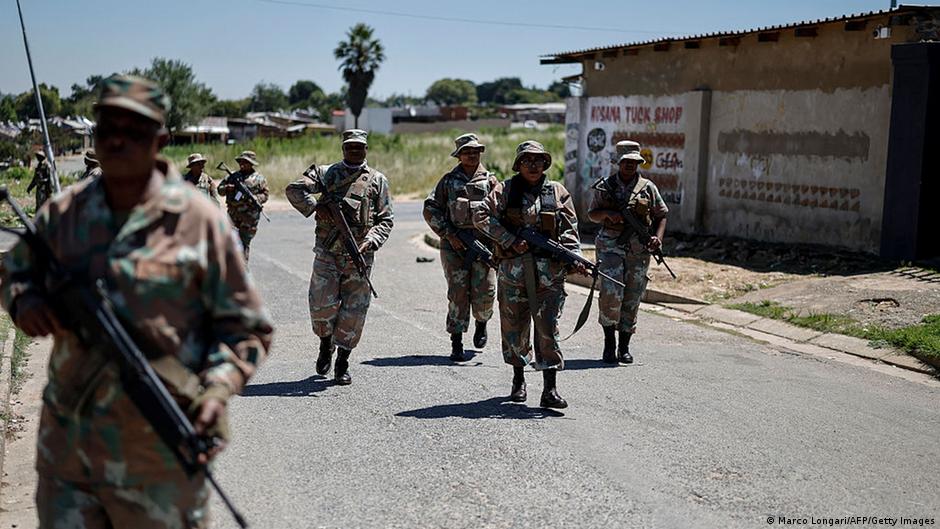
https://p.dw.com/p/5AAwVSoldiers have been moved into gang violence hot spots in Johannesburg, supporting police efforts to tackle rampant crimeImage: Marco Longari/AFP/Getty ImagesAdvertisementOn March 10 in South Africa's Western Cape province, a gray vehicle pulled up outside a house in the Rocklands neighborhood of Mitchells Plain.
Masked men got out, walked inside and open fire, leaving three people dead and a 15-year-old girl injured.
Scenes like this have become common in South Africa. Estimates suggest that around 64 people are killed across the country daily.
Figures from the online database Numbeo show how widespread the issue is.
Pietermaritzburg, Pretoria, Johannesburg, Durban and Gqeberha, formerly known as Port Elizabeth, rank as the five most dangerous cities in the country. Even Cape Town, one of the world's most popular tourist destinations, appears sixth on the list.
Mitchells Plain lies on the Cape Flats, a stretch of densely populated townships on the outskirts of Cape Town. The area has long struggled with poverty, gang violence and high rates of organized crime.
"It has often been linked to the fact that we are among the most unequal societies in the world in terms of wealth distribution, alongside high levels of poverty, and corrupt policing," said Ryan Cummings, director of analysis at the Cape Town–based consultancy Signal Risk.
In February, speaking about 30 kilometers (18.6 miles) from the Cape Flats, South African President Cyril Ramaphosa vowed to take tougher action against organized crime, including deploying the military.
That army deployment began on Wednesday. The presidency announced that 550 soldiers would be sent to Gauteng province to combat illegal mining. Residents also observed soldiers on the streets of Johannesburg, the country's biggest city.
Some argue the military is necessary to deal with an extraordinary crisis. Others say soldiers are not trained for policing work.
"In 2019, the government brought in the army to Cape Town," said Andy Mashaile, a security strategist and retired Interpol ambassador, noting that the very same people who called for the army were the same people who chased the army away.
"Just as it happened during the COVID era in Alexandra," he added. "The army is not trained to do policing."
Mashaile warned that sending troops onto the streets may only push criminal groups into new activities. But not everyone shares that view. Cummings said there is a history of cooperation between the army and the police in South Africa.
Still, while many residents in high-crime communities support stronger action, others worry about the growing role of the military in civilian law enforcement.
The military deployment will focus on illegal mining in the Gauteng, North West and Free State provinces, and gang violence in the Western Cape and Eastern Cape provinces.
Parts of the national deployment could last more than a year, officials have said.
Mashaile said the deployment could even create friction between institutions. Instead, he said the country should strengthen intelligence gathering.
"There is no other way that you will win this war on crime and criminality and transnational organized crime, without intelligence-led operations," he concluded.
Is South Africa suffering from an epidemic of gun violence?To view this video please enable JavaScript, and consider upgrading to a web browser that supports HTML5 video
This article has been adapted from an episode of the AfricaLink podcast.