Make New York Post a Preferred Source Whole Foods shoppers are overpaying for the swanky grocer’s “365” private-label chicken – most of which comes from plants that also service Walmart, Target and Kroger and which have dangerous levels of salmonella contamination, according to a report.
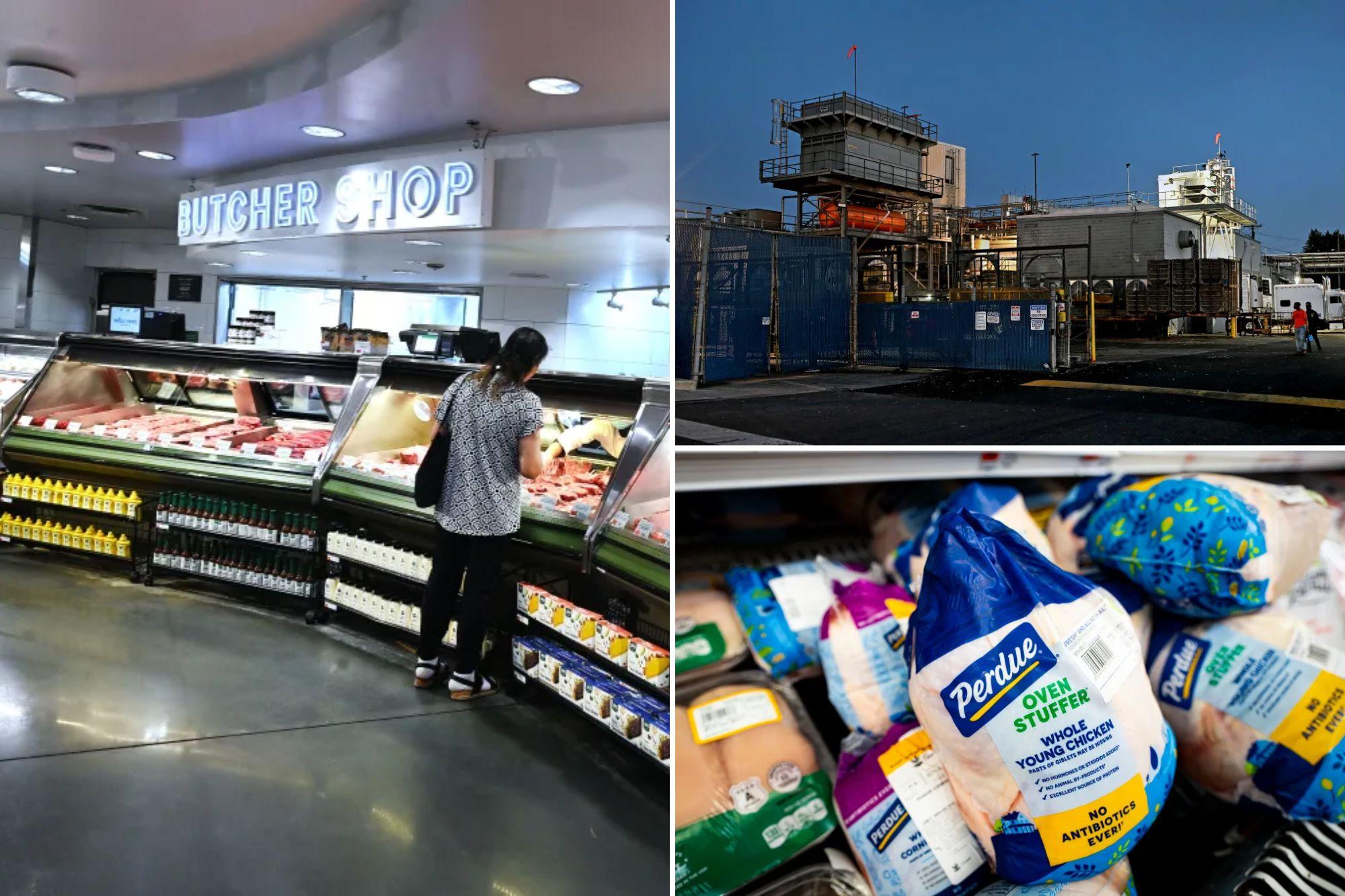
The upscale grocery chain owned by Amazon purchases its private label chicken from plants operated by poultry giant Perdue Farms, charging up to 45.7% more at retail for the same product that’s sold in discount chains like Walmart and mass-market grocers like Kroger, according to an explosive new report by Farm Forward, an animal advocacy group.
According to Whole Foods’ website, customers can be assured that its meat is antibiotic and hormone free and that the animals are humanely raised by farmers and ranchers who meet the retailer’s rigorous standards.
“You deserve to feel good about the meat you’re buying,” Whole Foods’ website states.
Farm Forward, which was founded in 2007 with the aim of ending factory farming, evaluated 247 raw chicken packages at 30 Whole Foods stores in all six of its sales regions during the week of Aug. 3. It looked at packages of breasts, thighs and wings, examining the federal codes to determine at which plant the meat was processed. It determined that 92% of the meat came from a Perdue plant.
Farm Forward then looked at the USDA records associated with those plants to determine the incidence and severity of salmonella contamination at each facility over the past year.
“Before this investigation, we didn’t know that Whole Foods gets its chicken from Perdue,” said Farm Forward executive director Andrew deCoriolis.
The nonprofit found that 98% of the “365” brand chicken was processed at plants where a highly virulent strain of salmonella was present in the raw meat, according to the report.
Whole Foods charges on average nearly 20% more per pound and as much as 45.7% more than mainstream grocery chains, Farm Forward claims.
Another troubling finding suggests that the meat may contain antibiotics, since products from those facilities showed high rates of antibiotic and multi-drug resistance – despite policies at both Perdue and Whole Foods that prohibit the use of such drugs, according to the report.
“Perdue and Whole Foods say no antibiotics ever, but the salmonella strain Farm Forward found was drug resistant,” which means that if someone gets sick from eating the meat, the infection may not respond to the antibiotics doctors would ordinarily use to treat it, deCoriolis said.
While it is not uncommon to find strains of salmonella in raw chicken, some strains are more dangerous than others.
The investigation found that three of the six Perdue slaughter plants failed the government’s standard for salmonella contamination over the past year.
While the USDA inspects the meat and conditions at slaughterhouses, it does not have the authority to stop the sale of poultry that is infected with salmonella.
“The poultry industry has lobbied heavily against [regulations],” deCoriolis told The Post. “Poultry is by far the most contaminated meat in America with the industry warning consumers to cook your chicken well.
“We have been telling people to handle chicken like a bio-hazard for decades. It can cross contaminate your cutting board, countertop and knives,” he added.
Earlier this year, Farm Forward uncovered unsavory facts about Costco’s $4.99 Kirkland Signature rotisserie chicken.
It found that Costco’s rotisserie chicken plant in Nebraska has a high rate of salmonella contamination.
The warehouse company is facing a proposed class-action lawsuit alleging that Costco’s Lincoln Premium Poultry plant “consistently fails USDA salmonella safety standards year after year,” according to an investigation.
Costco filed a motion to dismiss the case in federal court in Seattle. The court has not yet ruled on the motion.
Whole Foods and Perdue did not immediately respond to requests for comment.