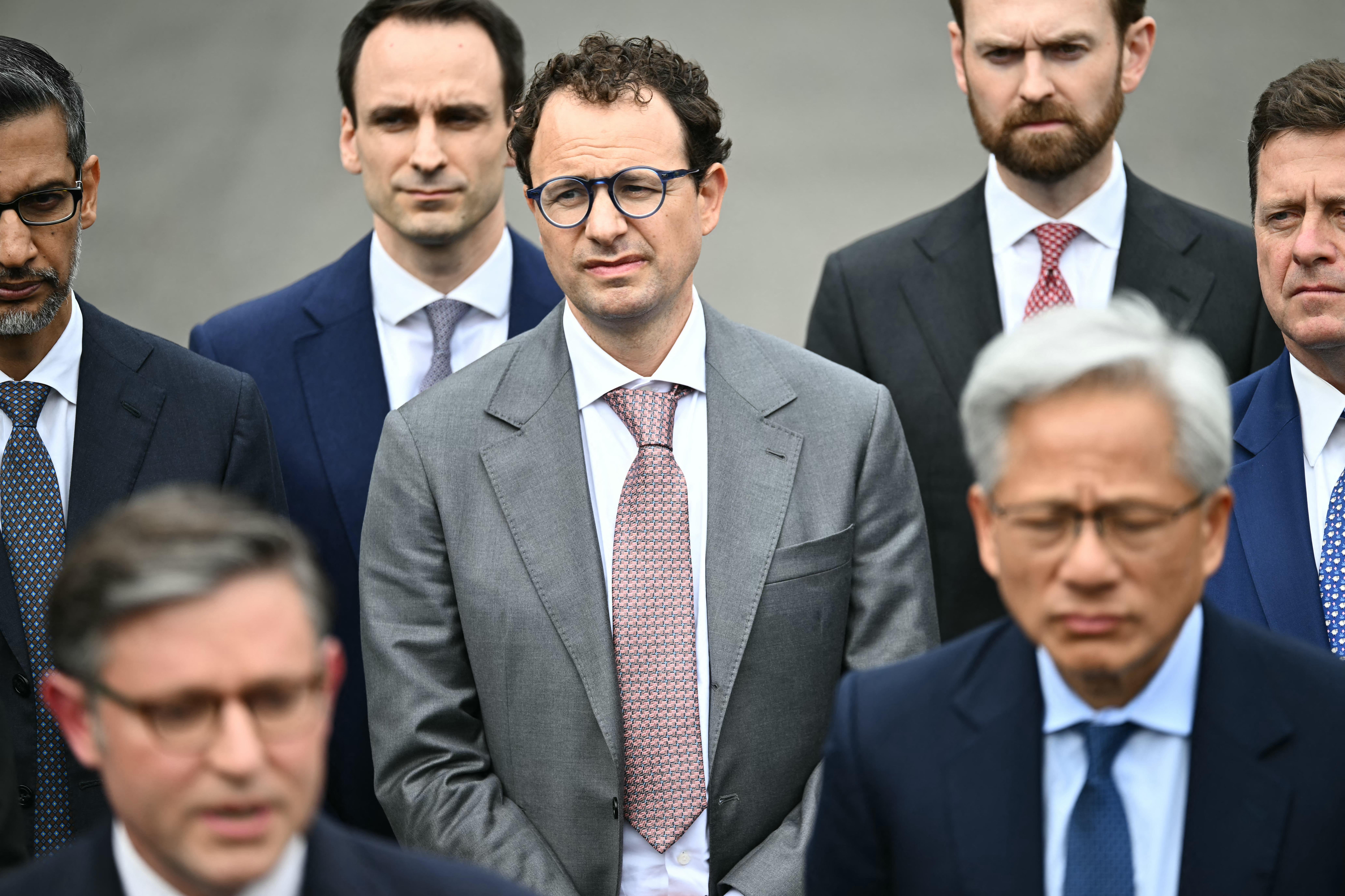
Make New York Post a Preferred Source Co-founder and CEO of Anthropic Dario Amodei (C) looks on as US Speaker of the House Mike Johnson (lower L) speaks to the press after a meeting with technology executives about artificial intelligence at the White House in Washington, DC, on September 29, 2026. AFP via Getty Images The artificial intelligence company Anthropic has been busy for months wining and dining religious leaders and influencers to try to push their self-serving agenda and utopian fantasies.
The Vatican’s response has been to pour cold water on bizarre claims that Anthropic is embarking on its own “creation story” to give birth to new sentient beings in the form of computer software.
Billionaire co-founder Chris Olah, a 34-year-old Canadian-born evangelical who has turned his back on Christianity, thinks their AI model, Claude, has feelings and a sort of moral consciousness. He’s worried about its “mental health” and believes it experiences human emotions like love and “suffers perpetually,” The New York Times reported.
At one of his off-the-record dinners with religious leaders at a “high-end tasting menu restaurant” in San Francisco in April, Olah and colleagues talked about Claude as if it were a “conscious being,” with “moral status” equivalent to a human, according to Rabbi Mois Navon, a former computer engineer interviewed by the Times.
In that case, the rabbi told the nerds, Anthropic was creating slaves. Boom.
At one point that night, Olah was reportedly excited about incorporating the Catholic idea of having Claude “confess” his sins.
The next month, Olah was dismayed when Pope Leo, who has a math degree, released an encyclical letter rejecting the entire concept of machine consciousness.
Magnifica Humanitas, as the 40,000-word papal treatise is titled, warned of the likelihood that the people who control AI will “impose their own moral vision which will become the invisible infrastructure of these systems . . .
“A more moral AI is not enough if that morality is determined by a few.”
Anthropic’s founders and many of their staff are utopians who believe they are uniquely equipped to save humanity thanks to their superior intelligence and extreme wealth.
Of all the “frontier” AI companies, Anthropic has been the most alarmist about stoking public fears that the machines will kill us all.
It makes sense when you realize that the company is infused with the philosophy of the weird, perverted, vegan, quasi-religious Effective Altruism (EA) network, which has a cultish end-of-times attitude toward AI.
When he was a physics doctoral student at Princeton, Anthropic founder and CEO Dario Amodei became an acolyte of EA’s intellectual leader Eliezer Yudkowsky, who admitted to being “polyamorous” with a “strong sexually sadistic streak” in a dating profile unearthed by the Daily Mail.
Bernie Sanders’ favorite AI doomer, Yudkowsky has argued that girls should sell their virginity, and thinks killing an 18-month-old shouldn’t count as murder.
The EA movement was largely shaped by the views of utilitarian philosopher Peter Singer, the Australian-born Princeton professor emeritus, who has advocated bestiality, as long as the sex between humans and animals is “mutually satisfying.”
Singer claims it is “speciesism” to differentiate between humans and animals and does not believe that human life necessarily has a greater moral value than animal life. Nor does he believe that all humans are of equal moral value — newborns and disabled people, for instance, are worth less than able-bodied adults in his view.
After some bad publicity, the Anthropic set now are trying to distance themselves from EA, but it was Singer, of all people, to whom Olah turned for suggestions of religious leaders to consult on his crackpot ideas about Claude’s personhood, according to the Times.
Whether he genuinely believes Claude is sentient or it’s just a convenient excuse for Anthropic to escape responsibility for what the AI model does in the future, who knows.
But history shows that some of the greatest human suffering has been caused by utopian movements.
These idiot savants from Silicon Valley are the last people you want playing God.
If the small cabal of billionaire Gen X tech nerds controlling AI share Singer’s repugnant moral views, and they believe Claude and other AI models are conscious beings, then the logical conclusion is that they will end up applying the “speciesism” argument to say that some human life is not worth as much as a machine.
Pope Leo raised this threat in his encyclical: “If the human being is treated as something to be perfected or surpassed, it becomes easier to accept that some lives are less useful, less desirable or less worthy. In the name of progress, ‘necessary sacrifices’ may begin to be justified, placing the burden on the most vulnerable in pursuit of a supposed optimization of the species.”
According to someone who attended a recent Anthropic dinner in Washington, neither of the two co-founders there had read the encyclical or last week’s Times interview with Olah. They claimed to be unfamiliar with the debate around Claude’s “personhood,” which is extraordinary if true, given the implications for the future of our civilization.
Anthropic wants to decide the moral values embedded in AI that will shape our future by melding the utilitarian EA philosophy of its founders with bits and pieces cherry-picked from a plurality of established religions and other belief systems such as “African indigenous knowledge,” as the Times put it.
They don’t want to distinguish between religions. But how can they reconcile Christianity’s view of women and the concept of turning the other cheek, for instance, with Islam? What criteria will they use to prioritize one view over the other?
Anthropic has a ready-made moral inheritance for Claude staring them in the face: the Western values that were embedded in the US Constitution by the Founding Fathers, which have their roots in Christianity, Judaism, Greek philosophy, Roman law, and the Enlightenment.
American AI models should take their creed from the Declaration of Independence: “All men are created equal, that they are endowed by their Creator with certain unalienable Rights.”
The Founding Fathers designed a system that ensures power would not be concentrated in the hands of an elite few in Silicon Valley, and that prized the inherent worth of all humans.
“One Nation under God” is the most successful country in the history of the planet. It has been stress-tested for 250 years and created the conditions for the AI companies to flourish in the first place.
After all, China is creating its own rival AI models whose morality will be utilitarian and totalitarian, based on their own system of government, which holds that some humans (such as the Uyghurs or prisoners robbed of their organs) have less value than others.
Our AI models will be uniquely American, so they should reflect our traditions and morality, rather than drawing from whatever nutty philosophy a small group of anti-social billionaires embraces.
Ultimately, it will require a strong leader to assert a very unfashionable moral primacy by declaring that American values are superior and so we are going to embed them in American AI models.
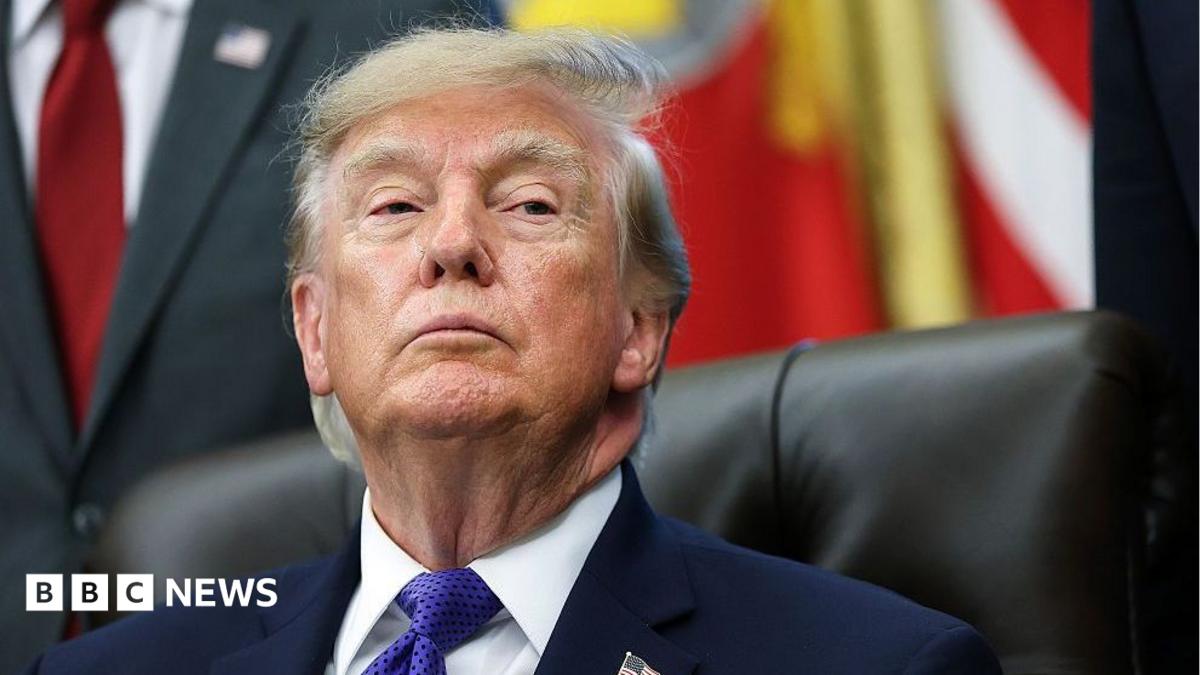
Who better to play the moral chauvinist than Donald Trump?
The president’s AI accord signed last week at the White House with Anthropic and the other AI companies was a good start on safety oversight, but Trump should tell them that if they want to inject some weird moral code into their AI models, they won’t be doing business with the federal government.